One of the meanings of the name ‘Lydia’ is ‘beloved. She is.
Some friends have a dog called Faith. Faith is a small dog. I sometimes refer to our friends as, “Oh ye of little Faith”.
Faith is something I’ve been looking for all my life.
For a long time, I didn’t know this. I just knew that there was something missing and I had to find a way of finding it.
In the past I’ve taken ‘leaps of faith’, bracing myself for big steps without knowing where they were going to lead. Landing on unfamiliar ground has led to growth, as I’ve struggled to find my feet and keep going from there.
More recently though, I’ve found an increasing sense of faith in Buddhism; the teachings of Buddha.
Having previously explored different branches of Buddhism, I’ve found strength through the Kadampa tradition, or what is now known as the New Kadampa tradition.
Drawing from my own experiences of Buddhist teachings through the New Kadampa tradition, I find that they are accessible, practical and available.
The Venerable Geshe Kelsang Gyatso Rinpoche – founder and spiritual director of the New Kadampa Tradition – wrote books that present the teachings in a way that is relevant to our modern world and our day-to-day lives.
I’m not a scholar, or a great reader, but I find that I don’t have to be. Other people who are better scholars and readers than me are prepared to share their skills and knowledge, in ways that help me to live my life. That is something I am so grateful and thankful for.
I somehow find that I don’t want or need to question. I just listen, and put what I can into practice on a day-to-day level. It’s so reassuring when I find that even just trying, making a positive effort, is recognised as a step in the right direction.
So, I’ll keep taking those steps, as I keep taking my steps with Lydia when we’re out walking together on a morning. We don’t necessarily know where we’re going, but we have faith that we’re on the right path.
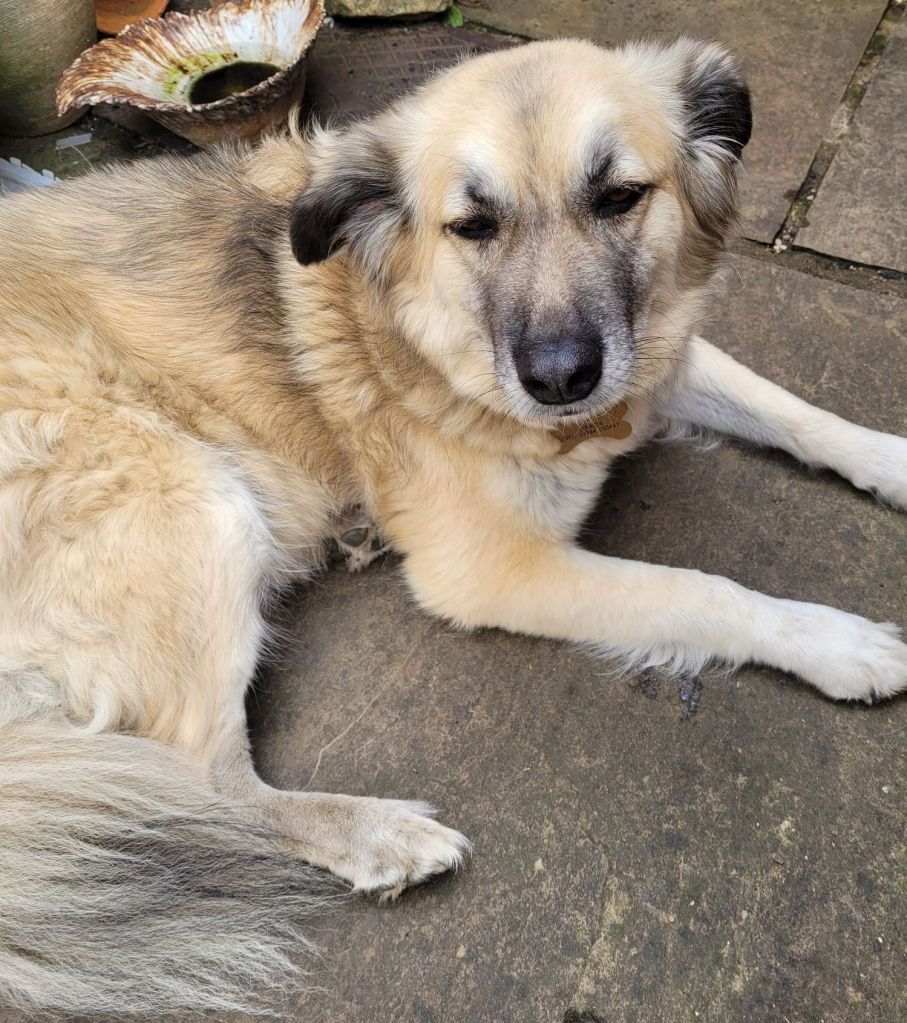
I’ve noticed how her confidence has increased, particularly over this last summer when she makes decisions about what she wants to do and when she wants to do it. The back door is open most of the time, and she comes and goes as she pleases, within the confines of our garden.
While I continue to train her and manage her behaviour around reactivity, reinforcing basic commands such as “sit”, “wait”, “down”, “stay” and “heel”, I like the fact that she works things out for herself, and we sometimes have a compromise. For example, if she’s outside barking at birds or other dogs or motorbikes going by, and I use the “here” command to bring her in, she will often come towards me but then settle down quietly, still outside but near the door. I think this is really clever. She gets what she wants – to stay outside – and I get what I want – for her to be quiet and not disturb the neighbours. I like the fact that we can come to an understanding about this arrangement between us, me using my language and she using hers.
Some people may say that I shouldn’t let her get her own way like this, that I need to be ‘top dog’ but I’ve read that the ‘alpha’ principle that used to be thought to apply to dogs, doesn’t, and I’m happy to go with the latest research.
Lydia belongs here. After the life that she’s had – much of which we know nothing about until she came into our lives through adoption – it’s good to know that she has a strong sense of home now. Her home; our home.
At the poetry open mic meeting that I performed in last week, another reader read out an extract from ‘The House of Belonging’ by David Whyte. I hadn’t heard of it before, but it resonated with me at a level that leads me to want to reproduce it here:
This is the bright home in which I live, this is where I ask my friends to come, this is where I want to love all the things it has taken me so long to learn to love.
This is the temple of my adult aloneness and I belong to that aloneness as I belong to my life.
She soaks up the sun when she wants to, and searches out shady spots when she needs to cool down.
We have a good walk together, mid- to late morning.
I still find the ‘waking up and getting out of bed’ bit of the day very difficult. But I do it, with the help of a routine which involves meditating and sitting quietly with a cup of tea before I do anything else. And this morning I did get myself out of bed a bit earlier than I have been doing, so something must be working.
Over the last couple of weeks, as well as preparing paperback versions of my two latest books, I’ve also taken part in an open mic poetry session at a local library. This was so inspirational not least because the library is in my home town, and I don’t have many positive associations with my home town, due to what I now realise is the trauma I experienced as a child. I disassociated, went into survival mode, and the rest isn’t history because I can hardly remember any of it. But it doesn’t matter. I’ve realised it doesn’t matter because it’s in the past, and I’m living my best life today.
What constitutes a ‘best life’ for me though, doesn’t mean that I need to go on exotic holidays or do ‘special’ stuff all the time. It’s the ‘small’ everyday stuff that does it for me, most of the time. Yes, I like to go out for meals, have treats and takeaways, holidays occasionally, but I don’t want to miss out on what I have around me, in the here and now, every day.
And that includes attending to my own personal paperwork – and filing.
Historically I haven’t been the best at this, although steadily, during the process of my recovery, I have been pulling chaos into order, establishing priorities and making sure that I don’t leave a pile of debris in my wake (literally, in my wake, i.e. when I do ‘pop my clogs’ my affairs are going to be so simple for the Executor to administer).
I first started developing a set of ‘rules for self-management’ some time ago, as an antidote for having been badly managed by others. Ideas for these rules popped into my head from time to time and I wrote them down, not knowing what I was going to do with them, or when I would be able to do anything with them. The self-management rules became ‘poetry rules’ for a while, as I related some of my poems to the inherent principles within.
Now I’m back to thinking again in terms of self-management, and I’m going to steadily work through my rules, applying them to my life as I continue to walk and work with Lydia, write this blog, live with my partner, meet up with friends and neighbours, write more poems, make more pots. I’m going to do my own filing as well along with a lot of other things I want and need to do.
Ambitions
Gleeful
Wild
Outrageous
Contagious
Cheerful
Fearful
Full
Respectful
Disrespectful
Mad
Sad
Glad
Cook
Read a Book
Make Tea
Dance
Romance
Work
Shirk
Naughty
Nosy
Silly
Me.
Available on Amazon for Kindle and Kindle Unlimited:
The health benefits of exercise are well recognised.
Exercise also keeps the brain and your other vital organs healthy.
Experts believe exercise releases chemicals in your brain that make you feel good. Regular exercise can boost your self-esteem and help you concentrate, sleep and feel better.
“I get a huge buzz from my rock ’n’ roll class. Hours later, my legs ache, but I’m still smiling.”
Exercising doesn’t just mean doing sport or going to the gym. Walks in the park, gardening or housework can also keep you active.
Experts say most people should do about 30 minutes’ exercise at least five days a week.
Try to make physical activity that you enjoy a part of your day.
We all know this and are likely to have had direct experience of these benefits.
Why, then, can it still be so difficult to find the motivation to exercise?
It’s an issue that I’ve struggled with all my life, experiencing barriers associated with body image when I was younger. I knew swimming was good exercise but would only ever go to a swimming pool or wear a swimsuit on a beach if I’d starved myself to be thin enough to feel able to do that. And even then, I felt morbidly self-conscious about how I looked. It took a long time and a lot of working through masses amount of personal ‘stuff’ before I could stop worrying and start enjoying swimming. My partner and I even go wild swimming now, and it feels wonderful.
I tried jogging but always found it so hard to build myself up to a regular routine. Lacking in willpower and discipline some people might say. Struggling with severe depression, anxiety and low self-esteem was the real reason. I’ve continued to struggle ever since, but have also never given up. Now 65, I’ve been doing on-line exercise classes, including yoga and pilates during lockdown. Last summer we did some cycling around our local lanes. We still both find that it’s an effort to go out, sometimes, but give each other a push and/or moral support when we need it. Whatever it takes.
What’s the alternative? An inactive old age with all the complications that brings?
I’ve always found it difficult to go to a gym or to exercise classes after work. Just getting through a day involved such a major effort for me. So, I looked for ways to combine exercise into my daily routine. Cycling to work meant that I often turned up looking like a drowned rat, but it did help.
Even so, I continued to struggle with depression and continued to find it hard to motivate myself to exercise enough to help it lift on anything more than a temporary basis. I felt like the only way I could sustain the ‘lift’ would be to train as if I was an Olympic athlete. I have neither the physique nor the talent to be anything remotely akin to athletic and, like most people, have had to commit a significant amount of my time to earning a living and keeping up with the usual day to day domestic activities.
There were times as well when I felt that the more I exercised, the deeper my depression went, after the initial ‘buzz’ fell away.
I continued to have to do a lot of work to try and shift it, with exercise being one of a number of tools and techniques that I’ve tried and tested over the years. It has been, and continues to be, a lifetime endeavour. I think that this is in part because of the way emotions are stored in the body, a matter which has been increasingly recognised and written about including the following article by Sean Grover (2018):
For years, I’ve made a study of where people tend to store their unwanted emotions. Certainly, not all body aches or illnesses are psychosomatic. However, as I studied people’s bodily reactions to stress, recurring patterns emerged.
Healthy vs. Unhealthy Repression
Fear is the driving force behind repression, and is frequently rooted in your past. Repression is often necessary, particularly when you feel overwhelmed or experience trauma. But an overdependence on repression fuels psychosomatic symptoms and self-destructive patterns.
In his article in Psychology Today, Sean Grover goes on to identify the ‘Top 10 Tension Areas for Unwanted Feelings’ as:
1.Lower Back: Anger 2. Stomach & Intestines: Fear 3. Heart & Chest: Hurt 4. Headache: Loss of control 5. Neck/Shoulder Tension: Burdens 6. Fatigue: Resentments 7. Numbness: Trauma 8. Breathing Difficulties: Anxiety 9. Voice & Throat Problems: Oppression 10. Insomnia: Loss of self
I find this interesting and helpful, relating these areas to recent and past experiences.
I did a lot of work on repressed anger at one point, including going to a workshop where I was encouraged to take a lot of it out on a punch bag. The physicality of the release at the time was phenomenal (although I did go into a kind of ‘toxic shock’ afterwards, so I would not recommend anyone trying this approach without a very strong support network around them).
Some years later, experiencing stress at work, I searched out volunteering opportunities, finding an outlet by doing trail maintenance work where I could break big rocks into smaller rocks to make hardcore with a sledgehammer. I came back refreshed and invigorated. Although the effects did wear off after a while, I have so far – touch wood – not suffered from lower back problems.
Fatigue and resentments strike a chord with me – I’m so good at hanging on to them, no wonder I feel tired all the time!
So, while I’ve done a lot of work on myself to get to this point, and to feel largely positive about the position I’m in, there’s still a lot to do.
It’s often the enormity – or perceived enormity of the challenge – that puts us off dealing with it, which leads to repression, which leads to depression….
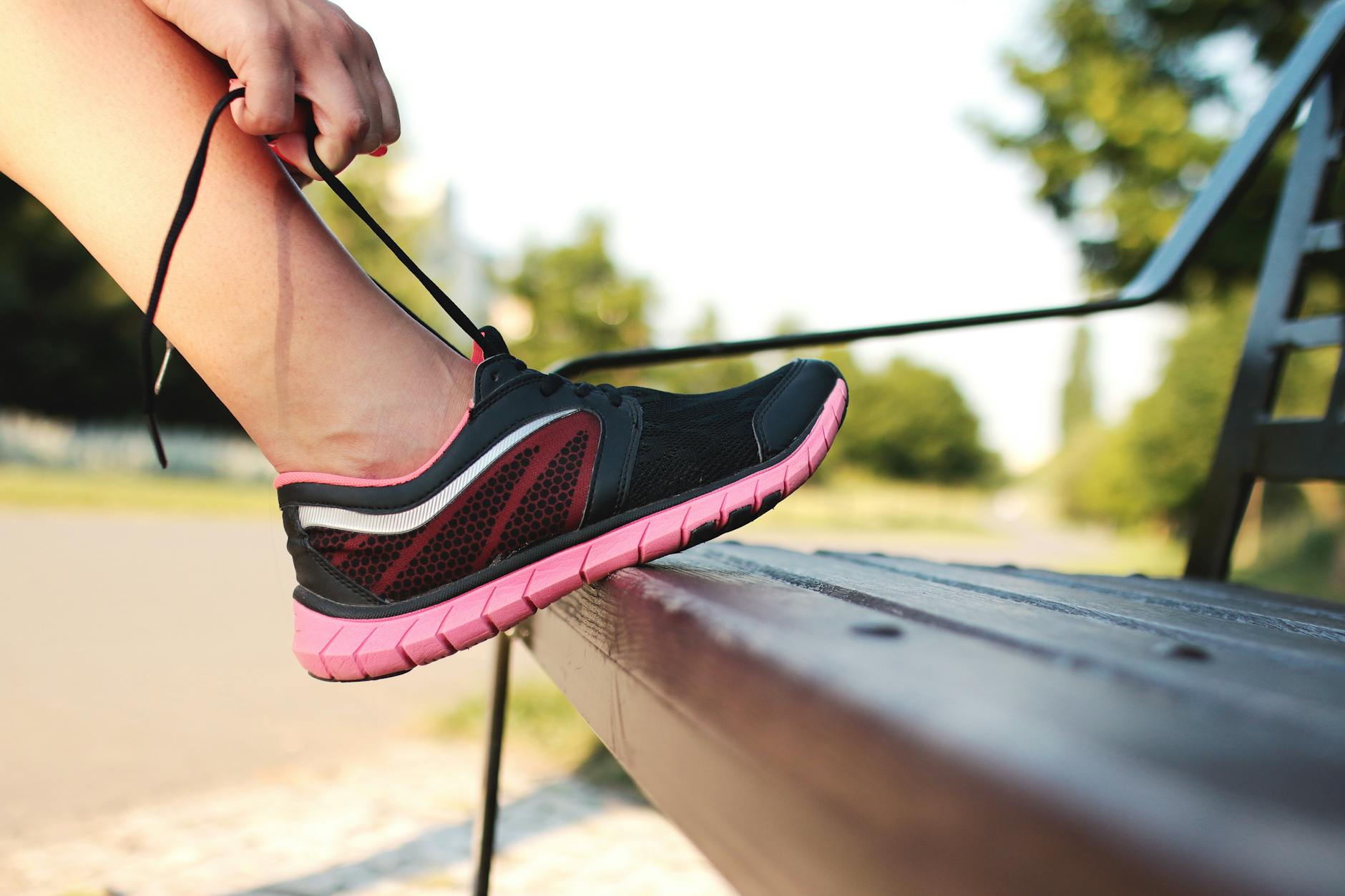
There are no easy answers or quick fix solutions, especially when difficulties are deep-rooted. I just keep reminding myself that it’s all about the next step. And the one after that. And the one after that. It does get easier. Miraculously – it feels to me – my steps feel a lot lighter, at the age I’m at now, than they did when I was young, all those years ago! Something must be working, somehow. Barriers can be overcome. It’s not easy, but it’s worth working at it, bit by bit.
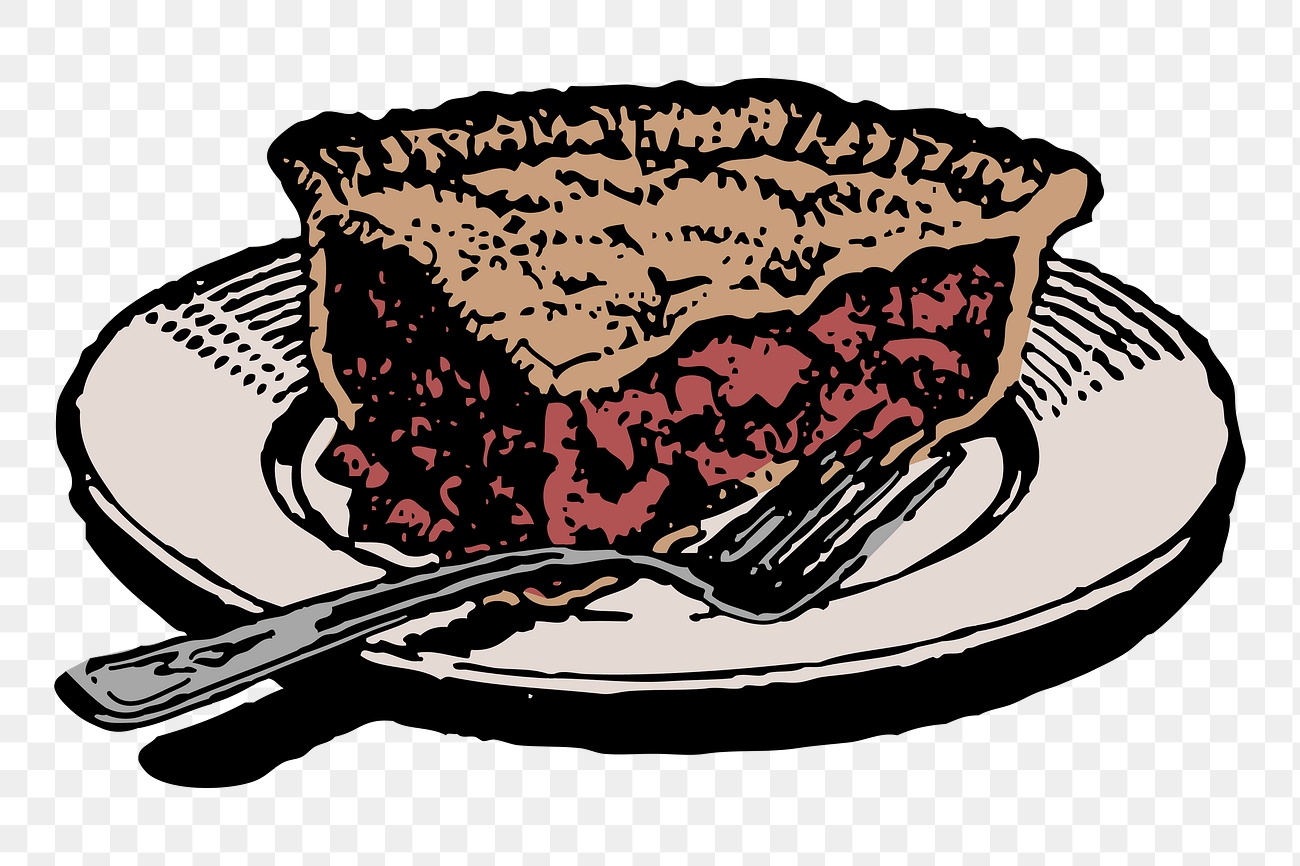
This poem was inspired by my partner’s love of pies generally and one in particular, The Famous Cow Pie at the George Hotel, Keswick in the Lake District, Cumbria, UK.
However, even though he helped me to write the poem, I’m only crediting him with eating the pie, unless he wants to eat his words. Ha!
One of the few things I remember from school is ‘The Order of Washing Up’:
Glasses first, clean and bright knives and forks come next plates follow on until they’re done the saucepans finally too I’ve washed up many times and yet the order still comes through
Washing up is not a chore it’s a time to stand and think of soap and suds and water and all things in my sink
I hope my pile of washing up is there for me each day I never dry, just let it drain and then I put it all away.
2020
Note today, 22 August 2025: I no longer love having a pile of washing up and am glad to have a dishwasher!
In one sense, this post should just be entitled ‘Being’, because age is irrelevant.
I interact with the world essentially as a being, and don’t need a label.
On the other hand, I do have history, and the ways that I have worked through that history impact on the way that I interact with the world – and other beings in it – on a daily basis.
It isn’t always easy to put the past behind us, especially when heavily loaded with emotions associated with trauma and grief.
Accepting things that I cannot change has been a hard life lesson to learn for me, helped by meditation, affirmations, and Buddhist teachings (including one in particular by Gen Togden of the Kadampa tradition).
Not having had children is a major regret. Raising this as an issue with a therapist recently, still needing to work it through, I was met with a profoundly uncompassionate response: “So you decided not to have them then, did you?”
At one level, she was right. I made choices – decisions – that led to me being in a state of extreme mental and emotional turmoil in my late 30s and 40s. Decisions that I made as a struggling, vulnerable young woman in my 20s were mine, and I was an adult. But should I really have had to pay such a high price in later life?
Shit does happen though, and doesn’t discriminate. Thankfully, I have had previous experiences with other counsellors/therapists who’ve approached my distress with humanity and empathy.
Even so, some things take a long time to work through. Some ‘stuff’ from the past has just come up that I thought I’d put behind me, or at least wanted to. It doesn’t always work like that though, and I’m sure my brain dredged it up now because I hadn’t properly dealt with it previously.
Now I’m in a much better place than I have ever been before, living with a kind, loving, supportive, funny partner. Being 65 is a starting point for me, and it’s never too late.
If I can send out a message to anyone who’s going through personal difficulties – whether recently experienced or long-term endured – it is to say: “Don’t give up.”
We don’t always know what we’re made of until our backs are to the wall, especially if we’ve oriented towards ‘flight’ rather than ‘fight’ in early years.
Fighting for survival is a primary motivator and there is always light at the end of the tunnel. Even if you can’t see it for yourself, let someone else – a friend – see it and hold it for you until you can.
I’m only 65, and I’ve got all my life ahead of me. So have you.
It may not be the most obvious thing to write about at this time of year, or even at any time of year.
However, it represents, for me, something of a New Year’s resolution, albeit one that I started with before this New Year; in fact before the last few New Years.
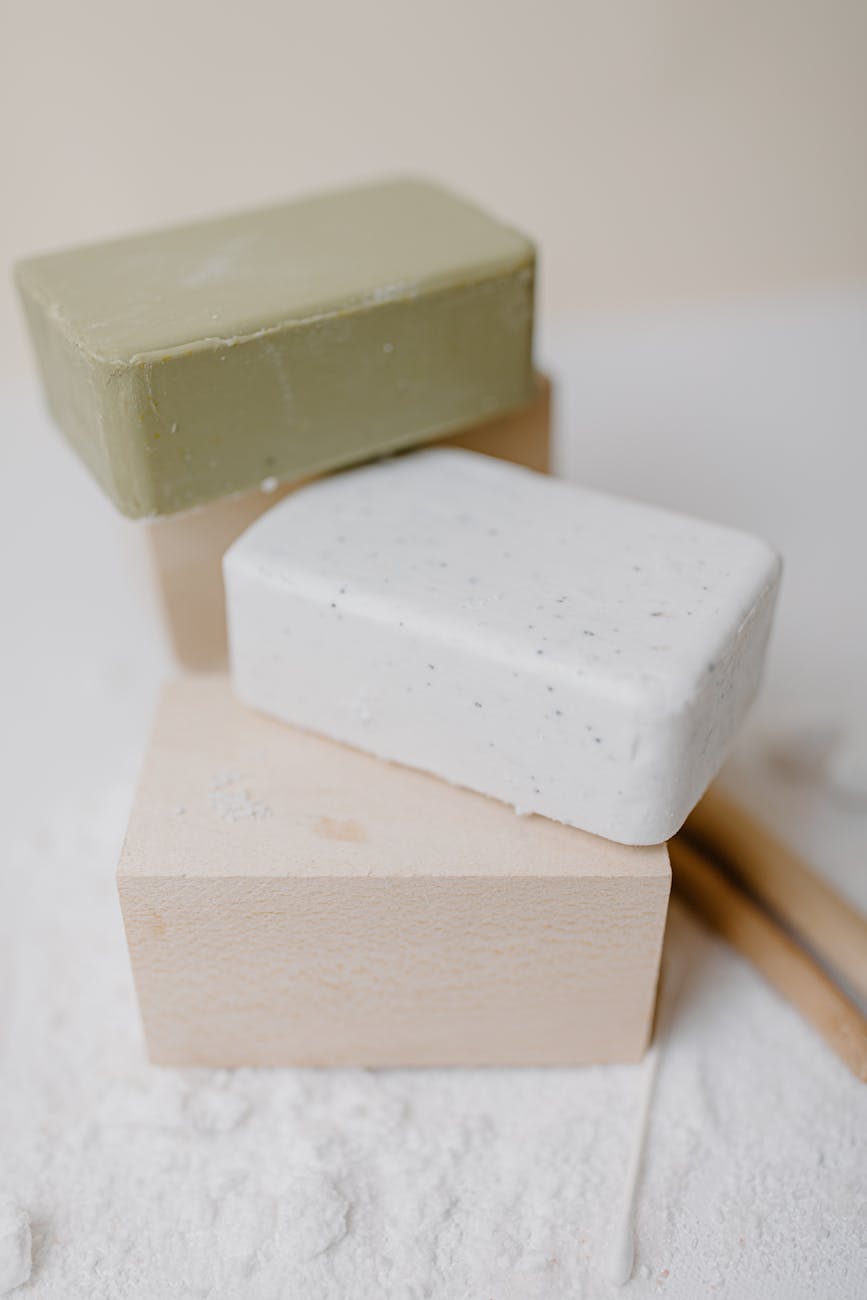
I started using soap instead of shower gel as a way of using less plastic. It’s a small contribution to a massive environmental problem, and I’m sure soap itself has negative impacts on the environment.
But I believe in small steps, building up to marathons and mountain climbs.
I make other buying decisions to reduce the impact of my waste on the world, such as buying unpackaged fruit and veg when I can, although I’m still horrified at the amount of ‘stuff’ that goes into our recycling bins.
This relates to an earlier post Poetry Rule No. 9b Keep recycling to a minimum until you’ve got your other priorities right. It may not seem obvious that it does – almost a contradiction in terms – but I will write further posts with further insights from this position. For now, though, I just want to keep this post simple, like the soap I use.
I’ve spent hours – days even – cross-stitching over the last few months.
A lot of other people must have been cross-stitching too, as all the company websites I’ve bought kits from have had special messages up to say how they are coping with unprecedented demand due to the Covid crisis.
Even so, orders have arrived promptly, and been a joy to work with …
… helping me to gain a sense of being at peace with myself and the world:
There’s something so soothing about the technique of counted cross-stitch, that puts my mind at ease.
I’ve mostly made cards – and some Christmas decorations – to send to people – friends – and it’s lovely to think about these friends as I stitch away.
I’m not great on phone calls or Facebook, but stitching has become my thing. I’m going to try knitting again though, for a while. Knitting’s good too. And macramé: knotting!




 Glad About
You must be logged in to post a comment.