I’ve had two unexpected and early Christmas presents this year. One came in a box and the other was unwrapped; both are brilliant.
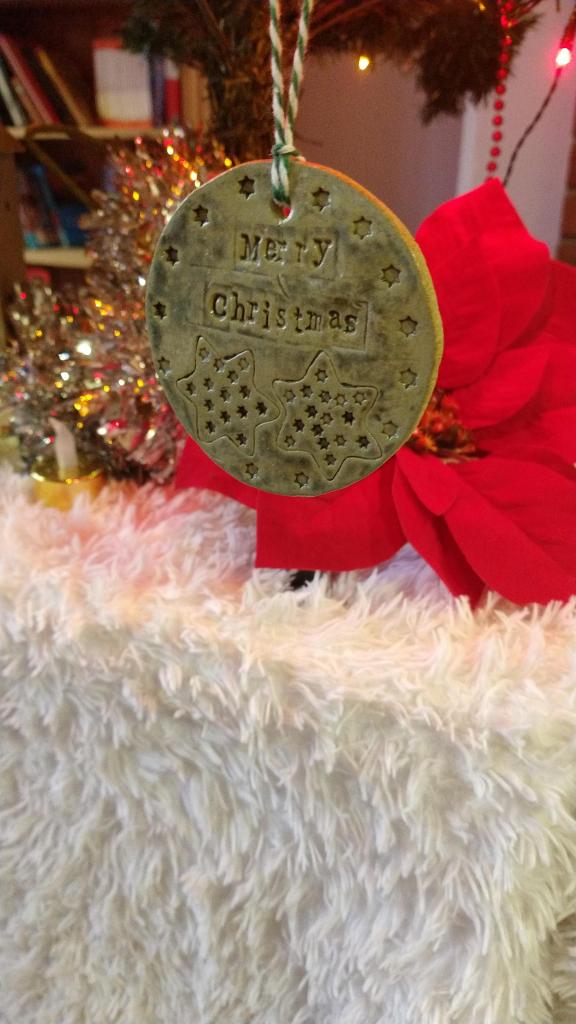
After a session at the ceramics studio which enables me to make and fire my own work – http://www.thepotterman.co.uk – I was putting my coat on to go home, and found a small cardboard box in my pocket. When I opened it up there was a handmade and personalised Christmas tree ornament, made by a fellow potter, Jenny. What a wonderful surprise; I felt I’d already had Christmas with that gift alone.
Then came another one…
After taking my partner’s daughter and three children home after a party at our house, I started taking one of the child seats out of the car. The four-year-old – who’d declared on the journey that he was tired – unbidden walked round towards me and took hold of one side of the car seat to help me carry it into the house. He didn’t say anything, he just spontaneously did it to help me. I was so moved by this; what a sweetheart – literally, a very sweet heart.
The other day I went through a box full of pieces that I’ve written in the past, and picked out seven items: poems, essays, ramblings. These are the titles:
Stirring abroad, without … within …
Bicycle pumps & bananas
Memories of a difficult day
Memories of a distinctly different day to the one I had yesterday
Surfing the Turf
Ms. Carriage
Written on the train to London some time in May
I also picked out a couple of pieces that I hadn’t written: one about learning and the other about ‘Being Human’.
I think the most important thing that I’ve learned about being human is to be able to accept that I get things wrong because I’m human, and for no other reason.
In any case, ‘right’ and ‘wrong’ in my experience aren’t always clearly defined, particularly since our lives are always unfolding, never fixed or final. We have expectations based on concepts of ‘normal’ but when we can drop those then all sorts of other possibilities arise.
There was a time when I thought that if I could do nothing else other than make sure that my cat – Bertie – had a good life, then that was enough. Who’s to say that it wasn’t?
I might publish ‘Bicycle pumps & bananas’ eventually but, for now, here’s …
Surfing the Turf
I’d like to roll myself In earth-warmed turf Like a bug in a rug Snug Safe from harm
The grass would tickle My nose and toes The worms would squirm Warm and Alive
I’d have to put an elastic band Around the roll of turf To stop it unfolding Unfurling Exposing Me
But if it did I’d need to find A sleeping bag To ease my mind
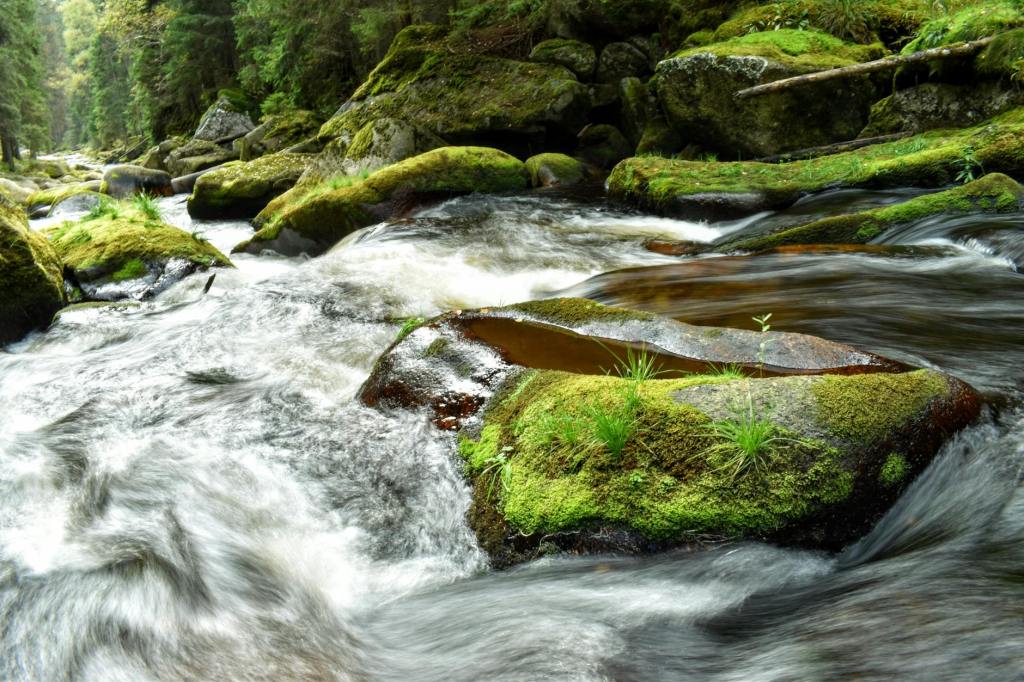
And then I would If I could Sit by the river Forever watching In awe and wonder At the world Flowing By
Breaking big rocks into smaller rocks: the hard-core approach to mental health recovery was the title of an article I wrote in 2013. It was published in a journal by the Royal College of Psychiatrists:
I was surprised, though, that there was no follow up from that. Nobody from the world of psychiatry or related fields sought to make further enquiry about the approach I was taking to rehabilitate myself back into a relatively healthy state of mind.
I think maybe it was because what I was doing seemed quite bizarre: undertaking hard physical labour involving a large sledgehammer and a lot of rocks. And yet the improvements I found in my mental well-being were significant and lasted for several weeks after I returned to my day job, based in an office.
While I don’t believe that all aspects of my complex mental health needs would have been resolved by continuing to do rigorous physical endeavour all day, every day, the experience certainly had a part to play in my overall recovery.
And the principle of breaking things down into smaller chunks is one that I work with every day.
Trev and I went to a ‘Yes’ concert recently. The music was sensational and he bought himself a very nice hoodie from the merch stand as a memento.
I said it was a shame they didn’t have tea towels in the merch range. Trev said it wouldn’t really be in keeping with the rock band image but I don’t know why.
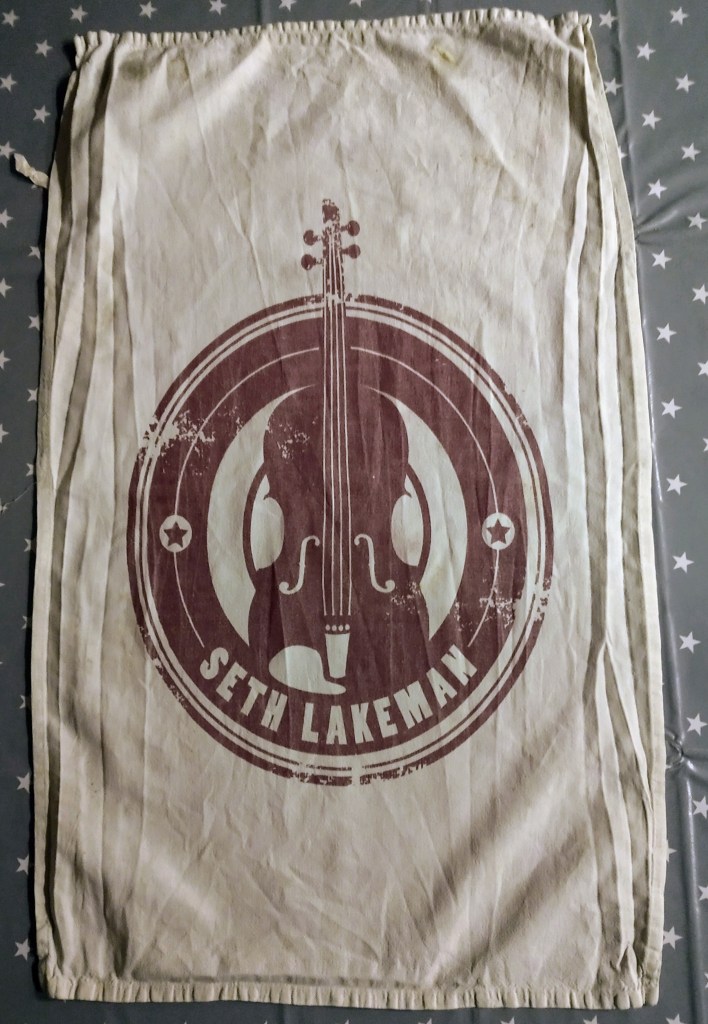
I’ve been to other music concerts where tea towels were part of the merch range, a favourite being Seth Lakeman. That tea towel is still going strong.
Whenever I use that tea towel it reminds me of my friend Rosemary, who I went to the concert with. She bought me the tea towel, and it has further sentimental value as she passed away a few years ago.
Ironically, I never dry dishes – only ever wash and drain – but I’ve got a really good collection of tea towels. I’d have bought a ‘Yes’ one though, if they’d had one, to add to my collection.
I’d prepared well for my trip to Iceland. But nothing had prepared me for the wild and fragile beauty of the place. And never have I felt more in tune with nature in all its manifestations as when I entered the Jökulsarglijufur National Park.
Giant rock formations thrust and thundered their way out of the earth; solid and fluid at the same time. They looked as if they could be there for time immemorial and yet gone tomorrow as the cycle of changes continues to turn. Iceland is a place of mixtures and contrasts; of separateness and unity.
Young beech saplings, richly green, provided a delicate backdrop to purple meadowsweet and long-stalked buttercups. Anemones grew among the rocks and on the open heath, alongside thrift and heather.
Wandering off alone one evening after dinner, I lost myself in order to be replenished with a new sense of awe and wonder for those tiny things that keep singing and smiling and dancing and shining, night after night in that place that beckons and welcomes and yet turns cold and hostile to test the spirit and firm the resolve: the midges; the birds, the flowers.
I walked, I climbed, I turned, I fell, I closed my eyes, I clung to a rock. I scrambled, I gasped and I grasped. I cried and breathed and yelled and pleaded. I sought forgiveness. I felt despair (but only for a moment).
The midges guided me and the birds showed me how to flap my wings to keep warm. I thanked them and rejoiced and sang and danced and whistled and cried. After many twists and turns and loops and leaps, after crossing snow and stream, diving under branches, scrambling up hard rocks and across soft moss, the path became straight and broad and familiar.
Heading finally for sleeping bag and tent, I peeled off my cold, damp clothes and piled on layer after layer, breathing warmth back into my bruised body for as long as I needed to.
I had survived but I had changed. Iceland survives but is changing. The change is being managed intuitively and generously, respectful of the needs of the wild and of those who need to escape to the wild to find a fleeting sense of freedom as a reminder of what we are, have been and always can be.
Goodbye midges. And thank you.
Au revoir Iceland. Bon voyage!
I wrote the above in 1995. Not long after that I spent two weeks as a voluntary inpatient in a psychiatric hospital, where my experience was described by a psychiatrist as a ‘psychotic episode’.
I’ve largely had to fight and find my own way through from that point to this, and never knew what to do with the piece that I wrote. In one sense it’s a piece of ‘travel writing’ and, as I feel more settled now in my head and my heart than I’ve ever been, I thought I might as well publish it on this blog.
My relationship with food has historically been a difficult one.
As a teenager I went on a strict diet – mostly made up of cottage cheese, crispbread, lean meat and fruit – to keep me at 7/71/2 stone. That was the only way I could feel reasonably good about myself and my body.
Even so, I didn’t think anybody could possibly find me attractive, and I struggled with a very limited life.
If I ever did ‘let go’ and start to eat anything even remotely fattening, my mood plummeted as my weight gained. The only way I could cope was to start restricting my eating again. I had no concept that help or support of any kind might be available; it was a very private and lonely struggle that went on until my mid-40s. After an almost catastrophic catalogue of failed relationships and career stalemate I realised that I had to push through the internal barriers, and keep going until I came out the other side.
20 years on, at 66, I believe I have finally arrived at that point.
I weigh five stone more than I did in my teens, and though I am aiming to steadily lose some weight this won’t be my starving myself – not just of food, but of life.
There are many factors and influences that have helped me to get through, not least in recent years that of my partner, Trev, who makes me feel beautiful just as I am, inside and out. That’s a great gift to get at any age!
I’ve taken on board Buddhist teachings of all kinds, with one fundamental phrase being an enduring fallback: “The mind is a muscle and it can be changed.”
I’ve had to fight and work hard to train and change my brain and was fortunate to find the fight associated with a strong survival instinct when I needed it.
That isn’t to say that I haven’t had moments of self-loathing that threatened to be overwhelming. But I kept looking for and finding ways to be positive, including reaching out to others who were also struggling in the extreme.
I still won’t try clothes on in a shop changing room, and feel no need to put myself through that ordeal. So, while this may be evidence of ‘avoidance’ lingering in my psyche, it’s a minor issue as far as I’m concerned, and doesn’t get in the way of me living my life in a full way, including enjoying delicious food.
When I went through a major breakdown in my late thirties, one of the many things I struggled to come to terms with, as I fought my way back to functionality, was the sense of all the ‘wasted time’ that had gone into building a life that at that stage had come to ‘nothing’.
Roll on more than a quarter of a century, and I’ve had a significant shift in mindset. As each day unfolds, I feel a strong sense of being gifted with it; of having all the time in the world. ‘Making the most of it’ can mean anything I want it to mean, whether that be resting, walking, making something out of clay, washing up, doing housework, doing nothing.
So, how did I get from where I was to where I am now?
I’m not sure, because it’s all a bit of a blur, but I know I’ve done a lot of meditating, a lot of searching, a lot of turning myself inside out, of fighting the thoughts that threatened to pull me into despair, a lot of reaching out, falling, getting up again and trying something else.
Sometimes the last push is the hardest and coming to terms with things that I couldn’t change took some doing. At around the same time that I had a counsellor who was determined to avoid the key issues that I needed to address, I came across a Buddhist teaching that helped me enormously: https://madhyamaka.org/how-to-accept-what-cant-be-changed/.
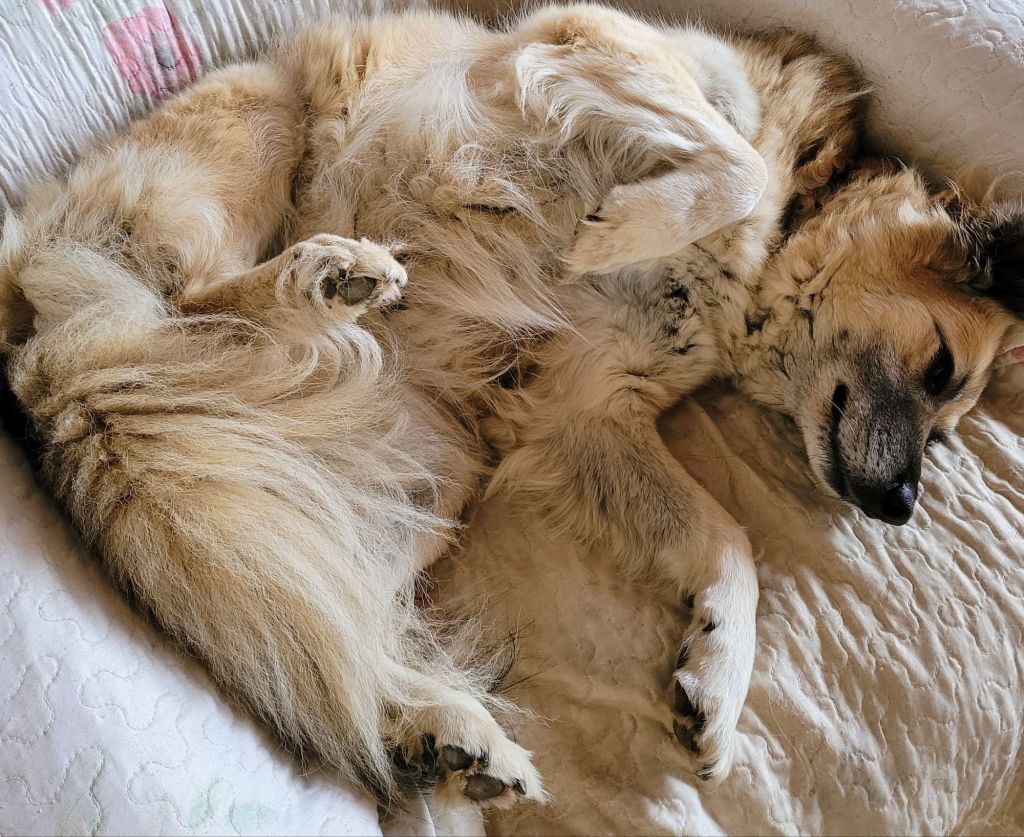
The lingering sadness associated with not having been able to form a family of my own has taken a different turn recently, in the form of a furry friend. She’s not a baby; she’s an adult dog. However, she’s done something to my heart that’s filled a gap I never thought could be filled. Time isn’t about what’s past or ‘lost’, it’s about being here and now, with my partner, and our dog.
I was at the funeral of a friend yesterday. He’d died unexpectedly at the age of 67.
As it turned out, the day of the funeral was the day of my 66th birthday.
A funeral isn’t the usual expected place to be on a birthday, nor is it where you would expect to receive an unexpected birthday present. But that is exactly what happened to me yesterday, at my friend Bill’s funeral. It was a gift given to me by Bill’s grieving wife, Deb, in words that she spoke in celebration of her husband’s life.
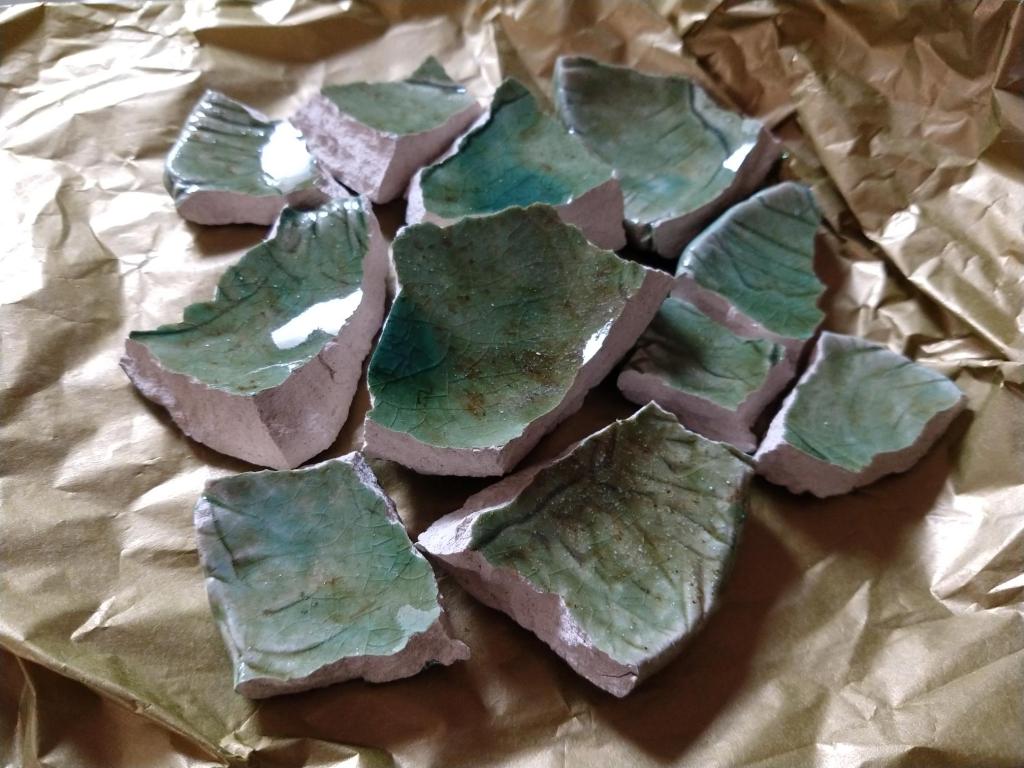
Deb spoke about the ancient Japanese art and philosophy of Kintsugi. Kintsugi is about celebrating imperfection; not trying to hide what is broken but recognising the place of mending as a thing of beauty in its own right, and highlighting the mend with gold. She referred to her husband as ‘pure gold’. He was. As was her gift to me in what she said, using words and with passion that I cannot even begin to emulate, nor do I think that I should even try. They were words that could only be spoken by a wife, grieving the loss of the love of her life.
I do, however, want to acknowledge those words in this post, feeling broken as I continue to feel inside as I continue to hope and try to heal. I realise now that I don’t have to aim to heal back to how I was before I was broken; that the broken parts and the process of healing – that includes reaching out to others who are also struggling – are the pure gold of life. So, I’ll continue to live it in the best way that I can, cracks and all.
As it turns out, I’ve been making some pots recently that are basically balls of solid clay that may well fall apart in the kiln. I now hope that they do – so that I can mend them in the Kintsugi way. Amazingly enough, I also got another birthday present yesterday – from another friend. It was a Kintsugi kit! How weird and wonderful is that?
At the turn of the Millennium, I completed a project under the Mind-Millennium Award Scheme.
My project – the Lifelines Project – involved collecting and publishing poems, pictures and self-help strategies from other people who, like me, had suffered from enduring and debilitating depression.
I had not met many of the contributors, and was amazed – honoured – that they trusted me with their personal expressions, all because of the underlying intention of reaching out in the hope of helping others.
If you, yourself, are suffering with depression, I would like to wish you well and tell you that you are not alone.”
Since then, there’s been increased awareness about mental health and how it can be improved. While there remains much to be done in society from the ‘prevent’ and ‘promote’ perspectives, being able to – and even encouraged – to talk about mental health difficulties more openly represents a start.
In my own experience, I eventually got fed up of talking – I’ve never been much good at it anyway. I knew that I needed to take action, to find ways of turning my life around, however difficult or painful that might be. And I knew it would be difficult and painful, to rebuild from a below zero level when I was in my forties.
From somewhere, somehow, I found the resolve to put my head down, prioritise, and push myself through. For a long time, I concentrated on work and on developing my internal resilience. Just before I turned 60, I decided to take the plunge and commit to a relationship. I now have a much fuller and richer life than I have ever had before and I’m thankful for that.
Even so, life continues to be difficult and I still take antidepressants – probably always will. But I have other coping skills and strategies, and have also been able to recently retire, taking away work pressures that I could no longer deal with.
I wasn’t able to keep in touch with all the people who contributed to the Lifelines Project but they’ve always remained in my thoughts and I hope that they too have been able to find a way through; a way that works for each of them:



 Glad About
You must be logged in to post a comment.