Day 9 – trusting

Writing into Life

Photo by Pixabay on Pexels.com

A few months ago I had high levels of anxiety which manifested in various ways.

I became highly stressed about my car, as I was having problems with the gears and I started to catastrophise about ‘worst case scenarios’, knowing the extent to which I need my car for daily walks with Lydia.

I pushed through on positives as best I could at the time, the worst-case scenario didn’t present itself and my car has been fine for a few months.

Recently, I’ve started having problems with the gears again.

In the intervening months I’ve taken a lot of time to rest and continue to practice meditation, yoga and Qigong.

I write my blog, in 28-day cycles. The process of writing is proving to be very therapeutic. I’ve written intermittently and irregularly for years but not in the same way as I do now.

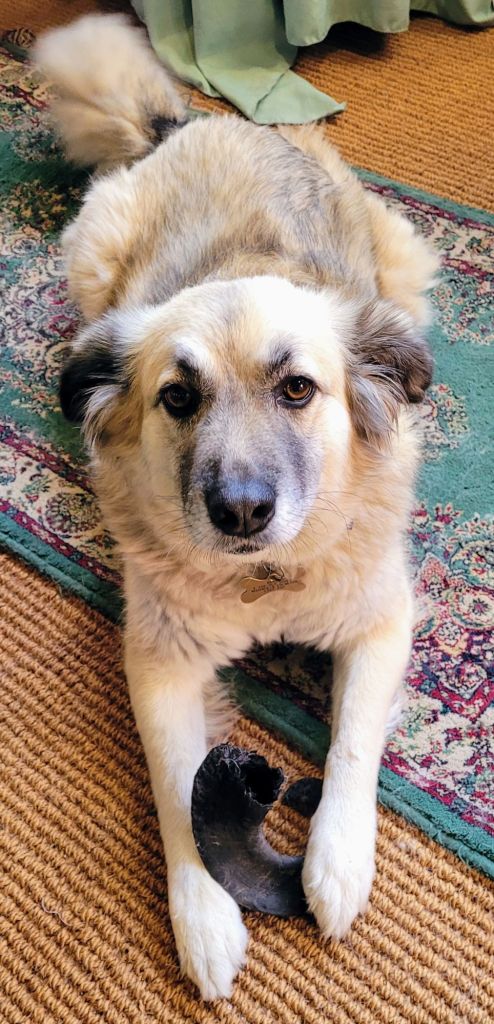
My daily walks with Lydia have also been therapeutic, giving us both a good start to the day with regular exercise, fresh air and that all important connection with the natural world.  In Lydia’s case a lot of her connection is through her nose; for me it is more a sense of the air around me and the ground under my feet; the slow steady movement of walking.

This time I haven’t experienced high levels of anxiety about my car problems.  It’s been a minor inconvenience which Trev has helped me with by picking me up from the garage when I dropped it off this morning. It should be ready later this morning and may need a new clutch in the longer term. 

Anxiety, I’m sure, arises from past experiences when we’ve needed to address a problem, and haven’t been able – for whatever reason – to find and implement a solution; where everything fell apart and we had no help in finding ways to put things back together. We’ve learnt to ‘not cope’ and to retreat instead of establishing ways of knowing what to do and how.

When I was younger, I had none of the personal resources and resilience that I have now. I wasn’t taught any coping strategies as any assertion on my part would have upset the status quo, however uneasy that status quo was (and it most certainly was uneasy, at best).

However, through experience and reflection I’ve done my best to learn and change, to take responsibility for the things that make up day-to-day life and to see and do things differently.

I still rely on a small dose of anti-depressant medication every day, but the main processes I use are the ones that are active not passive.  Moving from passive to active has been the major achievement of my life.  The mental effort it has taken has been enormous and sustained, which is why, at the moment, I need to rest a lot as well.  Re-focusing and re-prioritising takes time and I need to continue to trust in the process, however frightening the prospect of uncertainty may seem. I’ve come a long way, just in the last few months. I’m not going back now.


Day 8 – caring

Writing into Life

Photo by Pixabay on Pexels.com

I wake early, around 6am, relieved to know that there is no pressure for me to get up and out of bed for a few hours yet.

I set myself a target of 9.30 but rise before then, go downstairs and make a cup of tea.  The important thing comes first though – giving Lydia a tummy and chest rub.  Then I open the back door and do a few repeats of ‘Healing Form’ as Lydia welcomes the day in her own way.  Sue, the Qigong teacher, reminded us of some of the details of the Healing Form movement in the class last night so I was able to reintroduce these to my practice.

It’s a quiet walk for Lydia and me this morning, with no passing cars, joggers, cyclists or dogs; just a tractor going to and fro’ across a field in the distance. 

Back home and she has her breakfast from her breakfast ball as usual; she is an expert now at nudging it around with her nose so that the dried food pellets fall out; it’s a lot better for her than passively eating from a bowl.

I have a restful morning, doing nothing much more than loading and setting off the dishwasher, and putting away some clean laundry.  I’m sure if I looked around the house I could – and would – find dust and cobwebs in various corners, but on the whole I’m up to date with what needs doing inside.

As it’s Tuesday I visit my friend who used to live in the village but now lives in a care home, a few miles away.  Her personal carer, J is there too, and we have a lovely chat together outside in the sunshine while J does M’s nails, commenting on the wonderful weather we’ve had this summer and how we wish we could have weather like this every summer.

After J leaves, I read M a short story from a magazine I’ve brought with me. She lies on the bed and snoozes as I read.  At 85, it’s good to see her relaxed and looking so much brighter than she did a few weeks ago.  It’s amazing what a change of environment can do.

Arriving home, I have a supply of dental sticks that I ordered for Lydia, and proof copies of my latest books in paperback form waiting for me.  I give Lydia a dental stick for a treat straight away and flick through the proofs.  I’ll need to look at them in more detail before I approve them for publication, but am pleased on first sight.

Self-management rule no. 20 is a good one: enjoy the process. I have found in my life that it is enormously difficult to do this, but am working on it, and – I believe – getting better at it by the day, bit by bit, step by step.

Day 6 – commitment

Writing into Life

Photo by Eva Bronzini on Pexels.com

It was an early start for Lydia and me this morning.

I’d set the alarm for 6.15 but was awake and got up before then.

After a quick cup of tea I took Lydia out for a walk.

She is very amenable and adaptable to changes in routine. We normally have a slow start to the day and I take her out mid- to late morning.  However, she took it in her stride – literally – as we walked together for about an hour before heading back for breakfast.

Leaving Lydia at home with Trev, I set off to go to a half-day course at the Buddhist Centre, about a 50-minute drive away.

It’s an easy drive and I arrived in good time for the start of the session: Finding the Hero Within.

I was relieved to find that it didn’t mean I had to be able to quickly don a cape and a vest with a big ‘S’ on it and whizz about in the sky. 

The ‘hero’ or ‘heroine’ was defined as anyone who made the decision to train their mind to identify, reduce and eventually eliminate delusional thoughts. Delusional thoughts are those such as ignorance, desirous attachment and anger. These delusional thoughts lead us to believe that our happiness is dependant on external factors or other people rather than ourselves.

For me, an important aspect of the teaching this morning was the emphasis on meditation as the primary means for training the mind, and the acknowledgement that it was all about building things up, bit by bit. Making the commitment, and taking small steps towards achieving it, are the key, with the ultimate aim of building our capacity to be of benefit to others.

This brings me to self-management rule no. 26: Your brief case is an important tool. Use it well. Use it wisely. I’ve struggled with using my brief case – my life – well and wisely, largely because of the mental health complications that I developed as a child and young adult. 

I’ve had to do a lot of unravelling, and that in itself has been debilitating and exhausting. Having said that, perhaps what I’ve done is the best that I could do in the circumstances that I was presented with, and now I can start to do things differently, in the circumstances I’m now in?

There is really only one answer to my question, so I’ll continue to meditate, read the dharma (teaching) books, go to classes and retreats and find whatever way that I can to be the best person I can be, for the benefit of others.

I have to confess I find it daunting – terrifying – but bit by bit, step by step, is the way.

Day 4 – growing

Writing into Life

There was a tree overlooking the back garden of the house that I used to live in, before this house.

I felt a strong connection with that tree, as its branches extended over the fence into my garden, from the wood where it lived.

Thinking about this tree leads me into thinking about another one of my rules for self-management: establish a  good relationship with a stationary (or stationery) supplier.

The tree provided me with a sense of protection, somehow. I know this is really just an invention of my imagination – or at least I think it is – but I liked to think that the tree was looking out for me, as we shared the seasons from one year to the next.

There was a time when I thought I would never leave that house and garden, but I did.

The tree remained but I brought it with me in the form of a poem that I wrote while I was still there. I wrote it from the perspective of the tree.

I, The Tree

It is afternoon
soon to be evening
as I wait for her to return
from the business of her day

I always wait for her
and hope she never goes away

I am reaching, always reaching
into the garden she has tended
for many lonely years

I know that she knows I look out for her
and would love to wipe away her tears

But the fingers of my hands are too hard
bent and curled

The best I can do is to soften her sorrow
with the surprise of spring
and after the cold white of winter
the promise of a green and bright tomorrow

Summer comes
a time I love to share
with her
and the garden

She – stooped –
digging and weeding
me with arms outstretched
in full and joyous glory once again
her in her own way
also feeding

Together we grow
each through our seasons

Every year I provide a carpet for her feet
she thanks me from her heart
I feel
and looks out for me
the Tree
hoping I will never go away

I know
with all the branches of my being
I never will


This morning, in the dog park, while Lydia was enjoying her time off-lead – sniffing and running and chasing – I stood under another tree and did some repetitions of the Qigong ‘Healing Form’ movement. I am continuing to grow, as is the tree.


Washing Up

First published 12 January 2021

Photo by Castorly Stock on Pexels.com

One of the few things I remember from school is ‘The Order of Washing Up’:

Glasses first, clean and bright
knives and forks come next
plates follow on until they’re done
the saucepans finally too
I’ve washed up many times and yet
the order still comes through

Washing up is not a chore
it’s a time to stand and think
of soap and suds and water
and all things in my sink

I hope my pile of washing up
is there for me each day
I never dry, just let it drain
and then I put it all away.

2020

Note today, 22 August 2025: I no longer love having a pile of washing up and am glad to have a dishwasher!

Day 24

Continuing the story of Lydia and Me

Lydia has been less inclined to tug on her lead so far this week, in whatever walking places we’ve been to.

It’s a slow process, unlearning ingrained responses to situations and re-learning new approaches.

I know that myself because that’s what I’ve been doing myself, for a very long time: learning to change negative thought patterns and actions to positive ones.

For Lydia, I’ve taken guidance from a behaviourist and from on-line learning, applying and repeating what I believe are sound principles and recognising that there are no quick-fix solutions.

For myself, I’ve learnt what I could from experience and taken guidance from sources that I believe are sound, including Buddhist teachings and meditation practices.  Again, there are no quick-fix solutions.

It’s hard to find a balance sometimes, between accepting things as they are, and not giving up.

I have by no means given up on anything although, at the moment, I do feel tired, mentally and emotionally.

There is no Buddhist group meeting this week – due to a summer break.

I’ve twice sat down to meditate on my own today, once this morning and again this afternoon. I much prefer to meditate in a group, but the main thing is that I am doing my best to do it on my own, and when I feel tired. 

My ‘old’ way would have been to do nothing because I didn’t know what to do.  I do now.

Day 23

Continuing the story of Lydia and Me

The usual Tuesday visit to my friend in the village was different today.

She is currently in a care home, arranged by her Personal Carer, J.

J. has power of attorney; M. has no nearby relatives. J. has been looking out for M. and looking after her for years. It would be difficult, I think, to find a more caring, kind and considerate friend than J.

Even so, it’s a big change for M.

Returning to my own home, I have a parcel waiting for me, containing some dental chews and chewing horns for Lydia. I give her one of the horns straight away and it’s keeping her happily occupied. Lydia’s happy, in her home, which was new and strange to her at one point. It was a big change for her coming here.

I hope M’s new home will be a good one for her.

Cycles of Recovery

First published 18 April 2020

Grey Island

Grey island
you spin and swirl around me
(or is it the sea?)
as I sit and wait
for my thick-headed brain
to clear
which it does
almost, but elusively
and all too briefly
teasingly
still tense
tension immense

Four seagulls soar
one sits
probably shits
(or is that on the wing?)

Thrift, rock, heather
purple, black, yellow, mauve
green, grey, white
weather wild
mild
quite

Walking, talking, inwardly
I sit (still) and wait
for my thick-headed brain to clear
and allow me to feel
the joy of the sea
and the splendour of the trees
and everything around me

So, I sit (on a rock) and wait
for my thick-headed brain to clear
and know that someday soon
it will be free
hopefully

1998

A quarter of a century after I started my self-directed journey of recovery from a complete personal breakdown, it would be easy to think at this stage that I never will get that sense of mental clarity that I have been seeking.

I hoped by now that I could have been sailing instead of struggling to find the energy to get through each day in a remotely positive way.

There are significant differences though, between then – when I started out – and now – when I’ve arrived at a particularly low-down point, wondering how on earth I’m going to summon up the motivation and momentum to start going ‘up’ or ‘forward’ again.

The most significant difference for me is that now I’m in a loving relationship.  My partner and I care for and about each other in ways that make us both feel good.  He suffers from depression too, so we often alternate in terms of who most needs support from the other at any one time. We’ve both had almost catastrophic life experiences to contend with in the past, both just come through by the skin of our teeth, both had to learn to trust again – often the most difficult thing of all, including trusting ourselves as well as each other. And we’re both now thankful that we’ve found each other. ‘Together Forever’ is our motto. We want to make the most of the time that we have – both now in our 60s – and that, in itself, is a motivator. At the same time, I’m still feeling profoundly exhausted and know that I need to do some more work on myself to pull out of this and finally put the traumas of the past behind me.

I know that it’s important to sometimes push myself and at other times do nothing. Doing nothing is hard as it brings with it the fear that it will become a permanent state and that I will vegetate from doing nothing to being nothing. At my age, fear of dementia also comes in to the mix. But in the depths of depression, doing anything at all feels like just too much, so where do I start?

I keep coming back to affirmations.  Affirmations, some gentle regular exercise, healthy eating, not too much alcohol.  All sensible things.

The affirmations I’ve identified for myself at this time are for depression and hearing problems.  While I don’t really have hearing problems as such – other than age-related deterioration – I do have problems with ‘itchy ears’ and I have also had problems in the past with being heard. 

I set about learning and practising active listening skills when I trained as a volunteer bereavement counsellor – it must have been about 20 years ago now.  I’ve found those skills invaluable in different jobs and roles that I’ve held, although more latterly I’ve found it increasingly hard to concentrate.  Active listening, by definition, means giving another person full attention. I think my body and brain have been telling me to give myself full attention for a change; had I ‘listened’ to what they were telling me earlier, I might not have arrived at the state I’m at now, although by the nature of cycles, they do have to go full turn.

Anyway, the affirmations that I’ve found, to say to myself when I can and when I need to, are:

“I move beyond other people’s fear and limitations. I create my own life.”

“I hear with love.”

When I say each of these, at the very low ebb that I’m at now, I get a sense of uplift in my spirit, even if my body and brain are running well behind.  I hold on to the belief that they will catch up though. Eventually.

Oh, and of course writing – something, anything – can be therapeutic as well. I’m going to keep writing, and affirming. And washing up, and doing a bit of gardening …

Poetry Rule No. 45 Don’t underestimate the therapeutic quality of vices – or verses

Turning the Tables

Lobster meat is sweet, I believe
I tasted it once, a long time ago
but I really don’t know
if the clacking, snapping, pincer-sharp
bite of the lobster-look-alike girl’s mind
belies anything even remotely kind

As I sit watching her eat that lobster meat
sucking her fingers with self-satisfied glee
pouting and spouting out the debris
of her clacking, snapping pincer-sharp mind
and smile inwardly at the resemblance I see
a wonderful, horrible thought comes to me

Wouldn’t it be great if a giant lobster loomed
and ate her up after popping her into
a boiling pot, while she was still alive?

This is the sea-bed of salvation
upon which I feed and thrive
turning the tables through poetry
on the clacking, snapping
pincer-sharp lobster-look-alike girl’s mind
and her kind

(c) Maggie Baker 2014 & Glad the Poet 2020