First published 9th June 2021
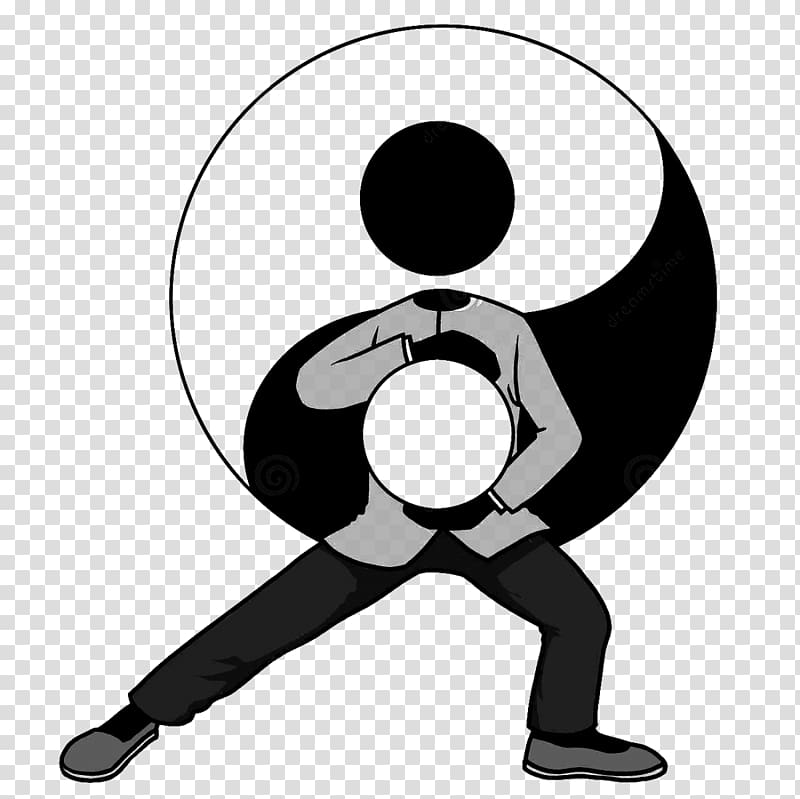
I first encountered Qigong when I was exploring anything and everything that I could find that I thought might help to restore my mental health from a point of crisis to some semblance of stability. That was over 25 years ago, and I had a long and arduous journey ahead of me. Along the way I took part occasionally in Qigong classes and workshops. It wasn’t until some years later, however, when I was struggling to push through the challenges of a demanding job – in itself part of my recovery process – that I considered a more regular commitment to the practise of Qigong.
Google searches came up with limited references to Qigong being offered locally. Luckily, one of these few was an evening class at a school just a few miles from where I was living, in Leeds.
An online Medical Dictionary notes:
Qigong (pronounced “chee-gung,” also spelled chi kung) is translated from the Chinese to mean “energy cultivation” or “working with the life energy.” Qigong is an ancient Chinese system of postures, exercises, breathing techniques, and meditations. Its techniques are designed to improve and enhance the body’s qi. According to traditional Chinese philosophy, qi is the fundamental life energy responsible for health and vitality.
The Dictionary goes on to state:
Qigong may be used as a daily routine to increase overall health and well-being, as well as for disease prevention and longevity. It can be used to increase energy and reduce stress. In China, qigong is used in conjunction with other medical therapies for many chronic conditions, including asthma, allergies, AIDS, cancer, headaches, hypertension, depression, mental illness, strokes, heart disease, and obesity.
Qigong is presently being used in Hong Kong to relieve depression and improve the overall psychological and social well-being of elderly people with chronic physical illnesses.
[Source: https://medical-dictionary.thefreedictionary.com/qigong]
While I can’t claim that I commit to a daily practice – not yet anyway – I have been attending these evening classes – and some day workshops at weekends too – with the same teacher ever since.
When the Covid lockdowns first started, Sue Dunham – the teacher – was quick off the mark with setting up Zoom classes. Just as in the live classes, Sue’s commitment to her own practice and to sharing her knowledge and vast experience has shone through into these Zoom sessions.
Sue doesn’t just demonstrate what to do for us to follow. She talks through and builds up each movement step by step, repeating as necessary; infinitely thorough and always engaging. Her approach is very meditative and mindful, working deep on different themes in each group of three classes. During the height of the pandemic, focusing on the lungs could not have been more appropriate, and we’ve also recently worked on the spine and the digestive system.
Though the movements are slow and steady, I find that I sleep really well after a class session, and wake in the morning with the sense that I’ve had a really good workout, even though it isn’t ‘exercise’ in the conventional sense.
According to Sue:
“Qigong is an extraordinary practice: it can bring you to question fundamental beliefs about mind and your life, bringing you to that in a supported, gentle way. I have found it to be accessible and yet challenging, it’s enigmatic but intriguing!”
One of my favourite Qigong movements is called ‘Healing Form’, and Qigong has certainly become an essential part of my own movement towards health and healing.
When I started to become aware of my body, as a teenager, it was on the basis of how it looked. The negative compulsive obsessions I developed were – I realise now – associated with complex psychological and emotional traumas that have taken me 50 years to unravel.
Fortunately for me, my body was and is healthy and, while I continued well into adulthood to control my life by controlling what I ate, my body served me well. Deep roots hold tight, though, and it was a long time – being ultimately faced with the choice of life or no life – before I was able to find the strength, coping mechanisms, and resolve, to push through and come out the other side.
Qigong has helped me to work at a deeper level with my body – my amazing body.
It hasn’t provided me with a miracle ‘cure’ but it has helped to shift my focus into health and wellbeing, which is where it should be.
I feel a lot ‘lighter’ these days, even though I’m 65 and probably weigh at least 4 stone more than I did when I was 15. At six-and-a-half stone and still feeling the need to lose weight, I was weighed down and locked in as a teenager.
Some of the grief, sadness and regret linger on, but less so day by day. I’m thankful for a lot of things and hope that I can continue to be so for many years to come. Qigong helps me to nurture my body, with all its intricate mechanisms for feeding and flow.
One of the wonderful things about this practice is that it takes me beyond what I ‘know’, what I can measure or evaluate, into that sense of wonder, about what I don’t know, with all the associated mysteries of those realms.
When I’m practising Qigong, under Sue’s infinitely patient and painstaking instruction, I feel as graceful as a dancer, and that – for me – is something of a miracle.
The Covid pandemic has shown us just how vulnerable any of us can be, at any age, but also how those vulnerability factors can increase as we get older. The more we can do ourselves to mitigate those factors, the more likely we are to be able to lead fulfilling, meaningful lives for longer. That’s my plan, anyway, and I’m sticking to it!
If you want to know more about Qigong, you can visit Sue’s website and Facebook pages via the following links: https://www.facebook.com/suedunhamqigong and this https://sites.google.com/view/qigongwithsue/home.
Additional references:
 Glad About
You must be logged in to post a comment.