With no Qigong this afternoon, it’s the woodland walk for Lydia and me this morning, then yoga. Lydia often partakes in this remotely, being particularly good at ‘downward facing dog’!
The yoga teacher introduced a new exercise aid to the class: conkers. They formed a focus for our meditation and visualisation and I must say I enjoyed the experience of familiarisation with the seed of the chestnut tree. It was somehow comforting and inspiring at the same time.
As I now complete this latest 28-day cycle of writing, I reflect on how far I’ve come, not just since I started writing this blog in 28-day cycles a few months ago, but since I started my overall journey of recovery over fifty years ago, when I was still very young.
I didn’t know it at the time, but it essentially started in my teens, when I decided that I needed more than physical food in my life.
That may sound ungrateful as I know there are many people in the world who have less food than they need to survive. But my needs for nourishment were psychological, emotional and spiritual. They were very real for me and presented in the forms of social anxiety, depression, body dysmorphia and an eating disorder. That’s a lot for any teen to have to deal with and I hope that in writing about my experiences, it may help others to not have to go through the same.
It’s taken me a long time to work out what I needed to work out, to find pieces that I didn’t have reference points for. How could I know what I’d lost when I had no memory of having it in the first place?
For whatever reason – probably survival – my emotional brain closed down, and it’s taken me a lifetime to find ways of opening it up again. I’m still working on it, with Lydia’s help and a lot of help and support from a lot of other people along the way.
The most significant latest step for me is on the path presented by the Buddhist faith. It helps me to make sense of a lot of things, accept what I can’t change, and do my best to make the most of each day as it comes, recognising the value of what I have when for so long I was focused on what I didn’t have. Grief doesn’t go away, but we can grow to encompass a wider experience of life around it. That’s what I’ve been doing my best to do.
As I now take a couple of weeks break from writing a new daily blog, I’ll continue with republishing previous posts, looking back a bit before again moving on.
The paperback versions of my two latest books – ‘Rules, Rhymes, Recovery, Recipe, Random: Glad About Life’ and ‘A Woman, a Dog and a Blog: Writing into Life’ will shortly be available on Amazon, along with the Kindle and Kindle Unlimited editions:
‘Rules, Rhymes, Recovery, Random: Glad About Life’ brings together over 60 blog posts, from March 2020 through to September 2024.
It offers personal insights into the mental health recovery journey, recognising that there are no easy answers or quick fix solutions to complex problems but demonstrating that growth is possible through whatever difficulties life presents.
‘A Woman, a Dog & a Blog: Writing into Life’ presents a summary of my own backstory and that of my dog, Lydia. We had both experienced trauma before we met and, though I effectively rescued and adopted her, in many ways she has also rescued and adopted me.
We continue our journey together, day by day, step by step. Volume I of this book presents the first cycle of me writing a post a day for 28 days, at a time when the depression I had experienced most of my adult life had started to lift, only to reveal an underlying and extreme – at the time – sense of anxiety. Having lost everything that I’d worked for in the past, due to a severe breakdown in my thirties, I was absolutely petrified that history was going to repeat itself and that I would lose everything again, including Lydia. I was determined that wouldn’t happen and I drew on every aspect of resourcefulness and resilience I’d built up, and all the support mechanisms I could muster, to make sure that it didn’t. And it hasn’t.
Volume II presents the next 28 days of continuing to work with – and write about – positives in whatever way that I can. Affirmations, exercises, working with clay, working with words, walking, reflecting, resting, meditating – they’re all in there as I find my own way through and I hope it may help others find their way too.
Waking this morning with a feeling of anxiety, my thoughts turn to the teaching and discussions at last night’s Buddhist meeting.
After I mentioned that the teachings and practices have been helping to lift me out of depression, another member of the group mentioned that she experiences anxiety rather than depression. The two often go together. In my case, I didn’t start to get any real sense of anxiety until after the depression started to lift. It hit me like a brick at the time: a traumatising blast of raw fear. Since then, I have been working on the fear and that too is usually in abeyance these days. This morning the anxiety is more in my body than my mind and I turn my thoughts to other things, other people: friends and people I know; close and not so close.
After showering, I do a quick clean of the bathroom; just enough to tide it over while I’m still in rest and recharge mode. A bit at a time stops it from building up and then seeming like it’s too much to tackle.
I’m doing the same with my emotional and psychological journey: a bit at a time now, after feeling so overwhelmed in the now distant past that I didn’t know where to start. Except that I did start – somewhere – and I kept going, am keeping going.
It’s pottery for me this afternoon. Trev is going to visit Lyme Regis, via a scenic route. Lydia is outside barking. She’ll be on her own for a few hours while I’m out so she may as well get a bit of fresh air and let off a bit of steam before I go.
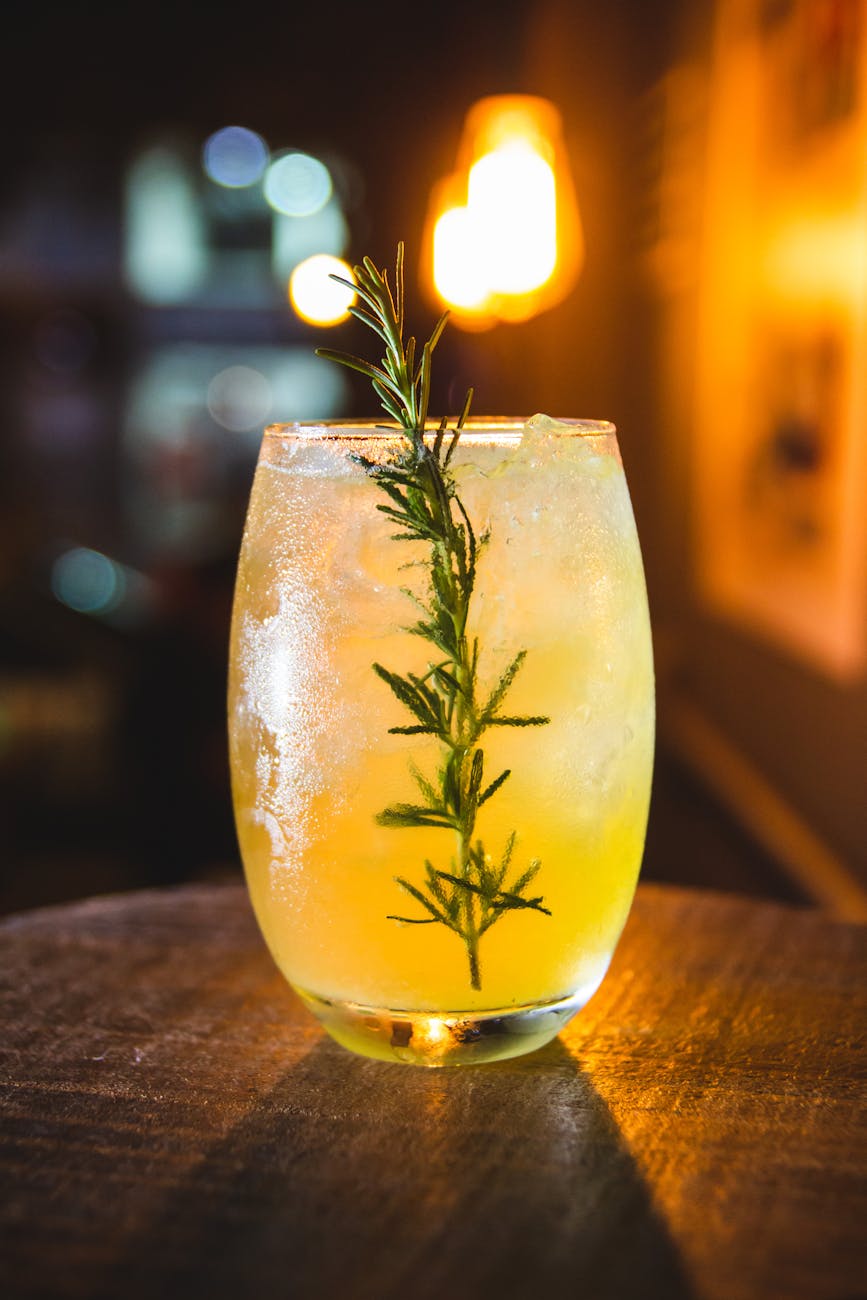
I’ll probably have beans on toast for tea. I like beans on toast. I may well also go for a large gin and tonic. I like gin and tonic too. Alcohol, of course, isn’t the answer, but it is a solution and one that can be very enjoyable if not over-indulged. I recognise that it is only a temporary source of ‘happiness’ but it is a pleasure I can partake in for now, and tonight I probably will.
Lydia and I seem to have had a bit of a breakthrough in terms of how we manage encounters with dogs and moving vehicles while out walking.
While I’ve been using positive reinforcement with her for over three and a half years, I’ve most recently been practising this with a “sit” and “wait” command combination. I’ve also been asking her to “sit” and “wait” before we go out of the back door and again before we go out of the back gate. She’s been getting really used to this and will now often do an impromptu sit before we go through the door.
Using the same “sit” and “wait” combination is now starting to work with her when we see a dog – from a distance – and also when we’re on a road and have cars passing by. I hold her on a short lead, reward her immediately for the “sit” and reward the “wait” providing she doesn’t bark or lunge. I also add a lot of reassurance and extra treats and praise afterwards, as I know her fears are still triggered by these experiences, but it does feel like a big step forward. We’re both doing our best to learn and I hope that we can continue to build on this.
I’ve had to do a lot of learning in my life, including a lot of hard life lessons. Learning can be a good way of avoiding being taught (self-management rule no. 35).
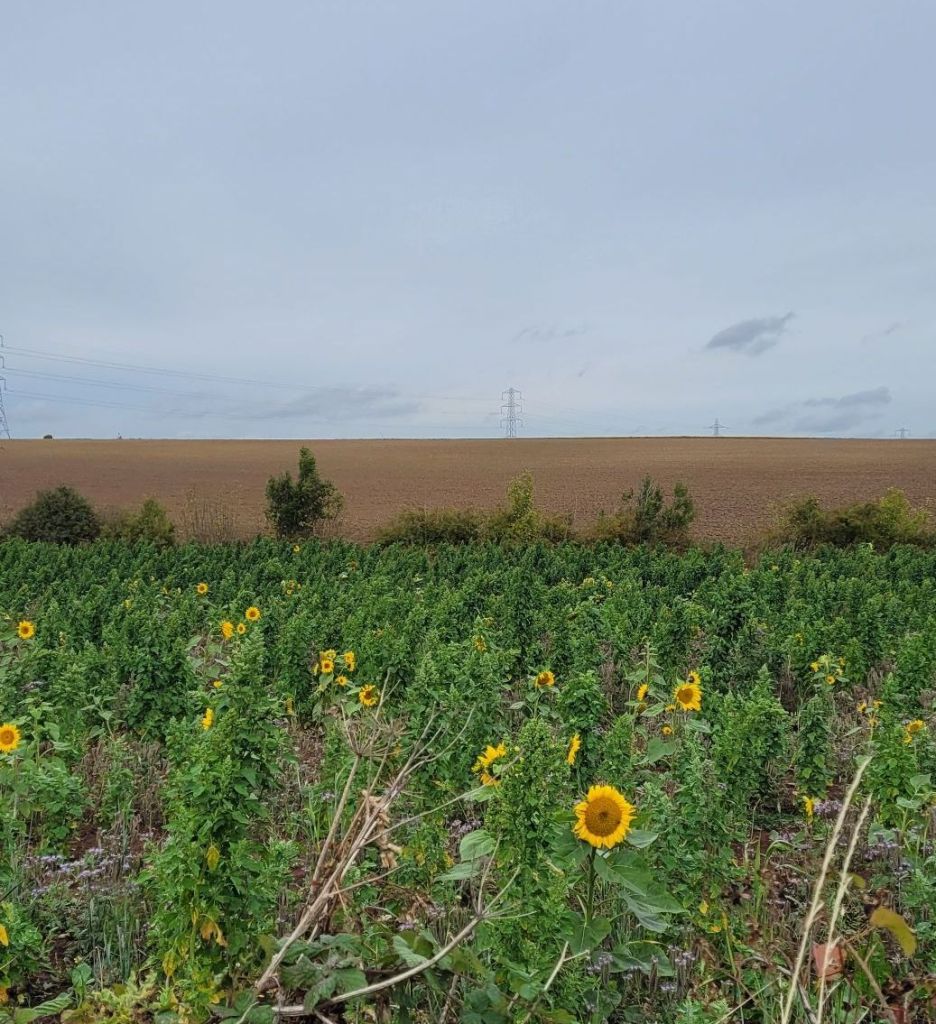
It was also good to see a field of still-flowering sunflowers when we were out today. It may be September, but there are still signs of summer.
A few months ago I had high levels of anxiety which manifested in various ways.
I became highly stressed about my car, as I was having problems with the gears and I started to catastrophise about ‘worst case scenarios’, knowing the extent to which I need my car for daily walks with Lydia.
I pushed through on positives as best I could at the time, the worst-case scenario didn’t present itself and my car has been fine for a few months.
Recently, I’ve started having problems with the gears again.
In the intervening months I’ve taken a lot of time to rest and continue to practice meditation, yoga and Qigong.
I write my blog, in 28-day cycles. The process of writing is proving to be very therapeutic. I’ve written intermittently and irregularly for years but not in the same way as I do now.
My daily walks with Lydia have also been therapeutic, giving us both a good start to the day with regular exercise, fresh air and that all important connection with the natural world. In Lydia’s case a lot of her connection is through her nose; for me it is more a sense of the air around me and the ground under my feet; the slow steady movement of walking.
This time I haven’t experienced high levels of anxiety about my car problems. It’s been a minor inconvenience which Trev has helped me with by picking me up from the garage when I dropped it off this morning. It should be ready later this morning and may need a new clutch in the longer term.
Anxiety, I’m sure, arises from past experiences when we’ve needed to address a problem, and haven’t been able – for whatever reason – to find and implement a solution; where everything fell apart and we had no help in finding ways to put things back together. We’ve learnt to ‘not cope’ and to retreat instead of establishing ways of knowing what to do and how.
When I was younger, I had none of the personal resources and resilience that I have now. I wasn’t taught any coping strategies as any assertion on my part would have upset the status quo, however uneasy that status quo was (and it most certainly was uneasy, at best).
However, through experience and reflection I’ve done my best to learn and change, to take responsibility for the things that make up day-to-day life and to see and do things differently.
I still rely on a small dose of anti-depressant medication every day, but the main processes I use are the ones that are active not passive. Moving from passive to active has been the major achievement of my life. The mental effort it has taken has been enormous and sustained, which is why, at the moment, I need to rest a lot as well. Re-focusing and re-prioritising takes time and I need to continue to trust in the process, however frightening the prospect of uncertainty may seem. I’ve come a long way, just in the last few months. I’m not going back now.
I wake early, around 6am, relieved to know that there is no pressure for me to get up and out of bed for a few hours yet.
I set myself a target of 9.30 but rise before then, go downstairs and make a cup of tea. The important thing comes first though – giving Lydia a tummy and chest rub. Then I open the back door and do a few repeats of ‘Healing Form’ as Lydia welcomes the day in her own way. Sue, the Qigong teacher, reminded us of some of the details of the Healing Form movement in the class last night so I was able to reintroduce these to my practice.
It’s a quiet walk for Lydia and me this morning, with no passing cars, joggers, cyclists or dogs; just a tractor going to and fro’ across a field in the distance.
Back home and she has her breakfast from her breakfast ball as usual; she is an expert now at nudging it around with her nose so that the dried food pellets fall out; it’s a lot better for her than passively eating from a bowl.
I have a restful morning, doing nothing much more than loading and setting off the dishwasher, and putting away some clean laundry. I’m sure if I looked around the house I could – and would – find dust and cobwebs in various corners, but on the whole I’m up to date with what needs doing inside.
As it’s Tuesday I visit my friend who used to live in the village but now lives in a care home, a few miles away. Her personal carer, J is there too, and we have a lovely chat together outside in the sunshine while J does M’s nails, commenting on the wonderful weather we’ve had this summer and how we wish we could have weather like this every summer.
After J leaves, I read M a short story from a magazine I’ve brought with me. She lies on the bed and snoozes as I read. At 85, it’s good to see her relaxed and looking so much brighter than she did a few weeks ago. It’s amazing what a change of environment can do.
Arriving home, I have a supply of dental sticks that I ordered for Lydia, and proof copies of my latest books in paperback form waiting for me. I give Lydia a dental stick for a treat straight away and flick through the proofs. I’ll need to look at them in more detail before I approve them for publication, but am pleased on first sight.
Self-management rule no. 20 is a good one: enjoy the process. I have found in my life that it is enormously difficult to do this, but am working on it, and – I believe – getting better at it by the day, bit by bit, step by step.
Lydia and I did a double circuit of our woodland walk this morning. It was good walking weather, neither too warm nor cold, and she was doing really well with her “heel” work, tugging on the lead only a little but also at times pulling herself into the “heel” position, which I was quick to reinforce with the reward of a treat (or three). She’s not just a “good girl”, she’s the best girl (but then I’m biased).
I’m rewarding myself with the treats of a yoga class followed by a Qigong class this afternoon.
I keep to the routine of my ‘Mental Health Mondays’ most weeks, providing the classes are on. It makes for a great start to the week, working at deep levels which, combined with meditation, help me to push through on positives.
That doesn’t mean that I’m always ‘doing stuff’. It just means that I’m working on training my mind to not revert to the negative thought patterns that I grew up with, so that I can move forward in different ways, taking care of my body at the same time as I need it to carry me through.
I’ve taken a further positive step by applying to do some volunteering at the Buddhist Centre.
My offer is one afternoon a month for now, as I don’t want to over-commit on top of existing commitments, particularly since I’m still working through a phase of burnout. But being at the Centre yesterday helped to remind me how replenishing an atmosphere it is, and I have a lot of skills learned in my working life that could be put to good use.
It isn’t always easy, during retirement, to re-establish ourselves after the rigours of working life have taken their toll. I don’t want or need too many things going on but I do need to feel that there is some meaning and purpose in what I do and why I do it.
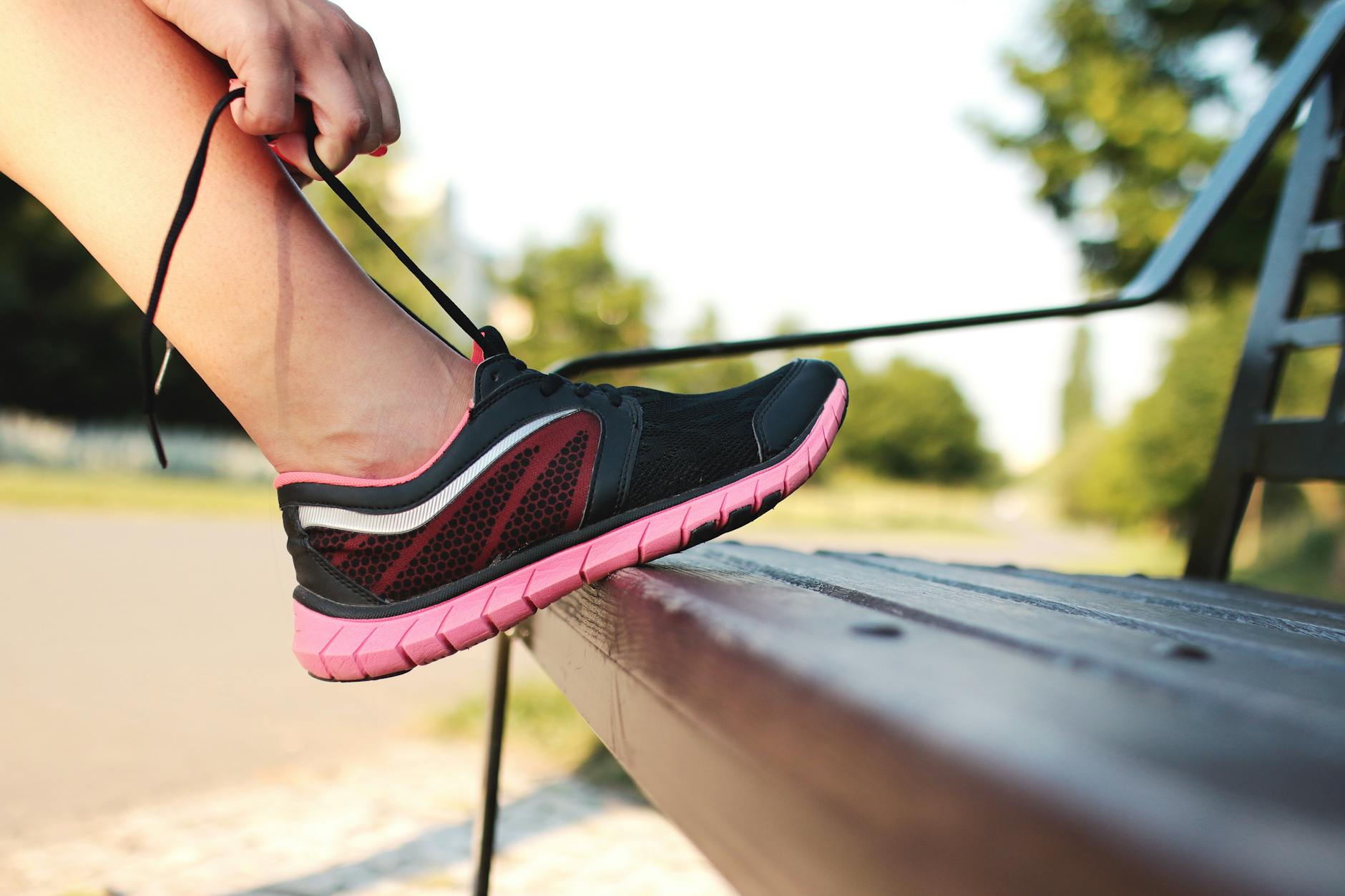
The health benefits of exercise are well recognised.
Exercise also keeps the brain and your other vital organs healthy.
Experts believe exercise releases chemicals in your brain that make you feel good. Regular exercise can boost your self-esteem and help you concentrate, sleep and feel better.
“I get a huge buzz from my rock ’n’ roll class. Hours later, my legs ache, but I’m still smiling.”
Exercising doesn’t just mean doing sport or going to the gym. Walks in the park, gardening or housework can also keep you active.
Experts say most people should do about 30 minutes’ exercise at least five days a week.
Try to make physical activity that you enjoy a part of your day.
We all know this and are likely to have had direct experience of these benefits.
Why, then, can it still be so difficult to find the motivation to exercise?
It’s an issue that I’ve struggled with all my life, experiencing barriers associated with body image when I was younger. I knew swimming was good exercise but would only ever go to a swimming pool or wear a swimsuit on a beach if I’d starved myself to be thin enough to feel able to do that. And even then, I felt morbidly self-conscious about how I looked. It took a long time and a lot of working through masses amount of personal ‘stuff’ before I could stop worrying and start enjoying swimming. My partner and I even go wild swimming now, and it feels wonderful.
I tried jogging but always found it so hard to build myself up to a regular routine. Lacking in willpower and discipline some people might say. Struggling with severe depression, anxiety and low self-esteem was the real reason. I’ve continued to struggle ever since, but have also never given up. Now 65, I’ve been doing on-line exercise classes, including yoga and pilates during lockdown. Last summer we did some cycling around our local lanes. We still both find that it’s an effort to go out, sometimes, but give each other a push and/or moral support when we need it. Whatever it takes.
What’s the alternative? An inactive old age with all the complications that brings?
I’ve always found it difficult to go to a gym or to exercise classes after work. Just getting through a day involved such a major effort for me. So, I looked for ways to combine exercise into my daily routine. Cycling to work meant that I often turned up looking like a drowned rat, but it did help.
Even so, I continued to struggle with depression and continued to find it hard to motivate myself to exercise enough to help it lift on anything more than a temporary basis. I felt like the only way I could sustain the ‘lift’ would be to train as if I was an Olympic athlete. I have neither the physique nor the talent to be anything remotely akin to athletic and, like most people, have had to commit a significant amount of my time to earning a living and keeping up with the usual day to day domestic activities.
There were times as well when I felt that the more I exercised, the deeper my depression went, after the initial ‘buzz’ fell away.
I continued to have to do a lot of work to try and shift it, with exercise being one of a number of tools and techniques that I’ve tried and tested over the years. It has been, and continues to be, a lifetime endeavour. I think that this is in part because of the way emotions are stored in the body, a matter which has been increasingly recognised and written about including the following article by Sean Grover (2018):
For years, I’ve made a study of where people tend to store their unwanted emotions. Certainly, not all body aches or illnesses are psychosomatic. However, as I studied people’s bodily reactions to stress, recurring patterns emerged.
Healthy vs. Unhealthy Repression
Fear is the driving force behind repression, and is frequently rooted in your past. Repression is often necessary, particularly when you feel overwhelmed or experience trauma. But an overdependence on repression fuels psychosomatic symptoms and self-destructive patterns.
In his article in Psychology Today, Sean Grover goes on to identify the ‘Top 10 Tension Areas for Unwanted Feelings’ as:
1.Lower Back: Anger 2. Stomach & Intestines: Fear 3. Heart & Chest: Hurt 4. Headache: Loss of control 5. Neck/Shoulder Tension: Burdens 6. Fatigue: Resentments 7. Numbness: Trauma 8. Breathing Difficulties: Anxiety 9. Voice & Throat Problems: Oppression 10. Insomnia: Loss of self
I find this interesting and helpful, relating these areas to recent and past experiences.
I did a lot of work on repressed anger at one point, including going to a workshop where I was encouraged to take a lot of it out on a punch bag. The physicality of the release at the time was phenomenal (although I did go into a kind of ‘toxic shock’ afterwards, so I would not recommend anyone trying this approach without a very strong support network around them).
Some years later, experiencing stress at work, I searched out volunteering opportunities, finding an outlet by doing trail maintenance work where I could break big rocks into smaller rocks to make hardcore with a sledgehammer. I came back refreshed and invigorated. Although the effects did wear off after a while, I have so far – touch wood – not suffered from lower back problems.
Fatigue and resentments strike a chord with me – I’m so good at hanging on to them, no wonder I feel tired all the time!
So, while I’ve done a lot of work on myself to get to this point, and to feel largely positive about the position I’m in, there’s still a lot to do.
It’s often the enormity – or perceived enormity of the challenge – that puts us off dealing with it, which leads to repression, which leads to depression….
There are no easy answers or quick fix solutions, especially when difficulties are deep-rooted. I just keep reminding myself that it’s all about the next step. And the one after that. And the one after that. It does get easier. Miraculously – it feels to me – my steps feel a lot lighter, at the age I’m at now, than they did when I was young, all those years ago! Something must be working, somehow. Barriers can be overcome. It’s not easy, but it’s worth working at it, bit by bit.
In one sense, this post should just be entitled ‘Being’, because age is irrelevant.
I interact with the world essentially as a being, and don’t need a label.
On the other hand, I do have history, and the ways that I have worked through that history impact on the way that I interact with the world – and other beings in it – on a daily basis.
It isn’t always easy to put the past behind us, especially when heavily loaded with emotions associated with trauma and grief.
Accepting things that I cannot change has been a hard life lesson to learn for me, helped by meditation, affirmations, and Buddhist teachings (including one in particular by Gen Togden of the Kadampa tradition).
Not having had children is a major regret. Raising this as an issue with a therapist recently, still needing to work it through, I was met with a profoundly uncompassionate response: “So you decided not to have them then, did you?”
At one level, she was right. I made choices – decisions – that led to me being in a state of extreme mental and emotional turmoil in my late 30s and 40s. Decisions that I made as a struggling, vulnerable young woman in my 20s were mine, and I was an adult. But should I really have had to pay such a high price in later life?
Shit does happen though, and doesn’t discriminate. Thankfully, I have had previous experiences with other counsellors/therapists who’ve approached my distress with humanity and empathy.
Even so, some things take a long time to work through. Some ‘stuff’ from the past has just come up that I thought I’d put behind me, or at least wanted to. It doesn’t always work like that though, and I’m sure my brain dredged it up now because I hadn’t properly dealt with it previously.
Now I’m in a much better place than I have ever been before, living with a kind, loving, supportive, funny partner. Being 65 is a starting point for me, and it’s never too late.
If I can send out a message to anyone who’s going through personal difficulties – whether recently experienced or long-term endured – it is to say: “Don’t give up.”
We don’t always know what we’re made of until our backs are to the wall, especially if we’ve oriented towards ‘flight’ rather than ‘fight’ in early years.
Fighting for survival is a primary motivator and there is always light at the end of the tunnel. Even if you can’t see it for yourself, let someone else – a friend – see it and hold it for you until you can.
I’m only 65, and I’ve got all my life ahead of me. So have you.




 Glad About
You must be logged in to post a comment.