A few months ago I had high levels of anxiety which manifested in various ways.
I became highly stressed about my car, as I was having problems with the gears and I started to catastrophise about ‘worst case scenarios’, knowing the extent to which I need my car for daily walks with Lydia.
I pushed through on positives as best I could at the time, the worst-case scenario didn’t present itself and my car has been fine for a few months.
Recently, I’ve started having problems with the gears again.
In the intervening months I’ve taken a lot of time to rest and continue to practice meditation, yoga and Qigong.
I write my blog, in 28-day cycles. The process of writing is proving to be very therapeutic. I’ve written intermittently and irregularly for years but not in the same way as I do now.
My daily walks with Lydia have also been therapeutic, giving us both a good start to the day with regular exercise, fresh air and that all important connection with the natural world. In Lydia’s case a lot of her connection is through her nose; for me it is more a sense of the air around me and the ground under my feet; the slow steady movement of walking.
This time I haven’t experienced high levels of anxiety about my car problems. It’s been a minor inconvenience which Trev has helped me with by picking me up from the garage when I dropped it off this morning. It should be ready later this morning and may need a new clutch in the longer term.
Anxiety, I’m sure, arises from past experiences when we’ve needed to address a problem, and haven’t been able – for whatever reason – to find and implement a solution; where everything fell apart and we had no help in finding ways to put things back together. We’ve learnt to ‘not cope’ and to retreat instead of establishing ways of knowing what to do and how.
When I was younger, I had none of the personal resources and resilience that I have now. I wasn’t taught any coping strategies as any assertion on my part would have upset the status quo, however uneasy that status quo was (and it most certainly was uneasy, at best).
However, through experience and reflection I’ve done my best to learn and change, to take responsibility for the things that make up day-to-day life and to see and do things differently.
I still rely on a small dose of anti-depressant medication every day, but the main processes I use are the ones that are active not passive. Moving from passive to active has been the major achievement of my life. The mental effort it has taken has been enormous and sustained, which is why, at the moment, I need to rest a lot as well. Re-focusing and re-prioritising takes time and I need to continue to trust in the process, however frightening the prospect of uncertainty may seem. I’ve come a long way, just in the last few months. I’m not going back now.
The health benefits of exercise are well recognised.
Exercise also keeps the brain and your other vital organs healthy.
Experts believe exercise releases chemicals in your brain that make you feel good. Regular exercise can boost your self-esteem and help you concentrate, sleep and feel better.
“I get a huge buzz from my rock ’n’ roll class. Hours later, my legs ache, but I’m still smiling.”
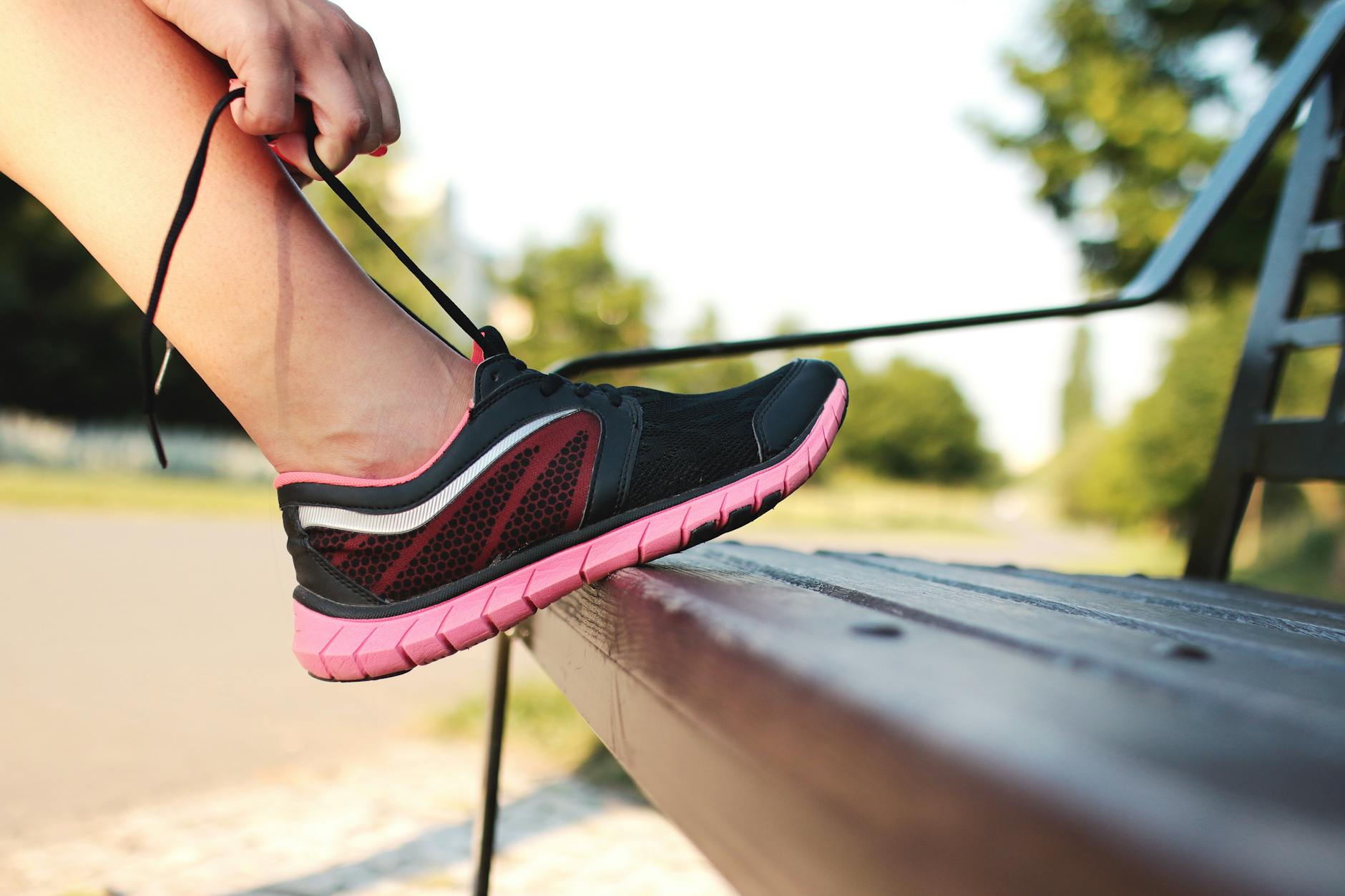
Exercising doesn’t just mean doing sport or going to the gym. Walks in the park, gardening or housework can also keep you active.
Experts say most people should do about 30 minutes’ exercise at least five days a week.
Try to make physical activity that you enjoy a part of your day.
We all know this and are likely to have had direct experience of these benefits.
Why, then, can it still be so difficult to find the motivation to exercise?
It’s an issue that I’ve struggled with all my life, experiencing barriers associated with body image when I was younger. I knew swimming was good exercise but would only ever go to a swimming pool or wear a swimsuit on a beach if I’d starved myself to be thin enough to feel able to do that. And even then, I felt morbidly self-conscious about how I looked. It took a long time and a lot of working through masses amount of personal ‘stuff’ before I could stop worrying and start enjoying swimming. My partner and I even go wild swimming now, and it feels wonderful.
I tried jogging but always found it so hard to build myself up to a regular routine. Lacking in willpower and discipline some people might say. Struggling with severe depression, anxiety and low self-esteem was the real reason. I’ve continued to struggle ever since, but have also never given up. Now 65, I’ve been doing on-line exercise classes, including yoga and pilates during lockdown. Last summer we did some cycling around our local lanes. We still both find that it’s an effort to go out, sometimes, but give each other a push and/or moral support when we need it. Whatever it takes.
What’s the alternative? An inactive old age with all the complications that brings?
I’ve always found it difficult to go to a gym or to exercise classes after work. Just getting through a day involved such a major effort for me. So, I looked for ways to combine exercise into my daily routine. Cycling to work meant that I often turned up looking like a drowned rat, but it did help.
Even so, I continued to struggle with depression and continued to find it hard to motivate myself to exercise enough to help it lift on anything more than a temporary basis. I felt like the only way I could sustain the ‘lift’ would be to train as if I was an Olympic athlete. I have neither the physique nor the talent to be anything remotely akin to athletic and, like most people, have had to commit a significant amount of my time to earning a living and keeping up with the usual day to day domestic activities.
There were times as well when I felt that the more I exercised, the deeper my depression went, after the initial ‘buzz’ fell away.
I continued to have to do a lot of work to try and shift it, with exercise being one of a number of tools and techniques that I’ve tried and tested over the years. It has been, and continues to be, a lifetime endeavour. I think that this is in part because of the way emotions are stored in the body, a matter which has been increasingly recognised and written about including the following article by Sean Grover (2018):
For years, I’ve made a study of where people tend to store their unwanted emotions. Certainly, not all body aches or illnesses are psychosomatic. However, as I studied people’s bodily reactions to stress, recurring patterns emerged.
Healthy vs. Unhealthy Repression
Fear is the driving force behind repression, and is frequently rooted in your past. Repression is often necessary, particularly when you feel overwhelmed or experience trauma. But an overdependence on repression fuels psychosomatic symptoms and self-destructive patterns.
In his article in Psychology Today, Sean Grover goes on to identify the ‘Top 10 Tension Areas for Unwanted Feelings’ as:
1.Lower Back: Anger 2. Stomach & Intestines: Fear 3. Heart & Chest: Hurt 4. Headache: Loss of control 5. Neck/Shoulder Tension: Burdens 6. Fatigue: Resentments 7. Numbness: Trauma 8. Breathing Difficulties: Anxiety 9. Voice & Throat Problems: Oppression 10. Insomnia: Loss of self
I find this interesting and helpful, relating these areas to recent and past experiences.
I did a lot of work on repressed anger at one point, including going to a workshop where I was encouraged to take a lot of it out on a punch bag. The physicality of the release at the time was phenomenal (although I did go into a kind of ‘toxic shock’ afterwards, so I would not recommend anyone trying this approach without a very strong support network around them).
Some years later, experiencing stress at work, I searched out volunteering opportunities, finding an outlet by doing trail maintenance work where I could break big rocks into smaller rocks to make hardcore with a sledgehammer. I came back refreshed and invigorated. Although the effects did wear off after a while, I have so far – touch wood – not suffered from lower back problems.
Fatigue and resentments strike a chord with me – I’m so good at hanging on to them, no wonder I feel tired all the time!
So, while I’ve done a lot of work on myself to get to this point, and to feel largely positive about the position I’m in, there’s still a lot to do.
It’s often the enormity – or perceived enormity of the challenge – that puts us off dealing with it, which leads to repression, which leads to depression….
There are no easy answers or quick fix solutions, especially when difficulties are deep-rooted. I just keep reminding myself that it’s all about the next step. And the one after that. And the one after that. It does get easier. Miraculously – it feels to me – my steps feel a lot lighter, at the age I’m at now, than they did when I was young, all those years ago! Something must be working, somehow. Barriers can be overcome. It’s not easy, but it’s worth working at it, bit by bit.

 Glad About
You must be logged in to post a comment.