Lydia’s enjoying some ‘Lydi juice’ – chicken broth – as the final course for her tea, which has included cooked chicken drum fillets, her main course of BARF[i]-based dried pellets and a raw chicken wing.
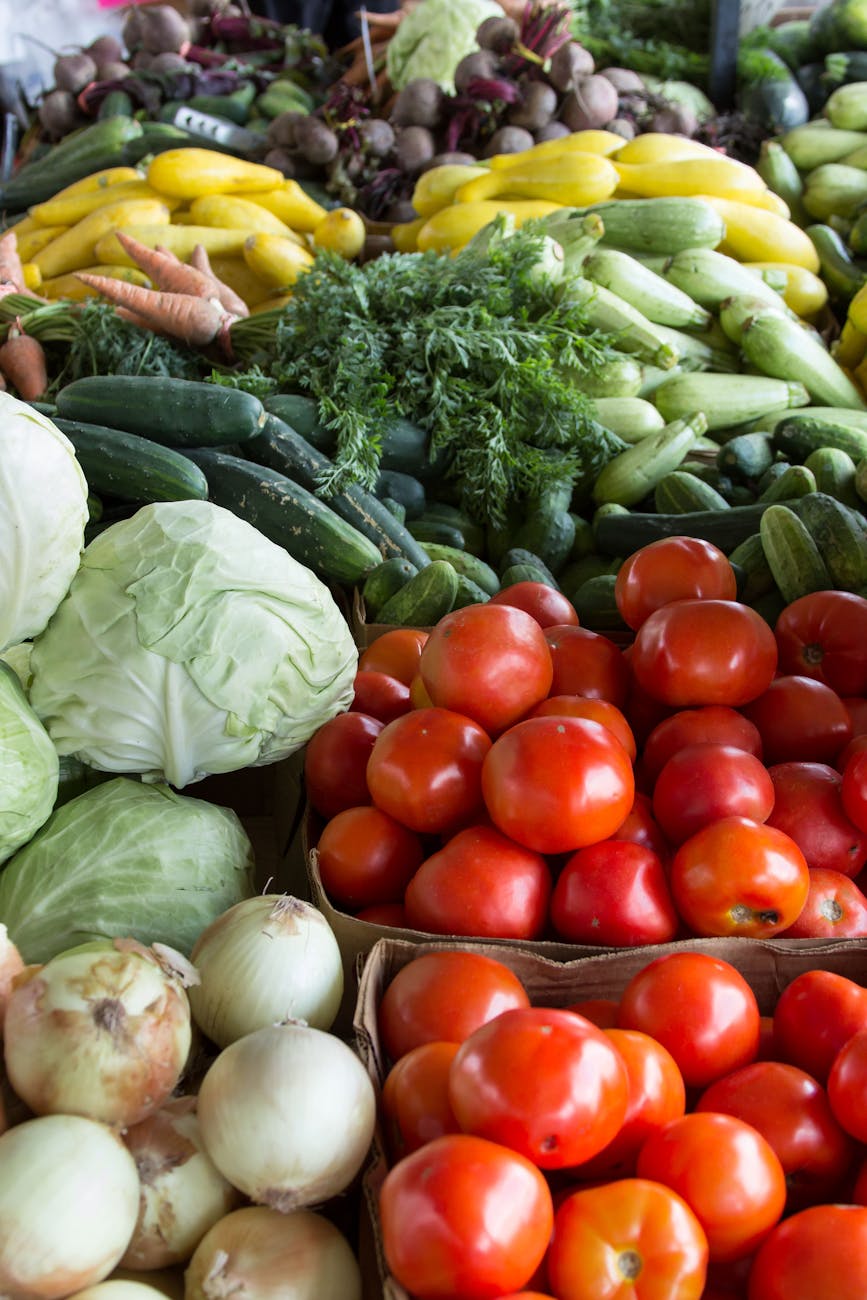
Trev is preparing our tea – soup made with some leftovers from earlier in the week plus some additional fresh vegetables and other ingredients, to help keep us healthy. It will also taste good.
It took me a while to work out a diet for Lydia that suited her needs and was practical, and the one we’ve arrived at does seem to work.
I change the flavour of her dried food regularly, because none of us want to eat the same things all the time, and I occasionally change brands. The website ‘www.allaboutdogfood’ offers helpful information with comparisons available for content and cost. I was also fortunate to be given some advice from our local dog food supplier, and I feel confident that Lydia does have a good quality balanced diet which – also important – she enjoys. She is by no means a fussy eater and also enjoys treats such as dental sticks, pieces of carrot, banana, apple, pear and peach.
Trev and I generally have a healthy diet, eating little in the way of processed food and plenty of fresh fruit and vegetables. I’m conscious of keeping my cholesterol intake down and don’t find this difficult at all. Tomorrow, Trev is having a steak while I’m having some salmon. Hardly what I would call ‘hardship’.
We also like our treats and, I think, all the better for being occasional rather than every day. We do have some ice cream lined up for later, and I can feel a nice glass of red wine coming on …
[i] Biologically appropriate raw food; all good quality ingredients with high protein content and superfood additions, to help keep her healthy
A friend told me recently that she had started to suffer from anxiety.
It had taken her by surprise as she loves her life, and considers the anxiety to be a chemical imbalance, that she is addressing through prescription medication.
I remember once feeling so frustrated when a GP described my mental health difficulties as a chemical imbalance. For me, medication has only ever been part of the equation, because of the complex nature of my experiences.
While I continue to rely on a daily dose of anti-depressant medication – a maintenance dose – I continue to additionally find my own ways of addressing internal imbalance, through the practises of Qigong, yoga, meditation and so on.
With no pottery session planned this afternoon, I’m booked in for an additional yoga class.
Lydia and I have had a walk together and she is now enjoying some time out in the back yard – her yard.
I’ve done a bit of housework so far, made and drunk some coffee, had some breakfast – a crusty roll with blackcurrant jam.
It may not be the most exciting start to the most exciting day, but it is just a start.
Later …
I do some front yard work – tidying, sweeping, cleaning – in preparation for the winter ahead. It’s good to do focused physical work, outside in the fresh air. And good to keep up my momentum of ‘a bit at a time’. Things are gradually getting done.
The theme for tonight’s Buddhist meeting – as it will be for the next few meetings – is ‘embracing change’.
I’ve been doing my best to ‘change my mind’ for a long time. It’s a slow process, for me, but one that I’m committed to. I listen, I meditate, I reflect and, one way or another, I change.
I hope – pray – that the process of change is also bringing about healing. I think it is.
Our usual teacher is away, so the teaching is given by a nun from the Centre.
We meditate on death and impermanence, which may sound morbid, but acknowledging and facing the inevitability of death does make sense to me, and I listen intently.
I don’t feel I have to fully understand and remember everything that I hear, and I certainly don’t. My powers of recall are not that good, and it is a process of gradual assimilation anyway.
There was a lot of emphasis on being able to let go of attachments that we acquire and accumulate in this life. I’ve not necessarily been that good at acquiring and attaching but then I’ve historically not been very good at letting go either.
After greeting me when I got home, Lydia has now settled down to sleep, on her favourite rug. She looks totally adorable and relaxed.
I’ll just sit for a while before I too settle down for the night.
I don’t need to set an alarm for tomorrow morning – we can just sleep as long as we want to and get up when we’re ready. Luxury!
For my age – pushing 70 – I have very little in the way of bodily aches and pains or physical ailments.
I do exercises for my knees – which keep the Baker’s Cysts at the back of them at bay – and my daily walks with Lydia help me to maintain my overall fitness levels.
The other day, though, I started getting a twinge to one side of my lower back. Nothing drastic, but noticeable.
I couldn’t have asked for more, then, when our Qigong teacher, Sue, in yesterday’s class, talked us through exercises that concentrated on the lower back area.
Qigong movements are very gentle, methodical. It isn’t always easy to see how they can be of immediate benefit – because they aren’t designed necessarily to be of immediate benefit. Effects over time can be difficult to recognise because of the very fact that they are gradual, often almost imperceptible. All I do know, is that I started going to Sue’s classes regularly – weekly – around 15 years ago and I hold them in no small part responsible for some of the health and fitness benefits I now enjoy.
This morning, the twinge in my lower back is less. I didn’t take painkillers and it didn’t just go away on its own. The combination of Qigong, preceded by yoga – which in turn was a gentle, meditative session – has, I believe, helped.
I meditated again this morning, sitting upright in a chair in the way we have been taught. Thankfully, there is no expectation of sitting cross legged on the floor. I used to try that, but it ‘killed’ my knees!
Lydia and I have had a woodland walk today. We also have new neighbours, including another dog. It’s going to be a challenge to train Lydia not to bark at it every time she hears it on the other side of the fence. We’ll get there though, just as we’re ‘getting there’ with other things. Even if we don’t know where we’re going, were doing our best to make the most of our time together, day by day, step by step.
Starting this latest 28-day cycle of writing into life on a Mental Health Monday, I have so far meditated and had a walk with Lydia.
I collected her from the boarding kennels this morning where she has been staying for a couple of nights. I had a night out in town with two friends on Saturday and a duvet day on Sunday.
Cocktails and a Thai curry in good company made a welcome change and Lydia had a change of environment as well. We all need it sometimes.
I’m booked into yoga this afternoon, followed by a Qigong class.
I’m struggling with low mood and low energy levels. For now, I don’t think there is anything I can do other than what I am doing. There are no ‘quick fixes’ so I approach the situation as positively as possible, keeping a focus on health and wellbeing and remembering to be glad that I am so fortunate to have my health and a reasonable level of fitness; not something to be taken for granted.
The day is mild, with blue sky and sunshine, albeit damp from the weekend’s rain.
Lydia has had her second breakfast – they’d fed her before I picked her up from the kennels this morning but she still demanded – and got – her breakfast ball with her usual supply. We all need a bit of a ‘bonus ball’ sometimes. She’s now outside enjoying being back in her domain.
Over the last couple of weeks, while I’ve had a writing ‘holiday’, I’ve been bringing my focus closer to my own domain: my home; our home. Home isn’t something to be taken for granted either. I’ve always been fortunate to have one, one way or another.
Over the next few months – through the winter – I’m going to concentrate on giving care and attention to the edges and corners in our home – the bits that often get missed with a general sweep and ‘hoover’ round. I’ve never been the best at spring cleaning so I’m going to do it over the winter instead. Then, when spring comes, I’ll be free to do other things instead. That’s my plan; that’s what I’ll do. It may not be the most exciting plan on the planet, but it’s mine.
Paperback versions of my two latest books are now available on Amazon:
Rules, Rhymes, Recovery, Recipe, Random: writing into life
Today I sat outside turning a piece of clay from one form into another. It’s called ‘art’ and I love it.
I have limited tools and equipment, so improvised, and just became profoundly absorbed in the process of ‘doing’.
The end result may not be classed as a ‘masterpiece’, but it’s my ‘mixed up piece’, and that’s what counts.
I’m looking forward to spending many more happy hours making things out of clay. It’s a wonderful medium to work with, providing all sorts of possibilities to explore.
1978 was not a good year, for me even though I hold it dear
Try as I might I could not find the key to unlock my brain work out its mystery
Lurching this way and that never finding a hold I fell so many times but got ever more bold
Crashing right down I broke back to the core then inched my way through to daylight once more
The clay in my hand is the life that I’ve led I’ve cried, ached and screamed and wished I was dead
But I never gave up and I never gave in I just kept on going and drank lots of gin
Joking aside – though I do like a drop – I feel like I’ve won I’ve come out on top
For I have love in my life a treasure most true I’m here and I’m now simply human, through and through
2021
1978 was the year I graduated with a degree in Ceramics from Bristol Polytechnic.
I’d reached out to art in my teens as a way of asserting a direction, without knowing where that direction might take me. It was driven by some deep-rooted instinct; an instinct which for a long time I thought had failed me. But it hadn’t.
As it’s turned out, my life has taken many “twists and turns, and loops and leaps”, most of which have left me struggling to find a foothold. Finally, however, I feel I am on firm ground, and astonished to find myself turning back to working with clay, after a break of over 40 years.
What’s even more astonishing is that I’m not only loving working with the medium, I’ve got ideas coming into my head from goodness knows where. I’m not having to push myself just to produce something, anything, as I did when I was at college (although I was proud of what I did produce in the end; it was no easy feat, considering the complexity of mental health problems I was dealing with).
Art didn’t work as a therapy for me when I was younger; the damage went too deep and I had to find ways to dig it out – just like clay has to be dug out. What I’ve got now is malleable and mouldable in whatever way I choose. I can be creative in any way or ways that suit me; working with clay or words; working with my life.
I hope my pots can be poetic; and that my poetry will continue to be potty.
When I was young I didn’t really follow any one I wasn’t into screaming at the Beatles Or collecting singles or going to concerts I’ve always been a bit behind with a lot of things I can never remember names Or who played what or where or when But then that maybe only matters In pub quizzes or if you want to feel flattered By other people praising you for what you know It would be nice though, sometimes, to be the one Who remembers what they heard when they were young And relate it to a first kiss, or a walk in the park But then I never could get up with the lark Always had a bit of a struggle, doing the usual things Although I did listen quite a lot to Cat Stevens Wishing I could be Sad Lisa but ending up just being sad Still, it hasn’t all been bad At least I haven’t got cluttered up With a load of CDs that I don’t know what to do with And now that I’m 61 I can listen to anyone Or anything I choose And my music collection Is out there waiting for me Just as it was All those years ago When I was young
I first encountered Qigong when I was exploring anything and everything that I could find that I thought might help to restore my mental health from a point of crisis to some semblance of stability. That was over 25 years ago, and I had a long and arduous journey ahead of me. Along the way I took part occasionally in Qigong classes and workshops. It wasn’t until some years later, however, when I was struggling to push through the challenges of a demanding job – in itself part of my recovery process – that I considered a more regular commitment to the practise of Qigong.
Google searches came up with limited references to Qigong being offered locally. Luckily, one of these few was an evening class at a school just a few miles from where I was living, in Leeds.
An online Medical Dictionary notes:
Qigong (pronounced “chee-gung,” also spelled chi kung) is translated from the Chinese to mean “energy cultivation” or “working with the life energy.” Qigong is an ancient Chinese system of postures, exercises, breathing techniques, and meditations. Its techniques are designed to improve and enhance the body’s qi. According to traditional Chinese philosophy, qi is the fundamental life energy responsible for health and vitality.
The Dictionary goes on to state:
Qigong may be used as a daily routine to increase overall health and well-being, as well as for disease prevention and longevity. It can be used to increase energy and reduce stress. In China, qigong is used in conjunction with other medical therapies for many chronic conditions, including asthma, allergies, AIDS, cancer, headaches, hypertension, depression, mental illness, strokes, heart disease, and obesity.
Qigong is presently being used in Hong Kong to relieve depression and improve the overall psychological and social well-being of elderly people with chronic physical illnesses.
While I can’t claim that I commit to a daily practice – not yet anyway – I have been attending these evening classes – and some day workshops at weekends too – with the same teacher ever since.
When the Covid lockdowns first started, Sue Dunham – the teacher – was quick off the mark with setting up Zoom classes. Just as in the live classes, Sue’s commitment to her own practice and to sharing her knowledge and vast experience has shone through into these Zoom sessions.
Sue doesn’t just demonstrate what to do for us to follow. She talks through and builds up each movement step by step, repeating as necessary; infinitely thorough and always engaging. Her approach is very meditative and mindful, working deep on different themes in each group of three classes. During the height of the pandemic, focusing on the lungs could not have been more appropriate, and we’ve also recently worked on the spine and the digestive system.
Though the movements are slow and steady, I find that I sleep really well after a class session, and wake in the morning with the sense that I’ve had a really good workout, even though it isn’t ‘exercise’ in the conventional sense.
According to Sue:
“Qigong is an extraordinary practice: it can bring you to question fundamental beliefs about mind and your life, bringing you to that in a supported, gentle way. I have found it to be accessible and yet challenging, it’s enigmatic but intriguing!”
One of my favourite Qigong movements is called ‘Healing Form’, and Qigong has certainly become an essential part of my own movement towards health and healing.
When I started to become aware of my body, as a teenager, it was on the basis of how it looked. The negative compulsive obsessions I developed were – I realise now – associated with complex psychological and emotional traumas that have taken me 50 years to unravel.
Fortunately for me, my body was and is healthy and, while I continued well into adulthood to control my life by controlling what I ate, my body served me well. Deep roots hold tight, though, and it was a long time – being ultimately faced with the choice of life or no life – before I was able to find the strength, coping mechanisms, and resolve, to push through and come out the other side.
Qigong has helped me to work at a deeper level with my body – my amazing body.
It hasn’t provided me with a miracle ‘cure’ but it has helped to shift my focus into health and wellbeing, which is where it should be.
I feel a lot ‘lighter’ these days, even though I’m 65 and probably weigh at least 4 stone more than I did when I was 15. At six-and-a-half stone and still feeling the need to lose weight, I was weighed down and locked in as a teenager.
Some of the grief, sadness and regret linger on, but less so day by day. I’m thankful for a lot of things and hope that I can continue to be so for many years to come. Qigong helps me to nurture my body, with all its intricate mechanisms for feeding and flow.
One of the wonderful things about this practice is that it takes me beyond what I ‘know’, what I can measure or evaluate, into that sense of wonder, about what I don’t know, with all the associated mysteries of those realms.
When I’m practising Qigong, under Sue’s infinitely patient and painstaking instruction, I feel as graceful as a dancer, and that – for me – is something of a miracle.
The Covid pandemic has shown us just how vulnerable any of us can be, at any age, but also how those vulnerability factors can increase as we get older. The more we can do ourselves to mitigate those factors, the more likely we are to be able to lead fulfilling, meaningful lives for longer. That’s my plan, anyway, and I’m sticking to it!




 Glad About
You must be logged in to post a comment.