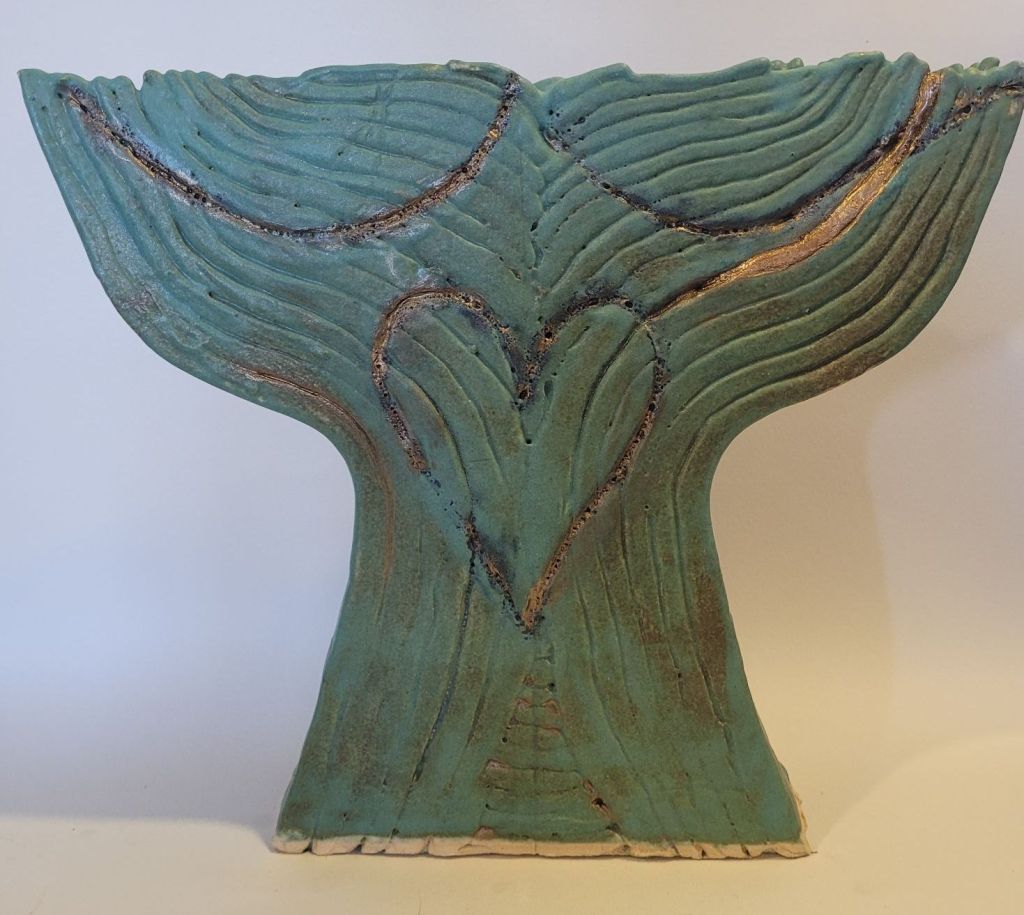
My latest piece of ceramic art, made out of stoneware clay. This and other works by me and 70 other artists and makers will be on show and for sale at the Saltaire Maker’s Fair, Victoria Hall, Saltaire, near Bradford from 24-26 May 2025:
Pottery & Poetry & Life
My latest piece of ceramic art, made out of stoneware clay. This and other works by me and 70 other artists and makers will be on show and for sale at the Saltaire Maker’s Fair, Victoria Hall, Saltaire, near Bradford from 24-26 May 2025:

I’m struggling a lot with fear at the moment. Fear of the future; fear of uncertainty; fear of not being able to cope with whatever life challenges lie ahead.
I’ve coped with a lot of life challenges in the past but I was younger then! I used to put my head down, put my back into it, prioritise and push through. Now, in my 69th year, I know I can no longer do what I used to do. I have to do things differently; see things differently; find an approach to working through my fear that is in tune with my more mature status and circumstances.
I know that I have to believe that everything will be – is – OK. I also know that a lot of what I fear is in my head. I don’t live in a war zone or on the streets.
But when you’ve had to pick yourself up by the bootstraps and start again, and again, and again, it’s hard to believe that the pattern isn’t on repeat.
I’ve been working hard to learn my lessons, to change how I see and do things and to live in the here and now. The important thing is not to let the fear take over. This can be easier said than done, but I’m working on it!
The featured ceramic piece includes some Kintsugi repair work. This is a Japanese method for making a feature of a repair instead of trying to hide it. The idea is that the piece is even more beautiful than it was before.
Publishing 05 June 2025:
I’ve somehow arrived at the point in retirement where I have ‘Wellbeing Wednesdays’ in my non-working week.
After taking Lydia – our dog – for a walk – which I do every day, usually twice a day – I go to a yoga class. Then, at 1pm, I have a therapy session. In the evening, providing I’m not too tired (or relaxed) I go to a Buddhist class which includes two meditations as well as the teachings.
I usually sleep well on a Wednesday evening; another factor which contributes to wellbeing.
I do other things on other days, including a Qigong class on a Monday, and pottery/making things with clay when I feel like it. But Wednesday stands out as the day when three focused activities combine to contribute to a strong sense of wellbeing emerging.

I’ve recently come through a minor breakdown.
I make the distinction between a minor breakdown and a major breakdown on the basis of the level of functionality that I lost, and the time it has taken to return to a semblance of normal functionality (whatever that means).
When I had a major breakdown over thirty years ago, it took years to recover to the point where I could do paid work again (although I did a lot of voluntary work as part of the recovery process).
In the years leading to my major breakdown, which was effectively from my teens until my late thirties, I developed unhealthy coping strategies.
With no idea how to deal with things differently, I worked out ways of getting through that worked – to a degree – but they weren’t sustainable, and I came crashing down.
“The wound is the place where the Light enters you.” – Rumi
The main thing was – in the trauma of the breakdown experience – I didn’t give up; the survivor in me kicked in. Reaching out for and finding sources of support helped me to rebuild. I started to retrain my brain through meditation and affirmations, did hard physical work and exercise when I could, pushed myself when I felt I needed to; tried to rest and relax into feelings that had previously been buried and then surfaced like a volcano. They were so difficult to deal with.
What do I do
with all these feelings?
Do I chew them up
and spit them out
and start again?
And if I do
what then?
I’m now retired, so in a sense the pressure is off, in that I don’t have to recover enough to fulfil the demands of a job. However, in retirement it is all the more important – and can be difficult – to find reasons to be motivated; to get up in the morning; to have a sense of purpose.
After my recent breakdown, and with support from my partner, good friends, and effective medication, I was able to start drawing on these healthier coping strategies fairly quickly, because I had already built them in to my life over many years; they had become part of my ‘muscle memory’, in brain and in body.
The Chinese exercise for health and well-being – Qigong – works on the whole person; walking our dog takes me into fresh air and the opportunity to appreciate the morning or evening light; making things with clay helps to take my mind away from unwelcome thoughts; Buddhist mind training helps me to just accept these thoughts as thoughts; meditation and affirmations provide the opportunity to let go of negative and introduce positive, even if it’s just for a few moments.
I haven’t yet achieved that all elusive peace of mind – my mind is still a work in progress – but I can at times feel a sense of peacefulness in the moment, and that is very welcome.

Forty five years ago I completed a degree in Ceramics. It wasn’t until a couple of years ago, though, that I started working with clay again.
The intervening years have been challenging, to say the least.
As a teenager with undiagnosed mental health difficulties including an eating disorder and depression, I struggled to get a foot hold on life and eventually came crashing down.
For the last thirty years I’ve largely been focused on getting back going again, pushing through, surviving.
A sense of well-being isn’t easy to establish or maintain when your mind and mood are volatile, like mine can be, always trying to pull me back to a pivotal point of trauma and grief that have been so hard to leave behind.
I do try to make the most of each day, and be thankful for what I’ve got – which is a lot – but when tiredness takes over from positive thinking, it can feel almost overwhelmingly bleak.
Sometimes it’s best to do nothing, rest into it and let it pass. I also find that, if I can get absorbed in making something with clay, I can start to come through the low mood to a brighter sense of self and life.
I have a table at home that I have set up with basic tools and materials, but I find it most uplifting when I go to a studio where I can spend a morning or an afternoon with others. We are all focused and industrious but there together, and it has a special kind of effect, which always leaves me feeling so much better at the end of a session than I felt when I got there.
It isn’t easy to pick up the pieces of your life and start again, but picking up a piece of clay is now a part of my ongoing journey of recovery and reclamation.
#thepottermanstudio

One of the fellow potters that I meet up with occasionally at the #pottermanstudio used to be an art therapist.
She told me that she no longer works as an art therapist because there is no basis of evidence that art is therapeutic.
I’d come to the same conclusion myself, although am also now going to contradict myself because I do believe that art can be therapeutic. It just depends on a lot of other factors such as context, timing and the weight of influences going on in a person’s life and head at any one time.
When I was an inpatient in a psychiatric hospital back in the 90s, I went along to art classes in the hope of finding them helpful, but they made me feel much worse.
I had a degree in art and design, but in those classes I was only able to produce work that most 6-year-olds would be embarrassed about. At least, that was how I felt at the time.
Subsequently and periodically I’ve gained some benefit from drawing – particularly life drawing – but I found more therapeutic benefit from smashing rocks with a sledge hammer when I worked as a volunteer on the Appalachian Trail #ATC. I’ve also found typing and other repetitive tasks – addressing and stuffing envelopes, for example – therapeutic, in different ways.
When I worked at a small publishing unit – part of the #Longman publishing group – we used to send marketing mailshot work to the same psychiatric hospital that I stayed in myself a few years later. The stuffing of envelopes with marketing materials was deemed to be therapeutic for some of the patients, and, based on my own experience, I believe it probably was.
It isn’t just the stuffing of the envelopes – or whatever simple repetitive task it is that you are doing – it’s also the experience that you have while doing it. Stuffing envelopes alone is highly unlikely to be particularly therapeutic – although it may pay bills if you’re doing it to earn money – but in a supportive group environment it can be very calming.
I set something similar up in a Buddhist community that I stayed at for a while, after my breakdown, helping to raise funds for the community. We sat around a table in the Temple and it was very meditative, for a while at least.
When you’ve got a lot of inner turbulence going on, it’s hard to find something – anything – to settle on for any length of time. It’s important to keep looking for and finding whatever it is that gets you through, until the next time you have to start looking for and finding whatever it is that gets you through.
This brings me to one of my ‘Rules for Self Management’ that I haven’t referred to for a while:
Rule No. 5: Don’t underestimate the therapeutic value of envelope stuffing (but don’t overestimate it either).
I’m glad I’m no longer envelope stuffing – either therapeutically or for a living – and am happy to be steadily working with clay in a creative way. This is therapeutic for me now, but it wasn’t before. A lot of other work needed to be done before it could be.

Struggling as I have been with my own mental health for most of my life, I haven’t always been able to prioritise dental health.
In voluntary and paid roles supporting others with mental health difficulties, I’ve noticed that poor dental health care is a common problem. Published research supports this observation, for example ‘Oral health interventions for people living with mental disorders: protocol for a realist systemic review’, Kenny Dickson-Swift, Gussy et al, International Journal of Mental Health Systems 14, Article number: 24 (2020) https://doi.org/10.1186/s13033-020-00357-8.
After a major breakdown in my late thirties, I was able to regain and maintain sufficient mental health stability to work and function within society (with various blips and crises along the way) and have since retired. As part of the process of recovery that I went through, I managed to reconnect with regular dental check-ups and treatment.
Recently, though, I struck a stumbling block while going through a really tough patch mentally.
I hadn’t been able to get a check-up at the surgery I’m registered with for over 18 months. While many dentists are still struggling to catch up after Covid, the dentist that I’ve been going to have had an additional burden of backlog due to a fire on their premises. Though they’ve been able to set up satellite surgeries around the city I was advised that, if I wanted a check-up on the NHS, I should seek it elsewhere.
As I have moved out of the city to a neighbouring village, this made sense anyway, so I started ringing around. It was only then that I discovered there was little or no chance of being able to see an NHS dentist as a new patient within the next 2-3 years.
Apparently this is due to government funding, although I don’t know the details of how it works.
What I do know is that government mental health strategy is due to be updated (https://www.bacp.co.uk/news/news-from-bacp/2023/24-january-government-mental-health-strategy-update-announced/) with a claim that mental health will be included in an overall ‘major conditions’ strategy that will focus on ‘whole-person care’.
If that strategy is to be worth more than words on paper then it would do well to ensure prioritisation of funding that enables people who have recognised mental health disabilities to access NHS dental care. It would be one less enormous obstacle to climb for those who deserve a medal just for getting out of bed on a morning. And let’s face it, if you can’t even look forward to a cup of tea because it’s too painful to eat or drink anything, then what’s the point?
It’s taken me several months to be able to concentrate enough to work out how to tackle the presenting problem and then follow up and get myself booked in for an appointment. I’m fortunate in that I’ve been able to pay privately for a check-up (£59.00) and have been presented with a range of options to address my dental treatment needs that I can prioritise on – for me – an affordable basis (approximately £250.00). Basically I’m going to book in for a hygienist appointment to address some gum issues and also get an old crown taken off so that the dentist can explore what’s going on underneath and put a semi-permanent top dressing on. This should keep me going for another year or so at least and I’ve got myself down on a 3-year waiting list at a surgery closer to home.
Others who are less fortunate than me financially shouldn’t have to suffer and wait, compounding mental agony with dental agony.
For my part, when I do eventually emerge from my current ‘downer’, I’d like to be able to smile without worrying about the fact that I have gaps in my teeth.
It can be profoundly difficult to acknowledge the dark side of our selves.
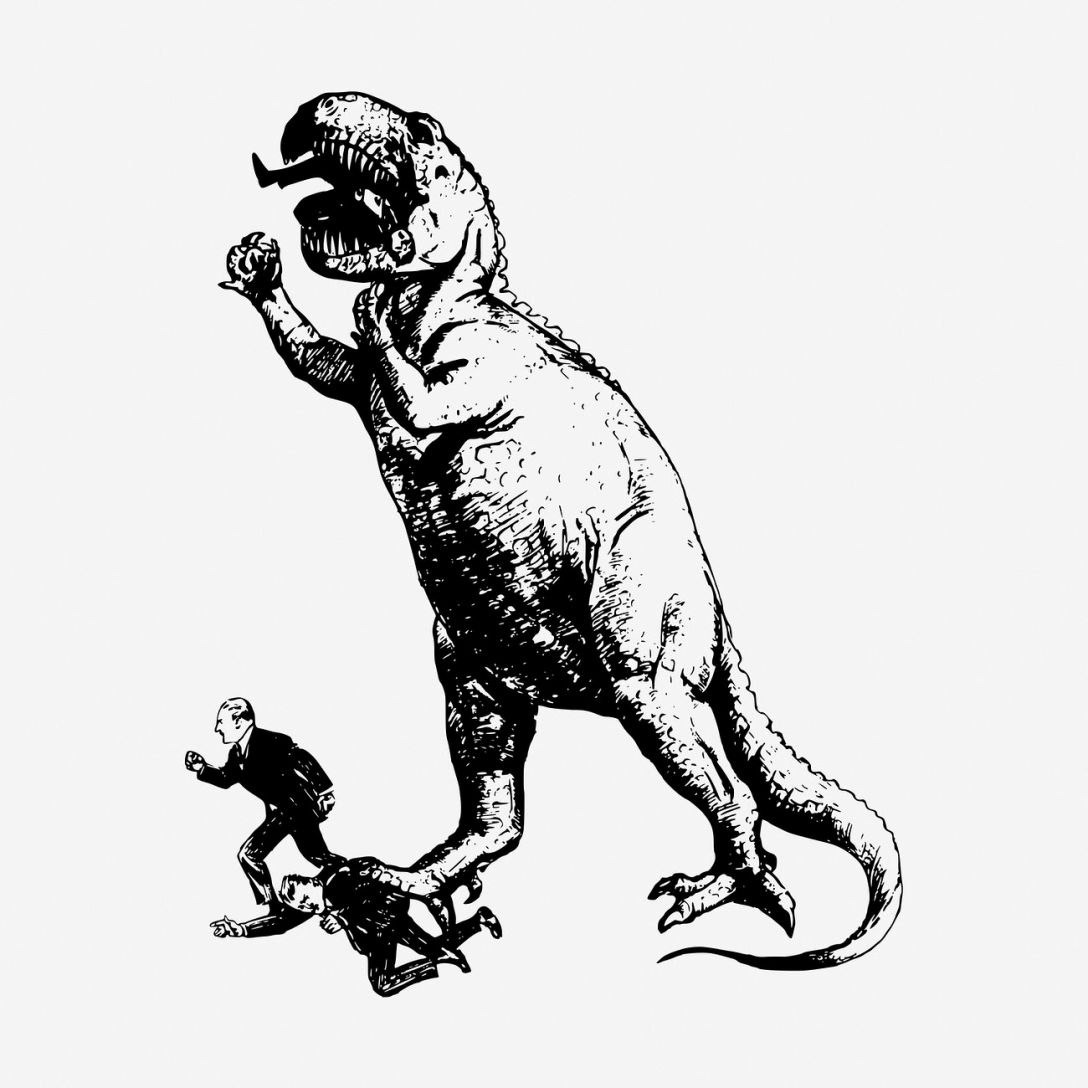
We’re brought up to be “nice”, “good”, “well-behaved”, and get no instruction as children on how to deal with thoughts that counter those values in constructive ways so we work it out for ourselves. As a result – because we want to please our parents and other adults who are important in our lives – such thoughts can get buried, pushed out of mind, to fester in the deepest darkest resources of our brains. Left unattended, the smallest ‘unacceptable’ thought can grow into a monster, desperate to do what monsters do, and our psyches go to great and often bizarre lengths to keep the monster behind bars.
My partner wrote the following piece about his monster. It takes a lot of courage to acknowledge the monster that is part of us and even more to write about it and be prepared to share that part of our selves with others. I don’t agree with him though, that the monster needs to be banished. In my view it is enough to see it for what it is: a thought that we can simply be aware of, trusting ourselves enough to just let it be.
Frankenstein’s Monster
The monster, with the horns and tails of a devil, lurks in the deepest, dankest dungeons of my mind, eyes burning red, teeth like vampires’ fangs, talons like dragons, hunch-backed, ready to pounce. Saliva drips from its gaping maw, the talons clutch a dagger dripping with blood.
All is dark, the blackness is solid, no light penetrates.
The air is hot, oppressive and stifling.
The smell of death pervades the atmosphere.
The monster is a chimera reflecting all my fears in one being. Its hybrid nature combines all my fears.
The shadow lurks in my unconscious, emitting negative thoughts, amplifying the anxiety.
The dread is unremitting, the torment is ceaseless.
I close my eyes.
I breathe in. Om!
I hold my breath. Ah!
I breathe out slowly. Hum!
I exhale black smoke.
I inhale bright white light.
I visualise the banishment of the monster.
The dread eases; a dim light starts to glow dimly through the dark night.
The monster disappears in a cloud of sulphurous smoke, emitting a shriek of rage and frustration.
The dismal fog clears. I see the sunrise.
(c) Trevor J. Leavesley 2023
I desperately needed a new pair of dog walking boots and have just found the perfect pair at #shoezone.
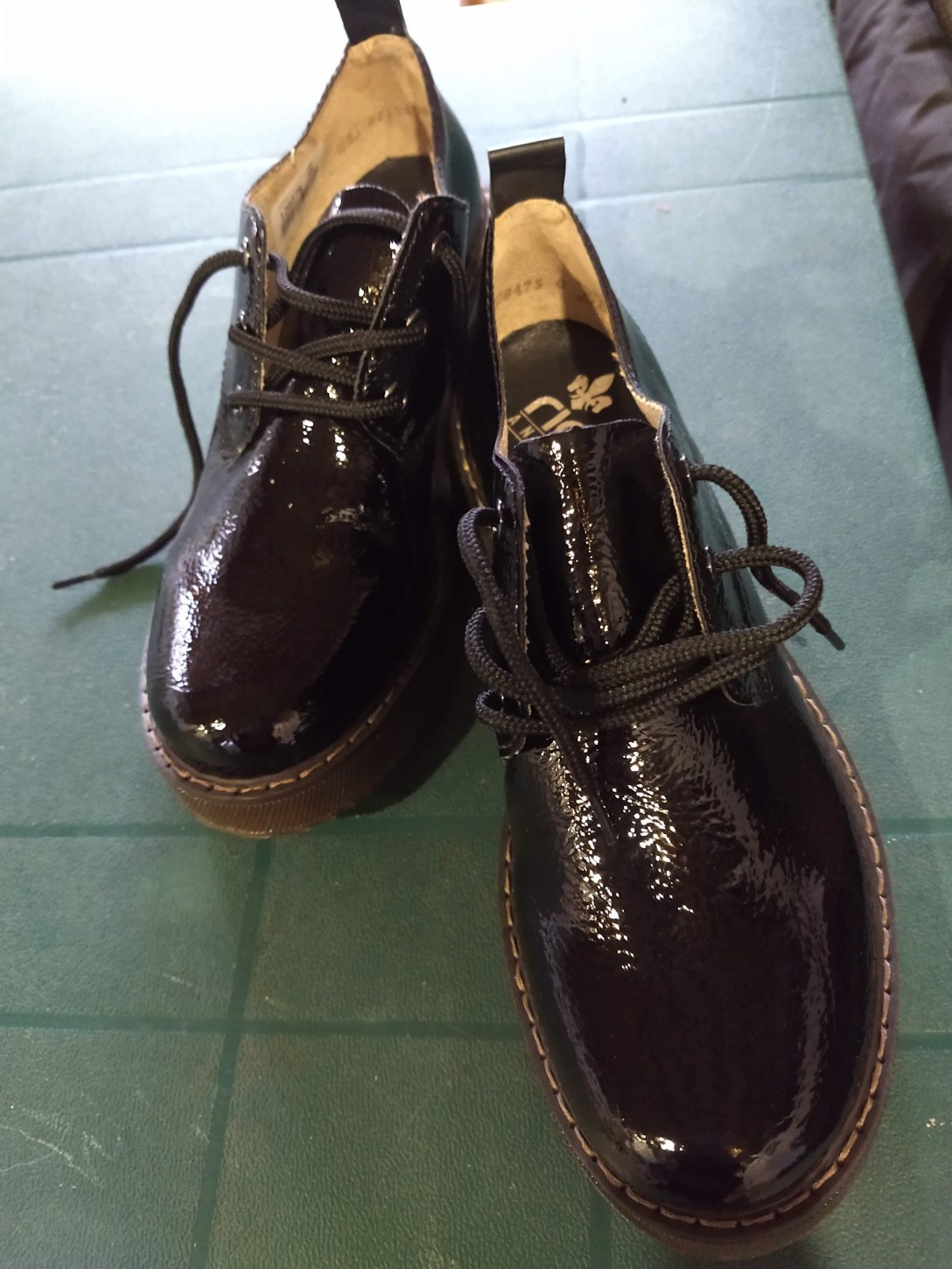
Also bought some black patent shoes, which made me think of some patent shoes that I had when I was a child, with a buckle. I loved those shoes, as I did a pair of purple patents that I had a while ago.
I loved those purple shoes so much that I wrote a poem about them. Here it is:
Perfectly Purple Patent

No other shoe
Looks quite like you do
Purple patent perfection
You don't just give my feet protection

Your bright shiny uppers
Light up my soul
When I'm out wearing you
I can only be bold

Bright yellow stitching
A statement of strength all around
Air cushioned and confident
A complement of colours profound

I love you purple patent shoes
You're perfect in every patent way
And every time that I wear you
My heart and soul become more purple
And less blue
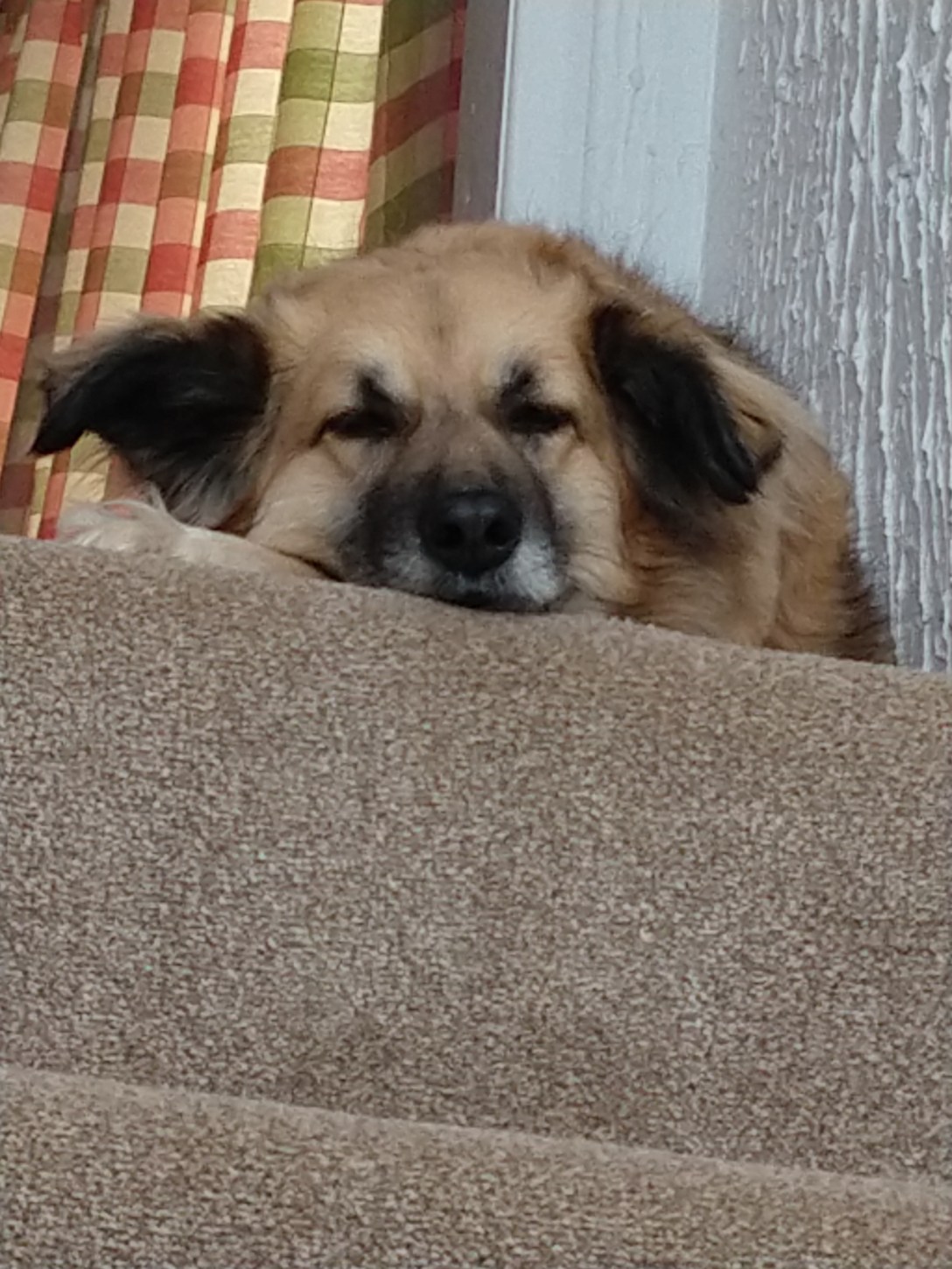
I’m taking some time out this weekend – just me and Lydia – to rest and recharge. I knew I’d run out of steam and, after a bit of searching on #airbnb, found a super dog-friendly place just a couple of hours drive away.
It’s a small converted barn, built in the 19th century and perfect as a peaceful retreat.
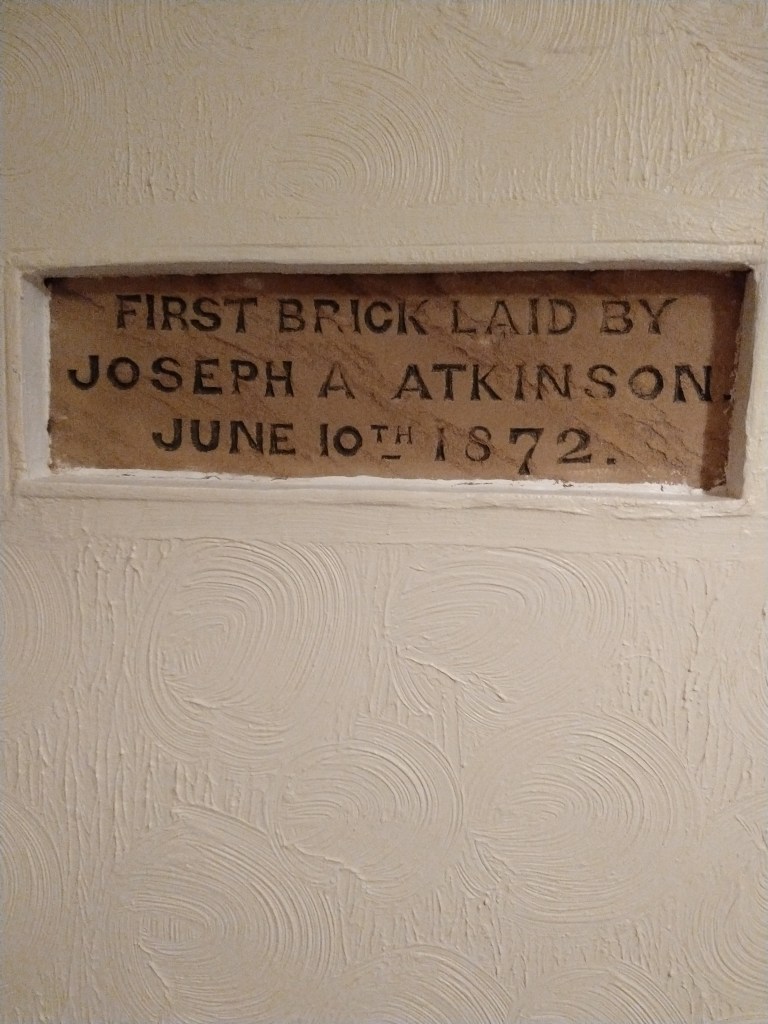
I don’t have a coherent plan about what to do while I’m here but it involves eating, drinking, sleeping and catching up on a few things.
There is a secure grassy area so I can let Lydia out whenever she wants.
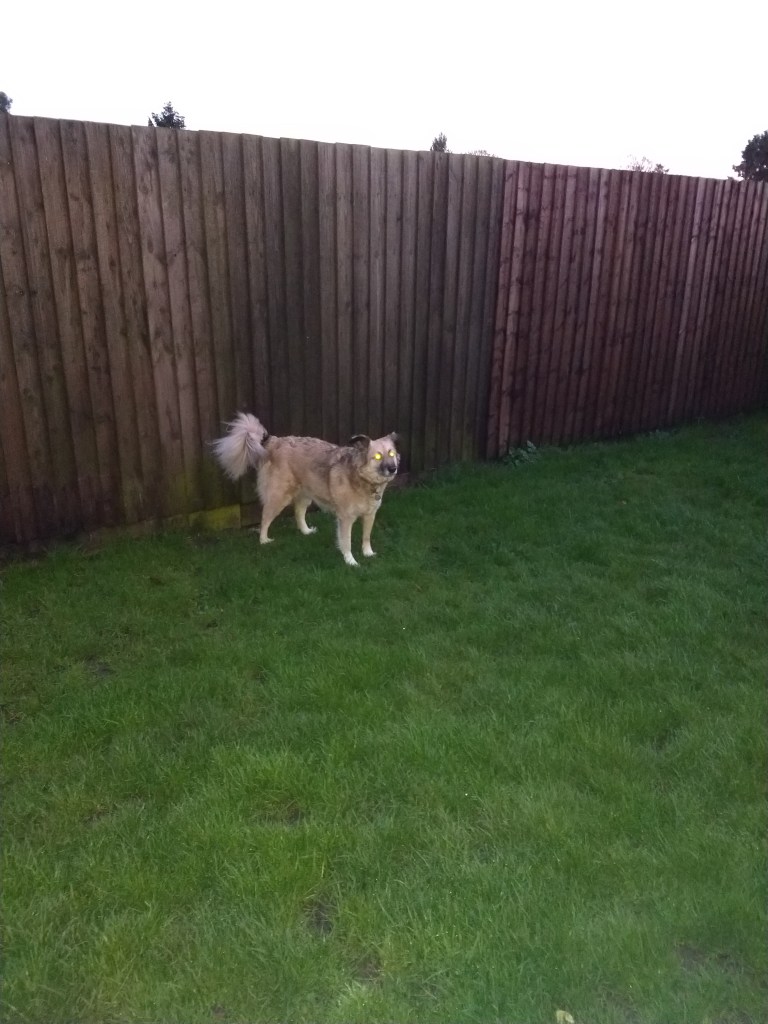
Yesterday she had a walk in the morning as usual, then I took her to a secure dog park near where we live #poochiepark before we set off to come here. Tomorrow we’re booked into a park near the barn #littlepaddocks. So today it’s a pj day for me.
I think Lydia is OK with this arrangement – she looks pretty chilled to me💕
 Glad About
You must be logged in to post a comment.