A piece that I’m pleased with

First published 29 September 2021
One aspect of depression that is a constant struggle is finding something – anything – to build up my self-esteem. To a certain extent I’ve learnt to live with it, knowing that the worst moments pass if I rest up and tune in to parts of my brain that I’ve trained, using positive processes such as meditation, and affirmations: “I choose to be peaceful and calm; everything is unfolding as it should.”

I’ve identified my own truths and ‘root causes’ of past problems, and arrived at a point – in a very long and arduous journey – where I felt I didn’t need to have any aspects of these verified or vindicated by any one or any thing. However, I have found it helpful recently to have discovered the work of Imi Lo. I went through her book – Emotional Sensitivity and Intensity: how to manage intense emotions as a highly sensitive person (John Murray Learning, 2018) – highlighting many passages that I felt applied directly to me. I urge anyone who has been deemed ‘over-sensitive’ and felt alienated one way or another as a result, to read and take hope from this book.

The author states in a key point (p.45):

We are not here to dismiss the validity of all mental health diagnoses, or the importance of appropriate treatment in the case of severe psychological trauma. But it is important to examine the root of your suffering: often, it may be a reflection of your natural tendencies, and a result of being misunderstood, rather than as a sign of defectiveness. We must be extra cautious to not reinforce any restrictive categories, diagnoses and stigma around emotional intensity.

In the final chapter of her book, Imi Lo identifies possibilities for tapping into our creative potential.

It’s possible to be creative in many ways – not just through the arts. I’ve been as creative as I could be at different stages in my life and through many different types of work. However, having arrived at the point when I’m now retired, giving me a new-found freedom that I relish, I’m loving being able to re-immerse myself in solving problems associated with art and design, construction and concepts.

A significant difference that I’ve noticed between how I feel about work that I produce now, compared with work that I produced when I was younger, is that now I can feel a sense of satisfaction about having produced it. I can ‘own it’, take pride in it, see it for what it is in the context of my life; a life that I’m glad to have.

My self-esteem still falls by the wayside sometimes, but – generally speaking – I’m in a much better place than I’ve ever been. It takes a bit of getting used to, but I’m determined to make the most of it, knowing that I am – after all ‘gifted’ rather than the waste of space I often felt my self to be.

Day 4

Writing into Life, more

Photo by Thapelo Boateng on Pexels.com

A friend told me recently that she had started to suffer from anxiety.

It had taken her by surprise as she loves her life, and considers the anxiety to be a chemical imbalance, that she is addressing through prescription medication.

I remember once feeling so frustrated when a GP described my mental health difficulties as a chemical imbalance. For me, medication has only ever been part of the equation, because of the complex nature of my experiences.

While I continue to rely on a daily dose of anti-depressant medication – a maintenance dose – I continue to additionally find my own ways of addressing internal imbalance, through the practises of Qigong, yoga, meditation and so on.

With no pottery session planned this afternoon, I’m booked in for an additional yoga class.

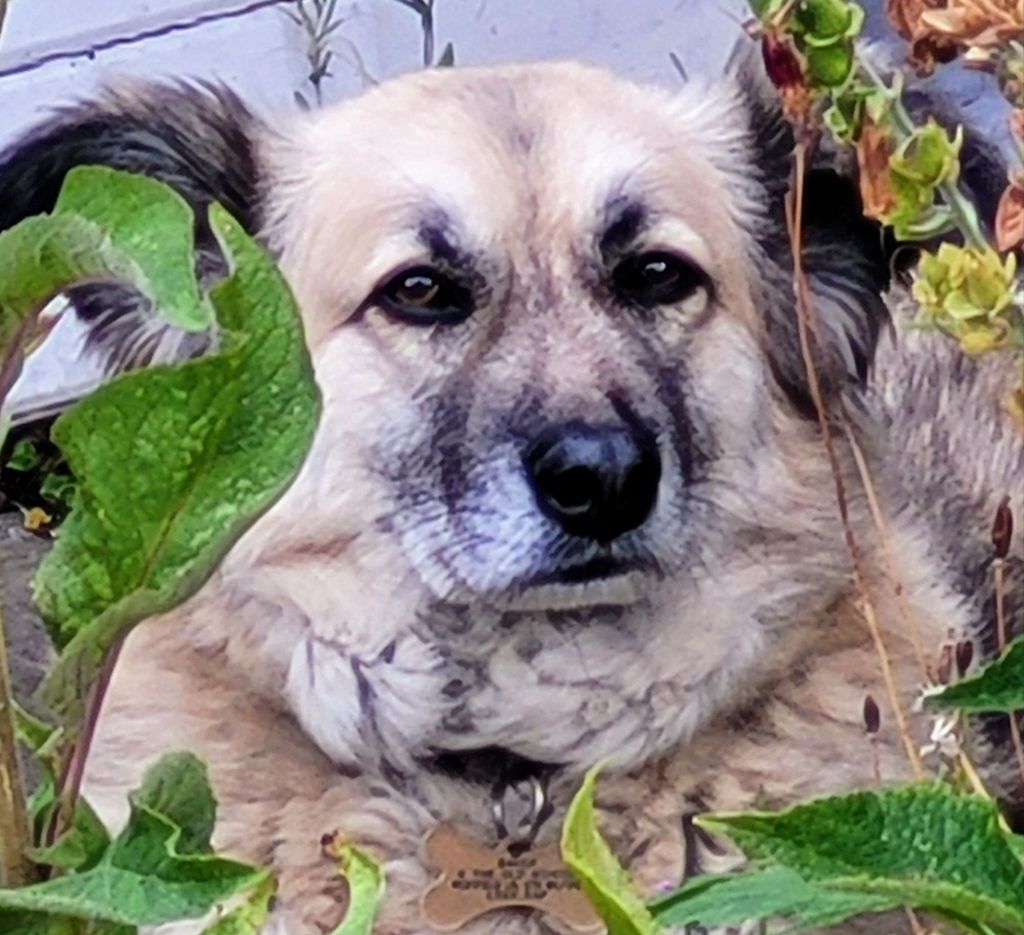
Lydia and I have had a walk together and she is now enjoying some time out in the back yard – her yard.

I’ve done a bit of housework so far, made and drunk some coffee, had some breakfast – a crusty roll with blackcurrant jam.

It may not be the most exciting start to the most exciting day, but it is just a start.

Later …

I do some front yard work  – tidying, sweeping, cleaning – in preparation for the winter ahead. It’s good to do focused physical work, outside in the fresh air. And good to keep up my momentum of ‘a bit at a time’. Things are gradually getting done.

Day 24 – Solutions

Writing into Life

Photo by Vinu00edcius Caricatte on Pexels.com

Waking this morning with a feeling of anxiety, my thoughts turn to the teaching and discussions at last night’s Buddhist meeting.

After I mentioned that the teachings and practices have been helping to lift me out of depression, another member of the group mentioned that she experiences anxiety rather than depression. The two often go together. In my case, I didn’t start to get any real sense of anxiety until after the depression started to lift. It hit me like a brick at the time: a traumatising blast of raw fear. Since then, I have been working on the fear and that too is usually in abeyance these days.  This morning the anxiety is more in my body than my mind and I turn my thoughts to other things, other people: friends and people I know; close and not so close.

After showering, I do a quick clean of the bathroom; just enough to tide it over while I’m still in rest and recharge mode. A bit at a time stops it from building up and then seeming like it’s too much to tackle.

I’m doing the same with my emotional and psychological journey: a bit at a time now, after feeling so overwhelmed in the now distant past that I didn’t know where to start. Except that I did start – somewhere – and I kept going, am keeping going.

It’s pottery for me this afternoon.  Trev is going to visit Lyme Regis, via a scenic route. Lydia is outside barking. She’ll be on her own for a few hours while I’m out so she may as well get a bit of fresh air and let off a bit of steam before I go.

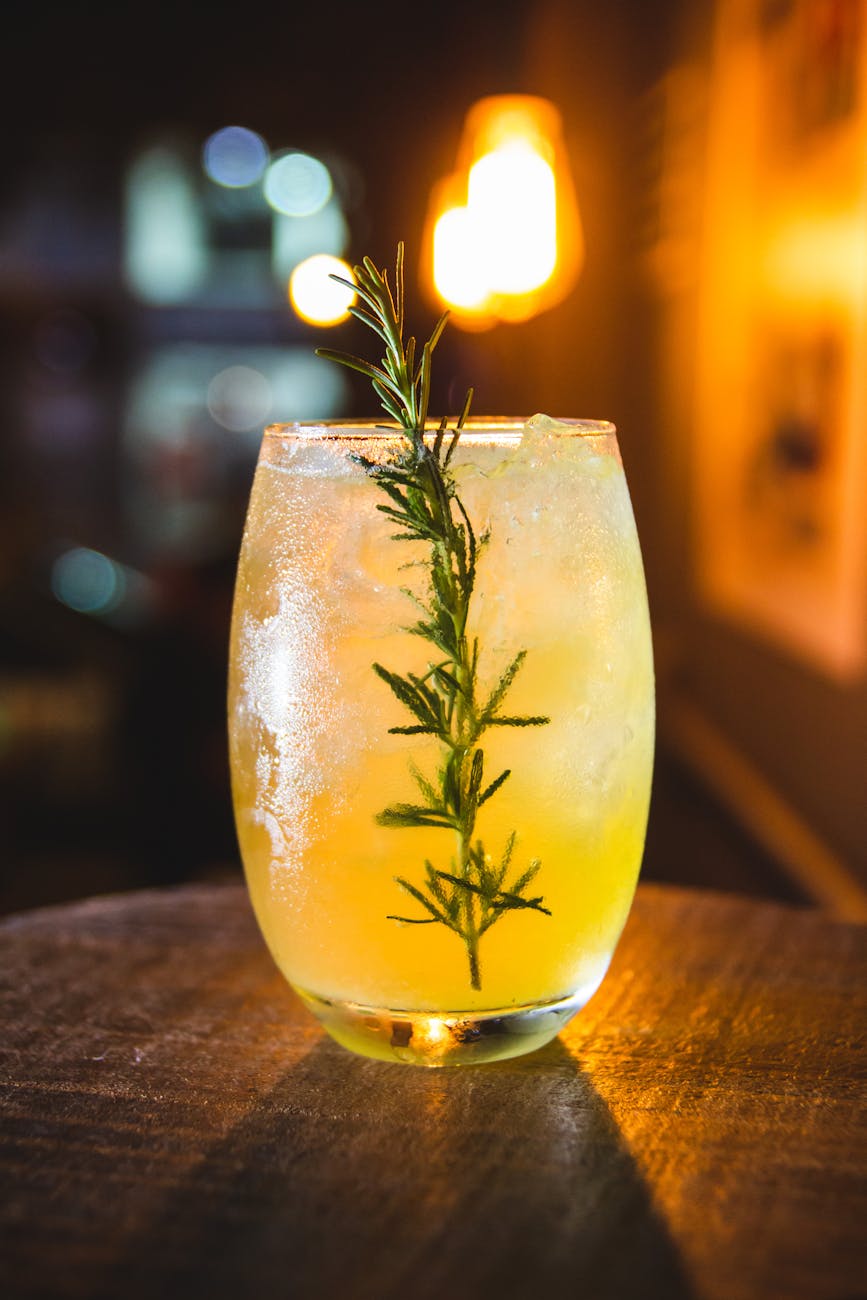
I’ll probably have beans on toast for tea. I like beans on toast. I may well also go for a large gin and tonic. I like gin and tonic too. Alcohol, of course, isn’t the answer, but it is a solution and one that can be very enjoyable if not over-indulged.  I recognise that it is only a temporary source of ‘happiness’ but it is a pleasure I can partake in for now, and tonight I probably will.

Day 6

Continuing the story of Lydia and Me

I needed a rest today; Lydia did too.

It’s raining.

She shows no interest in or inclination to go out in it.

We’re normally both all-weather girls, but today I have no interest in or inclination to go out in it either.

I leave the back door open so that she can go outside if she needs to, and go back to bed.

On checking my phone mid-afternoon, I see that it’s still showing the “connect charger” message.

There is no light on the extension board and no light comes on when I press the wall switch.  We have a power cut.

My phone charge is low so I turn it off, in case of emergency.

Thankfully, I can boil some water on the gas hob so make myself a cup of tea.

This is a ‘down day’ but not a ‘down day’.

The depression that I’ve been working through most of my life has gone, as has most of the more recent anxiety.

I’m tired – of course I am – but I’m neither ‘down’ nor ‘out’. I’m OK. We’re OK.

When I look over at Lydia, she is gently licking her paws and doing what she needs to do to look after herself, like I do.

For now, that means doing very little, and that’s enough.

Later we do go out for a walk, between showers.

When I give Lydia her tea, feeding her by hand as I always do, she waits a full two minutes in the “stay” position before I reward her with a raw chicken drumstick.

As always, I remind anyone and everyone to take veterinary advice on any aspect of dog feeding and nutrition. I only know what works for me and Lydia.  All dogs are different, just like all people are different.

The power comes back on.

Waking

 First published 29 June 2020

Anybody who has had depression knows that one of the most difficult things to deal with is that awful desolation that drowns you as you wake up from whatever sleep you can get.

It is an experience that you have to have had to know what it feels like, when the thought of even having to get up and get dressed, let alone do anything else, is beyond daunting.

There was a time when I could only wake up and get up by setting a first alarm clock to go off several hours beforehand, then another sometime after that, and another later still. When I finally did get out of bed, my first port of call was a strong cup of coffee (appropriately named ‘Rocket Fuel’) with which I swallowed my anti-depressant tablet. Eventually I could then get dressed and ready for work.

I’ve started to struggle again with this aspect depression, after years of having trained myself to get up without too much snooze time between alarms. The fact that my partner now brings me a good strong cup of tea helps enormously, as does not having any time pressures at the moment. Even so, the tasks associated with waking up, getting up and getting dressed should not be underestimated for anyone who is suffering from depression. Like a lot of things, breaking the process down into small steps can be a good strategy. First one sock, and then the other.

I’m working towards being one of those people who springs out of bed in order to ‘seize the day’. Just because I’m slow to start, though, doesn’t me I don’t appreciate and value. It just means that I have to take my time to get myself (literally) geared up, even at a basic level.

This is one place (of many) where the poem in my recently posted Poetry Rule No. 9b Keep recycling to a minimum until you’ve got your other priorities right applies.

Rules, Rhymes, Recovery, Recipe, Random – Glad About Life:

https://amzn.eu/d/6Ptwe4S

Woman, a Dog & a Blog – Writing into Life:

https://amzn.eu/d/63qIYzR

Sleeping

First published 27 May 2020

Ironically, I’ve recently been feeling too tired to write about what I have wanted to write about: sleep. Until today.

Breaking the cycle of inactivity is massively difficult during a period of depression. It feels impossible to know what to do or where to start that will make any difference in any meaningful and lasting way. And then sleeplessness takes hold and so it goes on.

I still have variable experiences of being able to get to sleep, and sleep long and deep enough to feel rested. However, any current difficulties I have are nothing compared to what it was like for me, years ago, when I became addicted to sleeping pills (Triazepam).

In the end, to detox, I took myself to Turkey in the hot season, walked and sweated for miles and eventually screamed myself off them.

The process of detox itself, especially in unsupported circumstances, is very dangerous, and, to anyone contemplating taking tranquilizers of any kind, I would say, “Don’t!”.

It might be easy for me to say that now, as I did take them then and felt that I needed to – desperately – at the time. Maybe I did. But that was before I had explored all the other options and possibilities, mainly because I didn’t know about them.

There is much more awareness and access to mental health coping strategies than there used to be over twenty years ago when I was going through some extreme experiences. Meditation courses and apps, Cognitive Behaviour Therapy, affirmations (I use these a lot), talking therapies, the benefits of exercise and so on. Even so, despite drawing on these approaches and applying them in my day-to-day life as best as I can, I don’t always sleep well.

Now, though, I’m much more able to sit or lie with the lack of sleep and rest into it, be patient with it, rather than going for a quick fix with all the associated draw backs. If I’m really struggling to settle, I might get up, watch a bit of telly (reading is usually out of the question at these times, such is the impact of depression on my capacity to concentrate), make a cup of tea or – even better – hot chocolate. I also occasionally indulge in a glass or two of wine or a gin and tonic. (I’m conscious of the drawbacks and addictive aspects of alcohol reliance but it does sometimes do the trick; a couple of paracetamols – again as a very occasional alternative and never at the same time as alcohol – also eventually send me off.)

I’m gradually working towards having a kinder and more balanced relationship with myself, doing what I can to be good to my body and my brain. I work on being thankful, get my brain into ‘glad’ mode and accept that I am getting “there”, which is “here”, with every day a blessing.

It is much easier for the me that I am now, than the me that I was twenty years ago, to not fall back on the quick fixes, partly because I have worked hard to find out about and put self-management strategies into practice and partly because I am in a much better place on a personal level. It is much easier to get to sleep on an evening, knowing that in the morning I will wake up in my partner’s loving arms.

Maybe there was a time when I did shoot the Albatross, and paid the price. But sleep is a very gentle thing, and doing my best to let sleep slide into my soul is part of an essential process of healing.

A Woman, a Dog & a Blog – Writing into Life:
https://amzn.eu/d/6Ho21L

Rules, Rhymes, Recovery, Recipe, Random – Glad About Life: https://amzn.eu/d/6Ptwe4S


Cycles of Recovery

First published 18 April 2020

Grey Island

Grey island
you spin and swirl around me
(or is it the sea?)
as I sit and wait
for my thick-headed brain
to clear
which it does
almost, but elusively
and all too briefly
teasingly
still tense
tension immense

Four seagulls soar
one sits
probably shits
(or is that on the wing?)

Thrift, rock, heather
purple, black, yellow, mauve
green, grey, white
weather wild
mild
quite

Walking, talking, inwardly
I sit (still) and wait
for my thick-headed brain to clear
and allow me to feel
the joy of the sea
and the splendour of the trees
and everything around me

So, I sit (on a rock) and wait
for my thick-headed brain to clear
and know that someday soon
it will be free
hopefully

1998

A quarter of a century after I started my self-directed journey of recovery from a complete personal breakdown, it would be easy to think at this stage that I never will get that sense of mental clarity that I have been seeking.

I hoped by now that I could have been sailing instead of struggling to find the energy to get through each day in a remotely positive way.

There are significant differences though, between then – when I started out – and now – when I’ve arrived at a particularly low-down point, wondering how on earth I’m going to summon up the motivation and momentum to start going ‘up’ or ‘forward’ again.

The most significant difference for me is that now I’m in a loving relationship.  My partner and I care for and about each other in ways that make us both feel good.  He suffers from depression too, so we often alternate in terms of who most needs support from the other at any one time. We’ve both had almost catastrophic life experiences to contend with in the past, both just come through by the skin of our teeth, both had to learn to trust again – often the most difficult thing of all, including trusting ourselves as well as each other. And we’re both now thankful that we’ve found each other. ‘Together Forever’ is our motto. We want to make the most of the time that we have – both now in our 60s – and that, in itself, is a motivator. At the same time, I’m still feeling profoundly exhausted and know that I need to do some more work on myself to pull out of this and finally put the traumas of the past behind me.

I know that it’s important to sometimes push myself and at other times do nothing. Doing nothing is hard as it brings with it the fear that it will become a permanent state and that I will vegetate from doing nothing to being nothing. At my age, fear of dementia also comes in to the mix. But in the depths of depression, doing anything at all feels like just too much, so where do I start?

I keep coming back to affirmations.  Affirmations, some gentle regular exercise, healthy eating, not too much alcohol.  All sensible things.

The affirmations I’ve identified for myself at this time are for depression and hearing problems.  While I don’t really have hearing problems as such – other than age-related deterioration – I do have problems with ‘itchy ears’ and I have also had problems in the past with being heard. 

I set about learning and practising active listening skills when I trained as a volunteer bereavement counsellor – it must have been about 20 years ago now.  I’ve found those skills invaluable in different jobs and roles that I’ve held, although more latterly I’ve found it increasingly hard to concentrate.  Active listening, by definition, means giving another person full attention. I think my body and brain have been telling me to give myself full attention for a change; had I ‘listened’ to what they were telling me earlier, I might not have arrived at the state I’m at now, although by the nature of cycles, they do have to go full turn.

Anyway, the affirmations that I’ve found, to say to myself when I can and when I need to, are:

“I move beyond other people’s fear and limitations. I create my own life.”

“I hear with love.”

When I say each of these, at the very low ebb that I’m at now, I get a sense of uplift in my spirit, even if my body and brain are running well behind.  I hold on to the belief that they will catch up though. Eventually.

Oh, and of course writing – something, anything – can be therapeutic as well. I’m going to keep writing, and affirming. And washing up, and doing a bit of gardening …

Affirmations

First published 29 March 2020:

“I choose to be peaceful and calm. Everything is unfolding as it should.”

Affirmations can be hard to take on faith at the best of times. At times like this – and especially with an affirmation like this – it can be even harder.

On my daily walk with my partner, in the beautiful spring sunshine and along the peaceful country lanes around where we are lucky enough to live, I’ve stopped and said this affirmation out loud, and it has helped; helped me to remind myself that I can choose to respond to any given situation in a calm and peaceful way, providing I have control of my emotions and my mind. It might be hard, but not impossible. It is something that I can keep working towards being able to do, even if I can’t do it now.

I first started to use this affirmation a few months ago, when I was struggling with some very difficult work situations and high levels of associated anxiety.

I discovered it in a slightly different form at http://thinkup.me/affirm and my thanks go to the author of that article. (5 Recommended Positive Affirmations for Anxiety by Yvonne Williams Casaus, 26 December 2017)

After struggling with anxiety and depression for many years, I keep thinking that I’ve beaten them, only to be hit again by another wave.

The difference, though, between when I first started my personal battle with depression – in my teens – and now – in my 60s – is that I now have a well-stocked resource bank of strategies to fall back on.

Even so, the nature of the disease- and it is a dis-ease – is such that it can be hard to fall back on what we know works when we are at our lowest ebb. I also find that I no longer have the reserves of fighting energy that I used to have, but if I can at least find an affirmation that resonates with me – even on a leap of faith – then I am doing something positive to pull myself through.

The first time I came across affirmations was when I was going through a breakdown in my late thirties.

Suddenly reaching out – desperately, as I knew I was in danger of drowning and was definitely not waving – I found that there were sources of help and support around that I had never even heard about before or could imagine being available.

Counselling was one of these, meditation another, and I also came across a book called You Can Heal Your Life by Louise Hay (1984).

In that book, as I recall, I identified an affirmation that reflected the exact opposite of how I was feeling:

“I am the love and beauty of life in full expression.”

At the time, I was feeling like the worst wretch that ever crawled the planet. But I knew I had to do something to turn my life around and so I took on board the affirmation and kept saying it to myself again and again and again. And it worked. Not on its own, not without me doing all sort of other things at the same time and ever since, but it helped to cure my warts (literally) and set me on the path to keep working and trying, never giving up.

This brings me to some more poetry, and Poetry Rule No. 28, Stand your ground when you need to; move when you don’t.

Sometimes

Sometimes
it isn’t as bad
as you think
it’s going to be
it isn’t even worse
as you hesitate
with anticipation
and brace yourself
to curse

Sometimes
you’re presently surprised
more than you thought
you could be
when you’re met with
some small kindness
unexpectedly

At times like these
it’s good to be wrong
in fact I would go
so far as to say
it’s a blessing
that’s been missing
for a long time
so, no messing
seriously

Sometimes
are better than
no times never
wouldn’t you
agree?

1998

Rules, Rhymes, Recovery, Recipe, Random – Glad About Life:
https://amzn.eu/d/6Ptwe4

A Woman, a Dog & a Blog – Writing into Life:
https://amzn.eu/d/6Ho21L8

Day 7

Photo by Madison Inouye on Pexels.com

Continuing the story of Lydia and Me https://amzn.eu/d/99yW3Qk

As I write, my beautiful girl is crunching her way through a dental chew. 

The chew is bone shaped. I did quite a lot of internet searching to find out about different brands, and this is one of the brands that got the best reviews. She has good teeth, and I want to help her to look after them.

I’ve struggled a bit with looking after my own teeth in the past. 

I previously wrote a blog post about this, and about other aspects of self-care within the context of mental distress:

At that time, there was a mental health update strategy in progress with a claim that mental health would be included in an overall ‘major conditions’ strategy that will focus on ‘whole-person care’.

There is now a Policy paper ‘Major conditions strategy: case for change and our strategic framework’ (Updated 21 August 2023) that includes common mental health conditions and severe mental illness (SMI).

There is some reassurance in the reference to reducing risks earlier in life, and it is also noted that:

 “…  access to physical healthcare is particularly important for people with SMI. The NHS LTP sets out a transformation programme to develop integrated models of care and holistic support closer to home. The major conditions strategy will outline how to do more to implement physical health support across mental health pathways.”

So, there’s a long way to go but at least there does seem to be some movement in the right direction, hopefully for future generations and hopefully for some people sooner than that.

In the here and now, I continue with my own strategy to manage my health and wellbeing, relying on only minimal, but still welcome, support from the system in the form of anti-depressant medication.

However, I do have access to other forms of support, that make all the difference to me in the context of my life.  These take human and canine form.  They are, of course, my friends, including Lydia.

With her, I am out every day, walking, enjoying fresh air and steady exercise.  I have, with her, companionship and company. Good company.

My friends are amazing – they are rallying for me at a time when I am struggling emotionally.

I am still struggling with anger; have just come back from a Buddhist prayer session; have just spoken to a friend on the phone; am writing this.  It all helps; having positive outlets for energy and emotions helps. I didn’t have this when I was younger, but I do now.

“I choose to be peaceful and calm. Everything is unfolding as it should.”

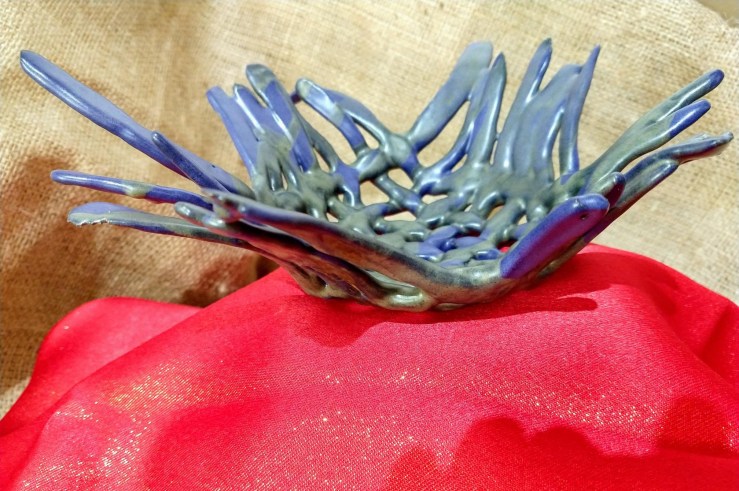
A piece that I’m pleased with

One aspect of depression that is a constant struggle is finding something – anything – to build up my self-esteem. To a certain extent I’ve learnt to live with it, knowing that the worst moments pass if I rest up and tune in to parts of my brain that I’ve trained, using positive processes such as meditation, and affirmations: “I choose to be peaceful and calm; everything is unfolding as it should.”

I’ve identified my own truths and ‘root causes’ of past problems, and arrived at a point – in a very long and arduous journey – where I felt I didn’t need to have any aspects of these verified or vindicated by any one or any thing. However, I have found it helpful recently to have discovered the work of Imi Lo. I went through her book – Emotional Sensitivity and Intensity: how to manage intense emotions as a highly sensitive person (John Murray Learning, 2018) – highlighting many passages that I felt applied directly to me. I urge anyone who has been deemed ‘over-sensitive’ and felt alienated one way or another as a result, to read and take hope from this book.

The author states in a key point (p.45):

We are not here to dismiss the validity of all mental health diagnoses, or the importance of appropriate treatment in the case of severe psychological trauma. But it is important to examine the root of your suffering: often, it may be a reflection of your natural tendencies, and a result of being misunderstood, rather than as a sign of defectiveness. We must be extra cautious to not reinforce any restrictive categories, diagnoses and stigma around emotional intensity.

In the final chapter of her book, Imi Lo identifies possibilities for tapping in to our creative potential.

It’s possible to be creative in many ways – not just through the arts. I’ve been as creative as I could be at different stages in my life and through many different types of work. However, having arrived at the point when I’m now retired, giving me a new-found freedom that I relish, I’m loving being able to re-immerse myself in solving problems associated with art and design, construction and concepts.

A significant difference that I’ve noticed between how I feel about work that I produce now, compared with work that I produced when I was younger, is that now I can feel a sense of satisfaction about having produced it. I can ‘own it’, take pride in it, see it for what it is in the context of my life; a life that I’m glad to have.

My self-esteem still falls by the wayside sometimes, but – generally speaking – I’m in a much better place than I’ve ever been. It takes a bit of getting used to, but I’m determined to make the most of it, knowing that I am – after all ‘gifted’ rather than the waste of space I often felt myself to be.