Day 15

Continuing the story of Lydia and Me https://amzn.eu/d/99yW3Qk

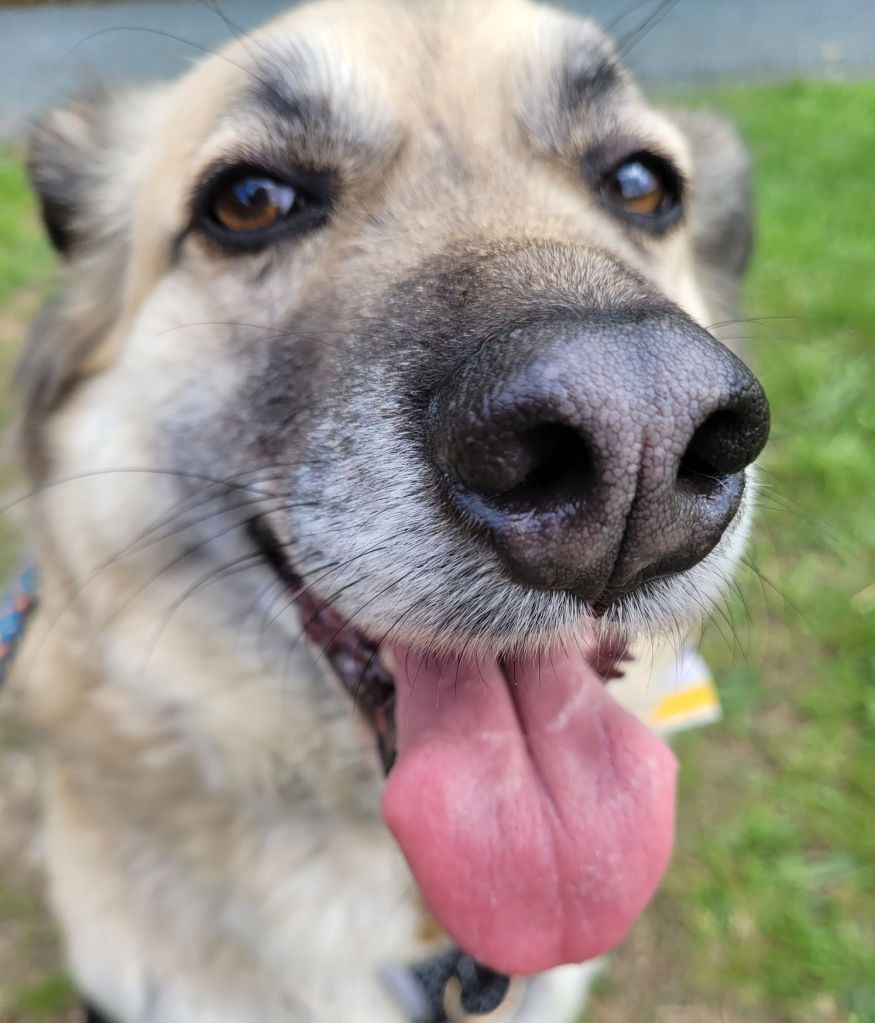
Having identified a priority for Lydia of giving her more body rubs and gentle massage, I introduced these during our walk today.

So, as well as continuing to reinforce “heel” and “watch”, using some of her daily food allowance combined with tasty treats for rewards, I stopped a few times during the walk to rub around her neck, ears and lower abdomen. 

This had an immediate calming effect. I also made sure that I gave her lots of verbal encouragement as we were walking along: “we’re OK Lydia”, “yes, good girl, we’re doing OK”, repeated often.

This evening, after we’d had our respective meals, Lydia came up to me while I was sitting on the settee, and I gave her some more rubs, all around her ears and down her spine. She sat there for ages while I did this – a far cry from when we first got her, when she would not have been able to accept this kind of attention at all. She came back for a little bit more rubbing and some brushing, and then started barking – an invitation I have come to realise, at this time of an evening, to have a bit of a play.

We played ‘tuggie’ with an old towel for a while, then she settled down.

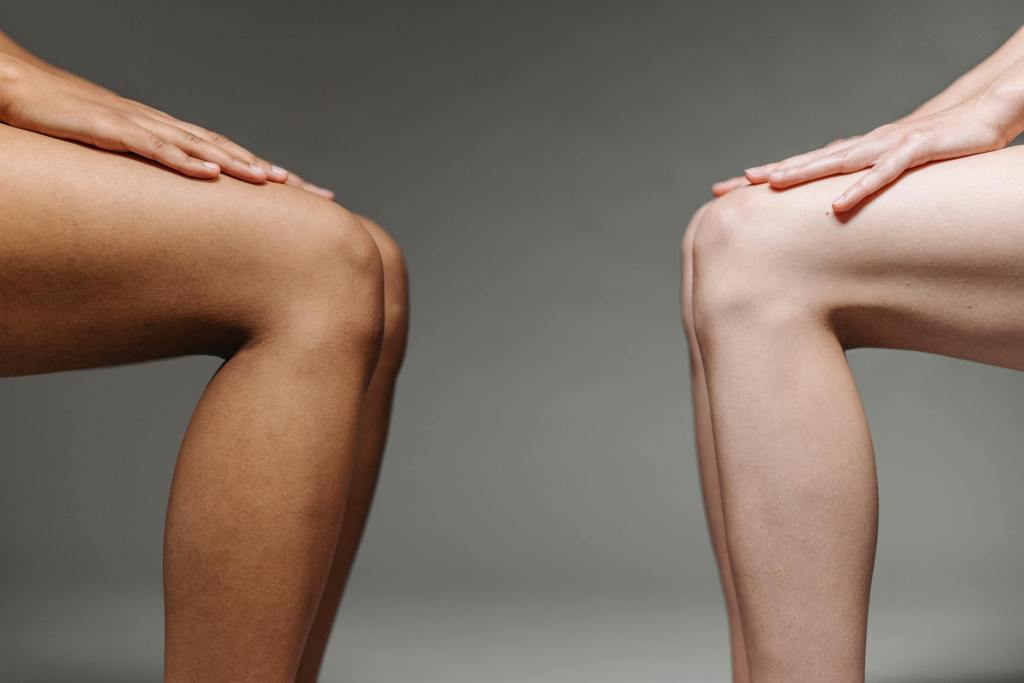
At my Qigong class today, we started by giving our knees a gentle rub. As Sue, the teacher said, this was an acknowledgement that we were going to be kind to ourselves, to our bodies, for an hour, doing gentle movements under gentle guidance.

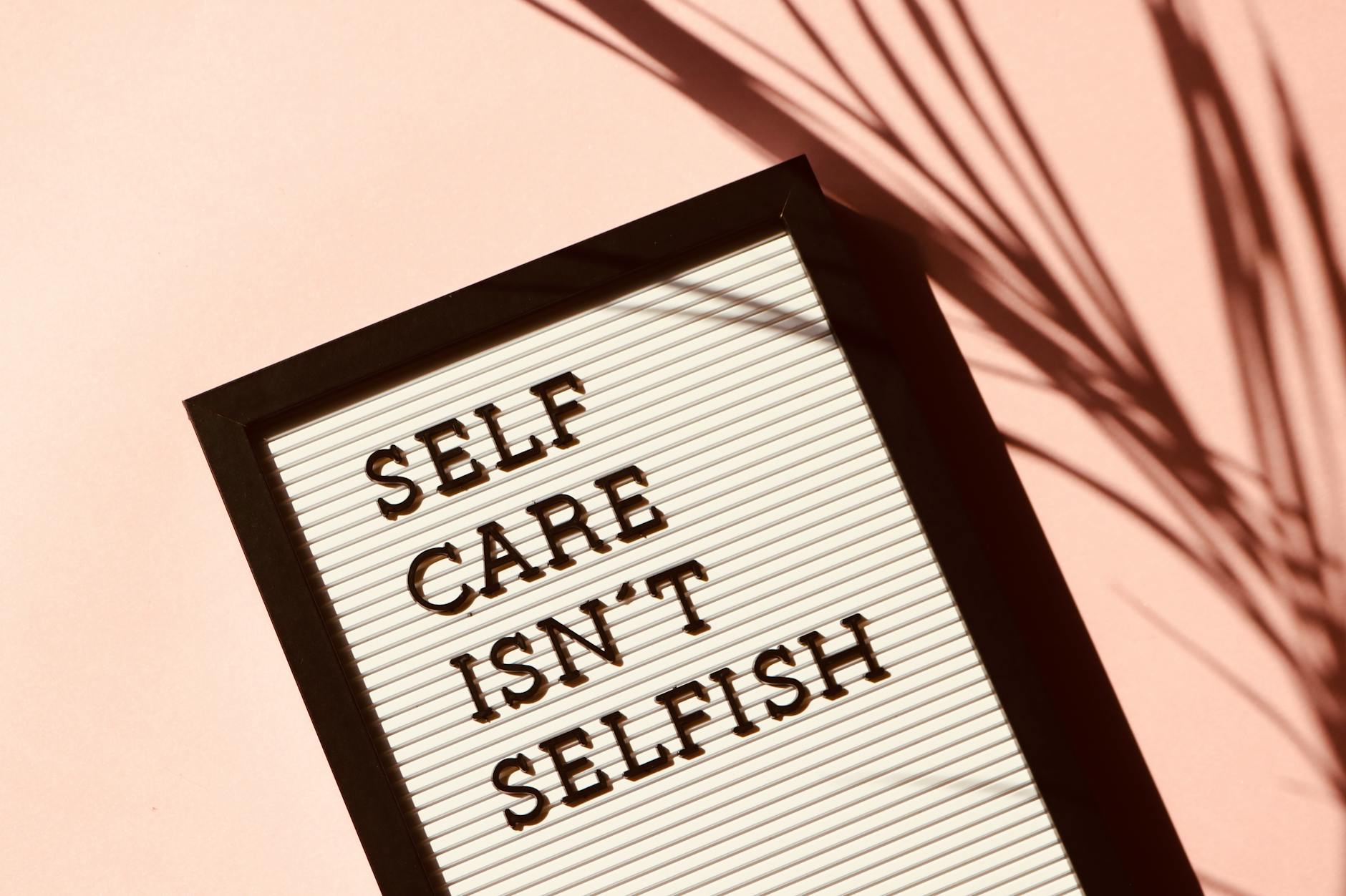
I haven’t always found it easy to care for myself; I used to have a tendency to push myself too hard, and to look after others’ needs first. While I continue to want to look out for and care for others, including Lydia, I also recognise now, particularly at this stage of my life, that I need to look after myself as a priority.

So, I have had a good ‘Mental Health Monday’, with a lovely walk around and through a wood; a yoga session which concentrated on developing strength and flexibility in the spine; and a Qigong class which incorporated a range of movements to open up the shoulder blades, promoting a calmer mind through working with the body and the breath.

I’m hopeful that I’m helping Lydia to have a calmer mind too.

Day 12

Continuing the story of Lydia and Me https://amzn.eu/d/99yW3Qk

Lydia had a chance to run about without harness or lead this morning, in a secure dog field.

I love to see her using what I call her ‘happy legs’, as she trots around, rolls about, sniffs, sniffs and sniffs some more.

While she is doing what she wants to do, I do some exercises for my knees. I’m still applying the ‘wear and tear’ gel to the backs of my knees, taking a joint care supplement, and saying the affirmation: “My knee is healing and getting stronger each passing day”. This combination of attention to my knees seems to be working. My right knee – the one that I was having some problems with a few weeks ago – is much improved.  Again, I reflect on how lucky I am, at the age of 69, to have the level of fitness and health in my body that I have.

During difficult times mentally and emotionally it can be hard to look after ourselves physically. Well, that’s my experience anyway and earlier blogs refer to evidence that supports this.

And, of course, it is in those times that we most need to look after ourselves in all aspects, so that we can have the chance to recover into a good place.

If it wasn’t for Lydia, I would have nowhere near the level of physical fitness that I have at the present time. Taking her for a walk every day – even if it isn’t a particularly long or strenuous one – has helped me both physically and mentally. The training and learning we’re doing together helps to keep us both mentally stimulated and strengthens the bond between us. 

I gave her some good neck and leg rubs this morning while we were out in the dog field. She settled down into the massage, then shortly afterwards went for another run and a roll.

I’ve read a little bit about the vagus nerve and the part it plays in regulating a dog’s nervous system.

I’m doing some of the things that are recommended to help support her nervous system. She is generally quite calm in most situations these days, including now as she is lying outside in the back yard, enjoying some sunshine and not even barking at the birds. Progress!

As for me, well I think my vagus nerve may be over-stimulated and not well-regulated, but I will keep working on it, doing my best to remain as calm as possible, even under difficult circumstances.

Coming back to knees, I came across an online article, published recently by the Knee Pain Centers of America (The Psychological Impact of Knee Pain and How to Cope) which identifies a link between stress and knee pain:

Stress plays a crucial role in the experience and management of chronic knee pain, affecting both physical and emotional health. When an individual encounters stress, the body activates the hypothalamic–pituitary–adrenal (HPA) axis, leading to increased secretion of cortisol, the primary stress hormone. Elevated cortisol levels over time can contribute to tissue degeneration, muscle wasting, and persistent inflammation, all of which can exacerbate knee pain.

Psychologically, stress is closely linked with emotional disturbances like anxiety and depression. These mental health issues can alter pain perception, often intensifying the sensation of pain through neurochemical pathways. Depression, in particular, involves cytokine imbalance and neurotransmitter dysregulation, which can make pain feel more severe and reduce motivation for physical activity.

Moreover, chronic knee pain can itself influence mental health adversely. Limitations in movement and daily activities may lead to social withdrawal, loneliness, and feelings of helplessness. This emotional distress feeds back into the physical aspect, worsening inflammation and pain, and setting up a vicious cycle.

However, research indicates that managing stress through lifestyle modifications, engaging in regular, low-impact physical activity, and psychosocial strategies can break this cycle. Techniques such as mindfulness, relaxation exercises, and support groups have shown to alleviate stress, reduce inflammation, and improve both mental well-being and joint health.

Referring to strategies to reduce stress and its impact on knee health, the article notes:

Effective strategies include engaging in mindfulness-based exercises such as yoga and tai chi, which promote joint flexibility and mental calmness. Maintaining a healthy lifestyle with weight management, smoking cessation, and regular exercise helps lower stress levels and protect joint integrity.

Supportive therapies like cognitive-behavioral therapy (CBT) help reframe negative thought patterns about pain, reducing catastrophizing and emotional distress. Additionally, social support networks and participation in support groups can provide emotional resilience, helping individuals cope better.

Incorporating these approaches into comprehensive treatment plans addressing both physical and mental health aspects yields better outcomes, reducing pain severity, improving mood, and fostering overall well-being.

Therefore I seem to be doing quite a few things right to help maintain healthy knees. I’ve still got a lot to work on but I am doing what I can, when I can.

The identified strategy also brings to mind and – to my mind – supports the principle of affirmations. Affirmations help to reframe negative thought patterns and I am committed to continuing to do that, for myself, for my knees and for my dog.

My knee is healing and getting stronger each passing day.

Day 10

Continuing the story of Lydia and Me https://amzn.eu/d/99yW3Qk

Lydia and I have both had healthy breakfasts today.

Her dry food has a high protein content, with lots of different ingredients including pumpkin, chickpeas, salmon oil, blueberries, dried ginger root, green-lipped mussels, glucosamine, chondroitin, Vitamin C, and others.

These pellets form the main basis of her diet, which I top up with additional food and treats. I try to make sure that the treats also have a high nutritional value.

I hope that her diet, combined with our regular exercise, combined with our training routines, will help to keep her healthy in mind and body. I hope that the love and attention I give her will help to keep her healthy in spirit.

My own breakfast this morning took the form of half a banana, some fresh strawberries, natural yoghurt, no-added-sugar muesli and some semi-skimmed milk. Historically I haven’t always been great at making sure that I have a healthy diet, but I’m getting better at it now. I’ve previously worked through an eating disorder and body dysmorphia, so it’s taken me a while to reach a point of having a healthy attitude to food. I do now though, on the whole.

In this blog I’ve most recently been writing about life with reference largely to my relationship with Lydia. This is because we are working together, Lydia and Me. She is learning to “heel” and I am learning to ‘heal’. In fact, we are both learning to heal, and we are helping each other.

Pottery also features as part of the healing process for me.

While I describe myself as a ‘Poetic Potter’ and a ‘Potting Poet’, I haven’t written a lot of poems recently.

I used to write more poetry, particularly when I had no other outlet for or inclination towards the creative arts. I do, however, belong to a poetry group, a poetry ‘corner’.

We meet once a month in a local library.  It’s the library in the town where I was born.

Each month, we set a theme for the following month’s meeting.  This month, the ‘theme’ is the name of the town where we meet; the town where I was born.

The ethos of our group is one of positive feedback; it is a very gentle and supportive group, facilitated by a very gentle and supportive leader.  We get a chance to read out poems that we’ve written, and to receive comments about them. This is the poem that I have written for the next meeting:

The Library
We met in a library
It’s a different library
to the one I meet others in, today
Since then
a lot of waves have washed
upon the shore
and pulled back
into nothing at all
I have little in the way of recall
to the times between
but that doesn’t mean
I don’t or didn’t care
It just means
I am aware
of a great tidal void
between then and now
Except that in this library
at this time
I am nowhere near the same
as I was in that library, then
I hope that we can meet
in this library
again.

© Maggie Baker 2025

A fellow member of the group described the meetings as ‘soul food’.

I’m looking forward to some spiritual sustenance on Saturday, when we have our meeting.  I’m also looking forward to further spiritual sustenance tonight, when I go to the Buddhist meeting. This will be for the second in the latest group of four classes: ‘Transforming Through Adversity’.  

Day 8

Continuing the story of Lydia and Me https://amzn.eu/d/99yW3Qk

Today I’ve had a walk/yoga/Qigong combo: great for physical and mental health.

The Policy paper, Major conditions strategy: case for change and our strategic framework Updated 21 August 2023 (www.gov.uk), includes reference to Musculo Skeletal (MSK) Health:

What the data tells us and our existing commitments

Poor MSK health is the leading contributor to the global burden of disease, with 20 million people in the UK living with an MSK condition (see the State of musculoskeletal health). In addition, one in 8 report living with at least 2 long-term conditions, one of which is MSK related. MSK conditions are one of the leading causes of years lived with disability in the UK today, accounting for 21% of YLDs, with low back pain the top cause (see the State of musculoskeletal health). They are also one of the main reasons given for ill health inactivity, with 21% of those economically inactive reporting MSK conditions.

MSK conditions affect people across the life course and cover a range of conditions, including conditions of MSK pain such as osteoarthritis, back pain and fibromyalgia, osteoporosis and inflammatory conditions such as rheumatoid arthritis and spondyloarthritis.[footnote 48]

Prevention, early detection and treatment can enable people to live in good health, remain independent and connected to the community, reduce the pressure on health and social care services and support people with MSK conditions to thrive in work.

Reducing the risks

There are multiple risk factors that can heighten people’s susceptibility to MSK conditions. These include living in an area of high deprivation, older age, being a woman, having a mental health condition, and genetic predisposition.[footnote 49]

There are also many modifiable risk factors that include physical inactivity, living with overweight or obesity, diets deficient in vitamin D or calcium, and smoking.[footnote 48] For a high number of MSK conditions, secondary prevention will also be effective.

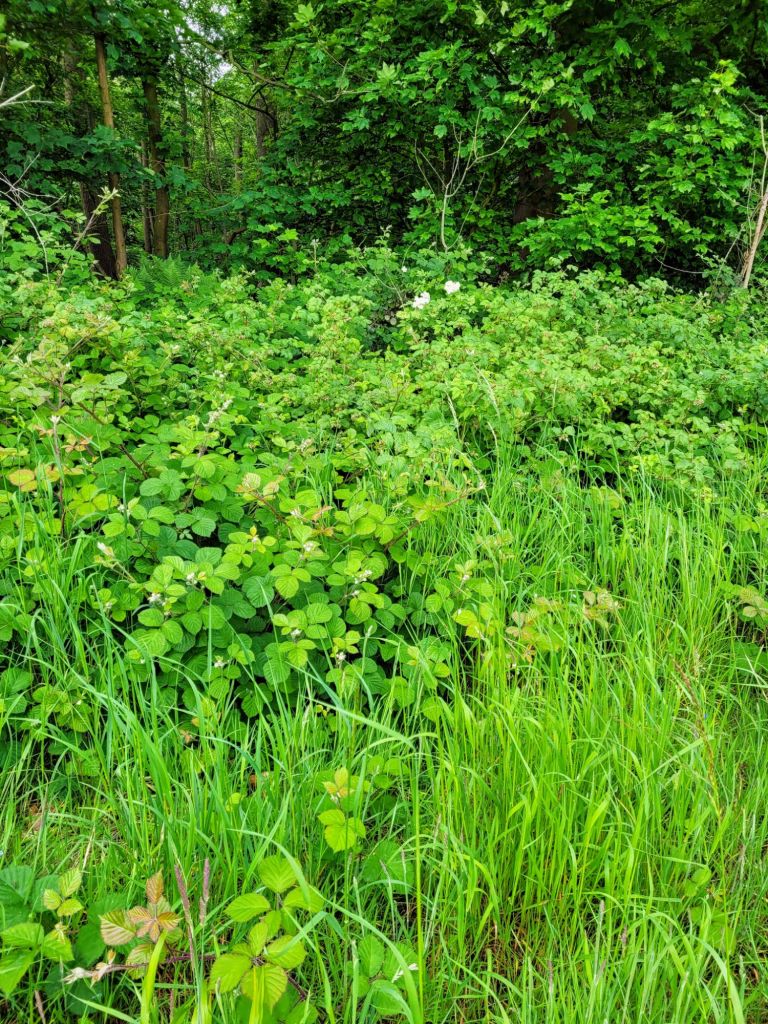
Everything around us – and underfoot – is green

I’m doing my bit in reducing the risk to myself, with my commitment to physical activity of various kinds.

The crops in the field, either side of the narrow path that leads to the woodland walk for Lydia and me, are continuing to grow.  They are now up to waist height on me. That doesn’t mean they are particularly tall, because I’m not, but they are doing well and hopefully will flourish.

Lydia is a bit ‘tuggie’ this morning, so I do a few about turns. There is a moist warmth arising from the path. Everything around us – and underfoot – is green.

We’re out for over an hour, at a steady pace. I enjoy my walk in the wood. With the amount of sniffing she does, I feel confident that Lydia does too.

Returning home, we both have our breakfasts and then I rest for a while before going out to my yoga class.  The class on this day lasts for one-and-a-half hours, and I feel like I’ve had a good workout by the end of it, building up muscle strength and developing flexibility.

After yoga I drive straight on to Qigong, a journey of about 20 minutes. I arrive early and sit outside on a wall for a while. It’s warm, not hot, and there is a gentle breeze.

I speak with the Qigong teacher, Sue, and we reflect on why – with all its health benefits – Qigong is still not that well known and more widely practiced. We don’t really have any answers, but I am just very glad that I do go to classes and I do get the benefits.

The current group of three Qigong lessons – of which this is the second – is concentrating on ankles and shoulder blades. We are slowly building up to a lovely movement known as ‘Cloud Hands’.

By the end of the class I feel ‘lighter’ in head and body.  A lot of tension has gone. Not all of it, by any means, but a lot.  I am hopeful of a good sleep tonight.

Day 7

Photo by Madison Inouye on Pexels.com

Continuing the story of Lydia and Me https://amzn.eu/d/99yW3Qk

As I write, my beautiful girl is crunching her way through a dental chew. 

The chew is bone shaped. I did quite a lot of internet searching to find out about different brands, and this is one of the brands that got the best reviews. She has good teeth, and I want to help her to look after them.

I’ve struggled a bit with looking after my own teeth in the past. 

I previously wrote a blog post about this, and about other aspects of self-care within the context of mental distress:

At that time, there was a mental health update strategy in progress with a claim that mental health would be included in an overall ‘major conditions’ strategy that will focus on ‘whole-person care’.

There is now a Policy paper ‘Major conditions strategy: case for change and our strategic framework’ (Updated 21 August 2023) that includes common mental health conditions and severe mental illness (SMI).

There is some reassurance in the reference to reducing risks earlier in life, and it is also noted that:

 “…  access to physical healthcare is particularly important for people with SMI. The NHS LTP sets out a transformation programme to develop integrated models of care and holistic support closer to home. The major conditions strategy will outline how to do more to implement physical health support across mental health pathways.”

So, there’s a long way to go but at least there does seem to be some movement in the right direction, hopefully for future generations and hopefully for some people sooner than that.

In the here and now, I continue with my own strategy to manage my health and wellbeing, relying on only minimal, but still welcome, support from the system in the form of anti-depressant medication.

However, I do have access to other forms of support, that make all the difference to me in the context of my life.  These take human and canine form.  They are, of course, my friends, including Lydia.

With her, I am out every day, walking, enjoying fresh air and steady exercise.  I have, with her, companionship and company. Good company.

My friends are amazing – they are rallying for me at a time when I am struggling emotionally.

I am still struggling with anger; have just come back from a Buddhist prayer session; have just spoken to a friend on the phone; am writing this.  It all helps; having positive outlets for energy and emotions helps. I didn’t have this when I was younger, but I do now.

“I choose to be peaceful and calm. Everything is unfolding as it should.”

Day 1

continuing the story of Lydia, Me and our Family of Three https://amzn.eu/d/99yW3Qk

Photo by Anthony ud83dude42 on Pexels.com

As I wake, I start to say affirmations to myself.

I first heard about affirmations over 30 years ago, when I came across the Louise Hay book, ‘You Can Heal Your Life’. (Hay House, 1984)

Affirmations have helped me in my healing process, although I’ve had to do a lot of other things as well.

The affirmation that I connected with at that time was: “I am the love and beauty of life in all its manifestations.”

I didn’t feel like I was the love and beauty of life in any of its manifestations, but I kept saying it to myself, over and over again.

I’d had some persistent warts on my thumb for years and found no lotions or potions that did anything to get rid of them.  They disappeared though, shortly after I started using this affirmation.

Coincidence? Maybe, but I don’t think so. The power of positive thinking is not to be underestimated, in my view.  And my view does tend to be aligned with a lot of other views, including those embedded in Buddhist teachings.

During the Covid crisis, my affirmation of choice was, “I choose to be peaceful and calm; everything is unfolding as it should”.   Some people laughed at me when I told them about this at the time, but it did help me to stay calm during Covid, even if I did go through some very ‘not so calm’ periods later.

Today, I am saying the Louise Hay affirmation, and also another that I came across online:

“My knee is healing and getting stronger, each passing day.”

I don’t have too much of a problem with my knees, at the moment, but they are a weak point for me, so I do exercises that a physio taught me, take a one-a-day vitamin and mineral supplement for joints, apply some ‘wear & tear’ lubricating fluid that I bought from the chemist, and say the affirmation.

I need my knees to be functioning and flexible so that I can keep walking and working with Lydia.

We go on our woodland walk this morning.

On the narrow path across the field, between growing crops, Lydia’s nose nudges the backs of my knees, but the lead is looser than it was the last time we did this walk. She seems much more relaxed, and this continues as we emerge from the field and start along the grassy path beside the wood. I do a few ‘about turns’ as I need to but she pulls very little.  We make our way through the wood, which has a warm dampness about it from yesterday’s rain, heating up now with today’s sun.

At one point during our walk, Lydia looks up at me, mouth open as if she is smiling, and I think that she is telling me that she isn’t as afraid as she used to be. She is still alert to sights, sounds, smells, but she isn’t pulling away from me. I feel like we are more ‘together’ on this walk, today. Every so often I reinforce the “heel” command, using some dried food from her daily allowance, mixed with some treats to give extra value to her reward for being a “good girl”.  I haven’t brought cooked chicken with me this morning; I’ll use that tonight when we have our evening training time.

Home and, after giving Lydia the rest of her breakfast allowance in her favourite food ball – which she pushes around with her nose to get access to the dried food pellets that I put inside – I get my own breakfast. It’s a late one and I have a busy afternoon planned.

For much of last year I had what I referred to as ‘Wellbeing Wednesdays’ because I used to take Lydia for a walk first thing, then go to a yoga class, then go for a psychotherapy session at 1pm, then, after taking Lydia out for another walk in the afternoon, go to a Buddhist teaching and meditation session in the evening.

Now I have ‘Mental Health Mondays’, with yoga and Qigong in the afternoon.

Qigong isn’t as well known as yoga, and I find both beneficial for both my physical and mental health. I wrote a blog post about Qigong a while back:

My Qigong teacher, Sue, congratulates me on the forthcoming publication of my book:

https://amzn.eu/d/0TIIDLG

It’s good to be on the receiving end of congratulations, and to feel good about the publication of my book. I used to think that I could never feel good about anything to do with myself again. Now I can, and I do.

Fear

“Tree of Love”, my latest piece, ready for the Saltaire Makers Fair at the end of May #saltaireinspired #saltairemakersfair


I’m struggling a lot with fear at the moment. Fear of the future; fear of uncertainty; fear of not being able to cope with whatever life challenges lie ahead.

I’ve coped with a lot of life challenges in the past but I was younger then! I used to put my head down, put my back into it, prioritise and push through. Now, in my 69th year, I know I can no longer do what I used to do. I have to do things differently; see things differently; find an approach to working through my fear that is in tune with my more mature status and circumstances.

I know that I have to believe that everything will be – is – OK. I also know that a lot of what I fear is in my head. I don’t live in a war zone or on the streets.

But when you’ve had to pick yourself up by the bootstraps and start again, and again, and again, it’s hard to believe that the pattern isn’t on repeat.

I’ve been working hard to learn my lessons, to change how I see and do things and to live in the here and now. The important thing is not to let the fear take over. This can be easier said than done, but I’m working on it!

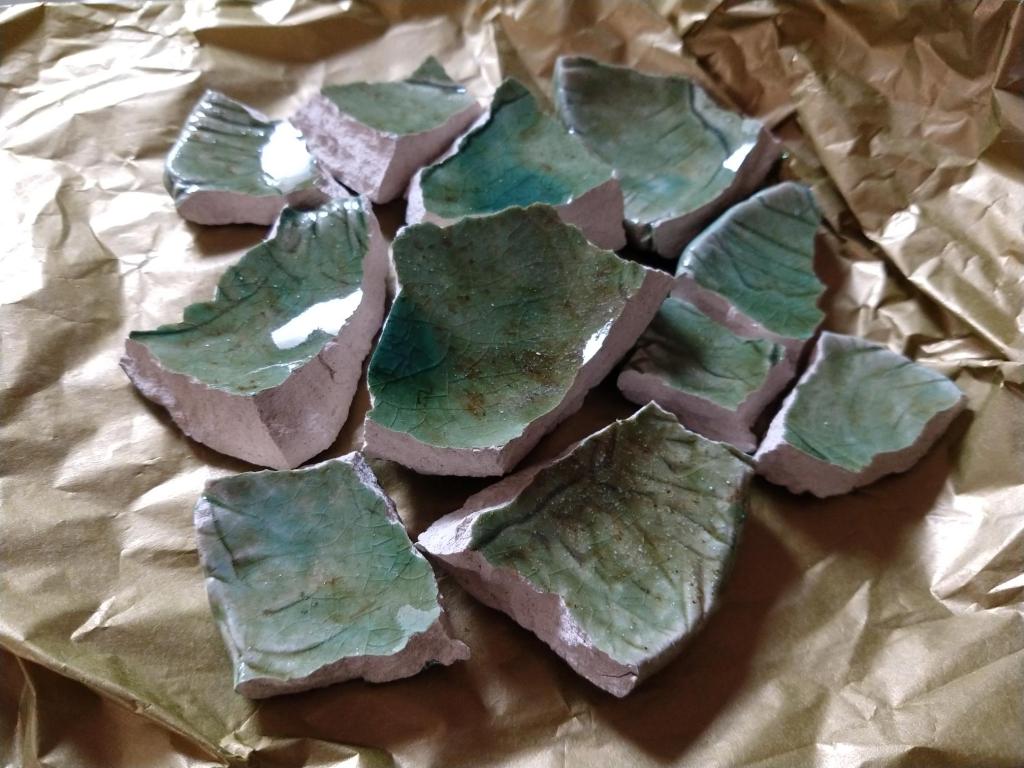
The featured ceramic piece includes some Kintsugi repair work. This is a Japanese method for making a feature of a repair instead of trying to hide it.  The idea is that the piece is even more beautiful than it was before.

Publishing 05 June 2025:

https://amzn.eu/d/2UyHVFQ

A Birthday Present

I was at the funeral of a friend yesterday. He’d died unexpectedly at the age of 67.

As it turned out, the day of the funeral was the day of my 66th birthday.

A funeral isn’t the usual expected place to be on a birthday, nor is it where you would expect to receive an unexpected birthday present.  But that is exactly what happened to me yesterday, at my friend Bill’s funeral. It was a gift given to me by Bill’s grieving wife, Deb, in words that she spoke in celebration of her husband’s life.

Deb spoke about the ancient Japanese art and philosophy of Kintsugi. Kintsugi is about celebrating imperfection; not trying to hide what is broken but recognising the place of mending as a thing of beauty in its own right, and highlighting the mend with gold. She referred to her husband as ‘pure gold’. He was.  As was her gift to me in what she said, using words and with passion that I cannot even begin to emulate, nor do I think that I should even try. They were words that could only be spoken by a wife, grieving the loss of the love of her life. 

I do, however, want to acknowledge those words in this post, feeling broken as I continue to feel inside as I continue to hope and try to heal. I realise now that I don’t have to aim to heal back to how I was before I was broken; that the broken parts and the process of healing – that includes reaching out to others who are also struggling – are the pure gold of life.  So I’ll continue to live it in the best way that I can, cracks and all.

As it turns out, I’ve been making some pots recently that are basically balls of solid clay that may well fall apart in the kiln.  I now hope that they do – so that I can mend them in the Kintsugi way.  Amazingly enough, I also got another birthday present yesterday – from another friend. It was a Kintsugi kit! How weird and wonderful is that?

Qigong – body awareness of a different kind

I first encountered Qigong when I was exploring anything and everything that I could find that I thought might help to restore my mental health from a point of crisis to some semblance of stability. That was over 25 years ago, and I had a long and arduous journey ahead of me. Along the way I took part occasionally in Qigong classes and workshops. It wasn’t until some years later, however, when I was struggling to push through the challenges of a demanding job – in itself part of my recovery process – that I considered a more regular commitment to the practise of Qigong.

Google searches came up with limited references to Qigong being offered locally. Luckily, one of these few was an evening class at a school just a few miles from where I was living, in Leeds.

An online Medical Dictionary notes:

Qigong (pronounced “chee-gung,” also spelled chi kung) is translated from the Chinese to mean “energy cultivation” or “working with the life energy.” Qigong is an ancient Chinese system of postures, exercises, breathing techniques, and meditations. Its techniques are designed to improve and enhance the body’s qi. According to traditional Chinese philosophy, qi is the fundamental life energy responsible for health and vitality.

The Dictionary goes on to state:

Qigong may be used as a daily routine to increase overall health and well-being, as well as for disease prevention and longevity. It can be used to increase energy and reduce stress. In China, qigong is used in conjunction with other medical therapies for many chronic conditions, including asthma, allergies, AIDS, cancer, headaches, hypertension, depression, mental illness, strokes, heart disease, and obesity.

Qigong is presently being used in Hong Kong to relieve depression and improve the overall psychological and social well-being of elderly people with chronic physical illnesses.

[Source: https://medical-dictionary.thefreedictionary.com/qigong]

While I can’t claim that I commit to a daily practice – not yet anyway – I have been attending these evening classes – and some day workshops at weekends too – with the same teacher ever since. 

When the Covid lockdowns first started, Sue Dunham – the teacher – was quick off the mark with setting up Zoom classes.  Just as in the live classes, Sue’s commitment to her own practice and to sharing her knowledge and vast experience has shone through into these Zoom sessions.

Sue doesn’t just demonstrate what to do for us to follow. She talks through and builds up each movement step by step, repeating as necessary; infinitely thorough and always engaging.  Her approach is very meditative and mindful, working deep on different themes in each group of three classes.  During the height of the pandemic, focusing on the lungs could not have been more appropriate, and we’ve also recently worked on the spine and the digestive system. 

Though the movements are slow and steady, I find that I sleep really well after a class session, and wake in the morning with the sense that I’ve had a really good workout, even though it isn’t ‘exercise’ in the conventional sense.

According to Sue:

“Qigong is an extraordinary practice: it can bring you to question fundamental beliefs about mind and your life, bringing you to that in a supported, gentle way. I have found it to be accessible and yet challenging, it’s enigmatic but intriguing!”

One of my favourite Qigong movements is called ‘Healing Form’, and Qigong has certainly become an essential part of my own movement towards health and healing.

When I started to become aware of my body, as a teenager, it was on the basis of how it looked. The negative compulsive obsessions I developed were – I realise now – associated with complex psychological and emotional traumas that have taken me 50 years to unravel.

Fortunately for me, my body was and is healthy and, while I continued well into adulthood to control my life by controlling what I ate, my body served me well. Deep roots hold tight, though, and it was a long time – being ultimately faced with the choice of life or no life – before I was able to find the strength, coping mechanisms, and resolve, to push through and come out the other side.

Qigong has helped me to work at a deeper level with my body – my amazing body.

It hasn’t provided me with a miracle ‘cure’ but it has helped to shift my focus into health and wellbeing, which is where it should be.

I feel a lot ‘lighter’ these days, even though I’m 65 and probably weigh at least 4 stone more than I did when I was 15. At six-and-a-half stone and still feeling the need to lose weight, I was weighed down and locked in as a teenager.

Some of the grief, sadness and regret linger on, but less so day by day. I’m thankful for a lot of things and hope that I can continue to be so for many years to come. Qigong helps me to nurture my body, with all its intricate mechanisms for feeding and flow.

One of the wonderful things about this practice is that it takes me beyond what I ‘know’, what I can measure or evaluate, into that sense of wonder, about what I don’t know, with all the associated mysteries of those realms.

When I’m practising Qigong, under Sue’s infinitely patient and painstaking instruction, I feel as graceful as a dancer, and that – for me – is something of a miracle.

The Covid pandemic has shown us just how vulnerable any of us can be, at any age, but also how those vulnerability factors can increase as we get older. The more we can do ourselves to mitigate those factors, the more likely we are to be able to lead fulfilling, meaningful lives for longer.  That’s my plan, anyway, and I’m sticking to it!

If you want to know more about Qigong, you can visit Sue’s website and Facebook pages via the following links:  https://www.facebook.com/suedunhamqigong and this https://sites.google.com/view/qigongwithsue/home.

Additional references:

Image: Physical exercise, yin yang transparent background PNG clipart | HiClipart
Walking

The predicted weather was cold, with possible snow and hail.  Even so, we set off, determined to make the most of the chance to meet up outside and walk with others, following the ‘Rule of Six’.

Although it did turn out to be cold, there was no sign of snow or hail. We walked through glorious countryside in bright sunshine and completed an 8-mile circuit. Not bad considering the effects of ‘lockdown winter’ with gyms closed and the impetus to exercise at home starting to dwindle.  We needed those hills, that fresh air, that blast to the senses.

With 38 years between the youngest of the group, at 27, and me, at 65, our walking speeds were variable. Our younger friends waited patiently at regular intervals for us to catch up – me and my partner plodding along at a steady 2 miles an hour.  We’re not going to break any records but we’re not aiming to.  What we do want to do, however, is maintain reasonable levels of fitness as we progress through our sixties and beyond.

We’ve both struggled with long-term depression but also both never given up on pushing ourselves – and now, sometimes, each other – to keep making that effort – massive though it is – to maintain an exercise regime, in one form or another.

For me it’s tended to be a bit ad hoc – I find routine difficult – although for years I did cycle to work regularly. It wasn’t a long distance but there was quite a lot of uphill on the way back. I often cursed at the end of the day when I wished – how I wished – that I’d driven there in the car.  But I’m sure it’s helped me a lot and I’m glad of it now. Glad to have kept going, pushing those pedals.

[https://wordpress.com/post/gladabout.life/220]

Every so often I used to try jogging.  I found it hard to psyche myself up, sometimes got into a bit of a ‘stride’, and even completed a 10K run once.  Jogging wasn’t for me though, long term. My knees complained and I had to call it a day on that one.

There were times in my life when I simply set off from home and walked until my heels bled. Not recommended but at least it got me out and active.

In later years I did volunteering involving hard labour with a sledge hammer (and called it a holiday!). For that, I set myself training targets, carrying a back-pack loaded up to 50lb in weight with books, tins of beans and bags of flour.  A good friend used to come with me on some of these training walks, to make sure that I didn’t fall backwards off the hillside – with that load I would never have stopped until I landed at the bottom!

Now, I enjoy our leisure walks – sometimes with friends, sometimes just the two of us.  We’re planning to do Helvellyn later this year. Must get into training again soon.