Keeping things simple is key for me just now. I can’t cope with complicated nor do I want to.
What better way, then, than to enjoy the company of friends, as I have done this weekend.
Yesterday I visited a friend – a fellow Ceramic Artist – at the Dovecot Gallery, near Doncaster, where she was exhibiting. It was a summer show in a garden setting, full of colour and creativity.
Today a friend and I visited a friend of hers. We sat together for about four hours, talking. Just talking. It was lovely to have a three-way conversation, each of us bringing in thoughts and ideas from our lives and experience.
My Ceramic Artist friend is a year or two older than me, so in her early 70’s. She started out in her career with clay just a few years ago. Rarely have I come across anyone more passionate about what they do.
My friend’s friend is about 10 years younger than us. Unlike me, she doesn’t enjoy good physical health, but she doesn’t let that stop her expressing herself through her art. She is a talented Textile Artist as well as a dog lover and owner of four canine companions.
While I aim in this blog to be positive about pushing through into a position of mental health recovery that I’ve been working towards most of my life, at the moment I’m struggling to get my brain to function.
Despite enjoying the company of friends, despite the wonderful weather, despite the woodland walk I had with Lydia this morning, I’ve hit a wall.
At least though, now, I know it won’t last, that I just need to rest – which I will – and tomorrow will be another day.
Looking across at Lydia, as I write, she is looking back at me. I’ll give her some more “rub-a-dub-dub” massages later, to help soothe her vagus nerve and I’ll keep doing what I need to do to help soothe mine too.
Train your dog; train your mind – positive reinforcement for humans and canines – now available in paperback: https://amzn.eu/d/eQ2sWjU.
The Kindle version is currently for sale at £0.99 on a Kindle Countdown deal https://amzn.eu/d/99yW3Qk.
As I write, my beautiful girl is crunching her way through a dental chew.
The chew is bone shaped. I did quite a lot of internet searching to find out about different brands, and this is one of the brands that got the best reviews. She has good teeth, and I want to help her to look after them.
I’ve struggled a bit with looking after my own teeth in the past.
I previously wrote a blog post about this, and about other aspects of self-care within the context of mental distress:
At that time, there was a mental health update strategy in progress with a claim that mental health would be included in an overall ‘major conditions’ strategy that will focus on ‘whole-person care’.
There is now a Policy paper ‘Major conditions strategy: case for change and our strategic framework’ (Updated 21 August 2023) that includes common mental health conditions and severe mental illness (SMI).
There is some reassurance in the reference to reducing risks earlier in life, and it is also noted that:
“… access to physical healthcare is particularly important for people with SMI. The NHS LTP sets out a transformation programme to develop integrated models of care and holistic support closer to home. The major conditions strategy will outline how to do more to implement physical health support across mental health pathways.”
So, there’s a long way to go but at least there does seem to be some movement in the right direction, hopefully for future generations and hopefully for some people sooner than that.
In the here and now, I continue with my own strategy to manage my health and wellbeing, relying on only minimal, but still welcome, support from the system in the form of anti-depressant medication.
However, I do have access to other forms of support, that make all the difference to me in the context of my life. These take human and canine form. They are, of course, my friends, including Lydia.
With her, I am out every day, walking, enjoying fresh air and steady exercise. I have, with her, companionship and company. Good company.
My friends are amazing – they are rallying for me at a time when I am struggling emotionally.
I am still struggling with anger; have just come back from a Buddhist prayer session; have just spoken to a friend on the phone; am writing this. It all helps; having positive outlets for energy and emotions helps. I didn’t have this when I was younger, but I do now.
“I choose to be peaceful and calm. Everything is unfolding as it should.”
When I first started writing this blog I had just retired and it was something that I wanted to do.
I thought it would help me to complete a cycle of mental health recovery that I’d started many years previously, and that in writing about my experiences it might help others too.
I had no idea then just how far away I was from the summit of my recovery mountain, or just how many sheer cliff faces I was going to have to climb to be able to finally enjoy the view.
That was over five years ago.
I found no easy answers but knew that I had to keep going, and I did.
At 69 I have no wish or need now to climb any more mountains, either in my head or with my feet. However, my journey does continue, day by day, step by step, and I will continue to write about it and share it with anyone who is interested.
My new e-book, publishing on Amazon for Kindle 5th June, gives insights into how Lydia, Me & our Family of Three have recently made our final ascent:
‘Train your dog; train your mind – positive reinforcement for humans and canines’
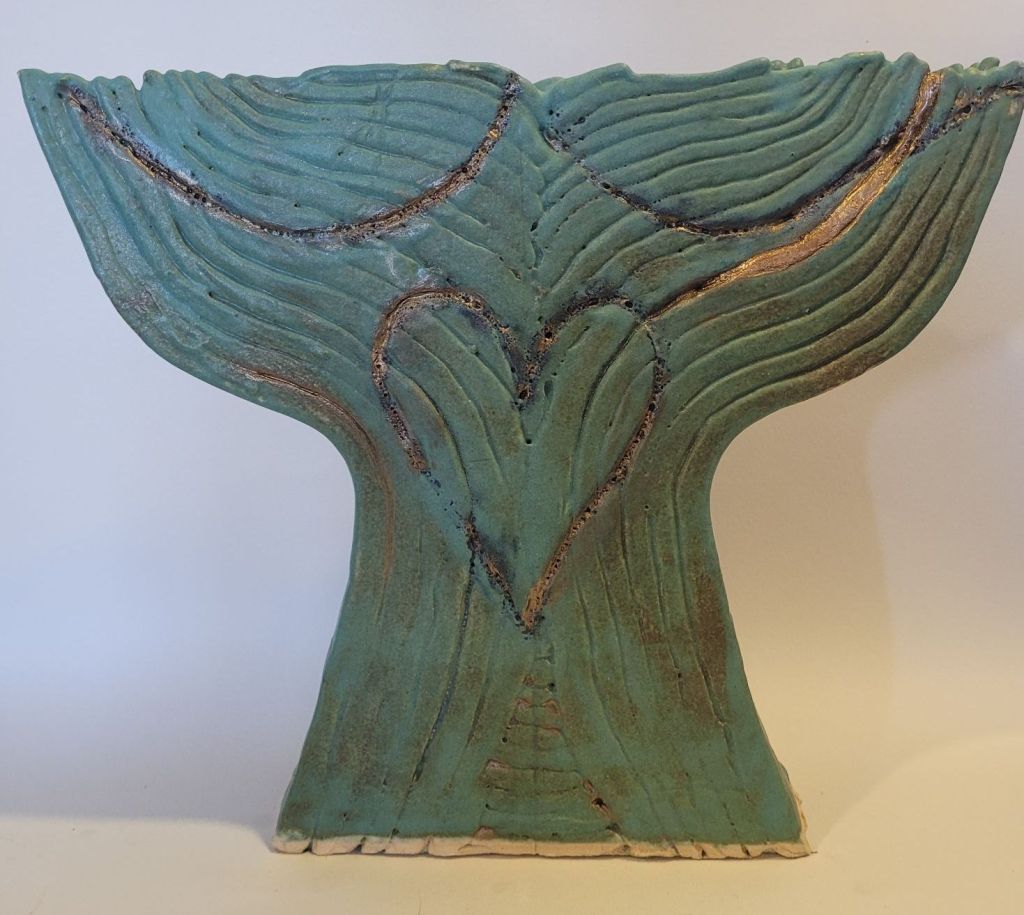
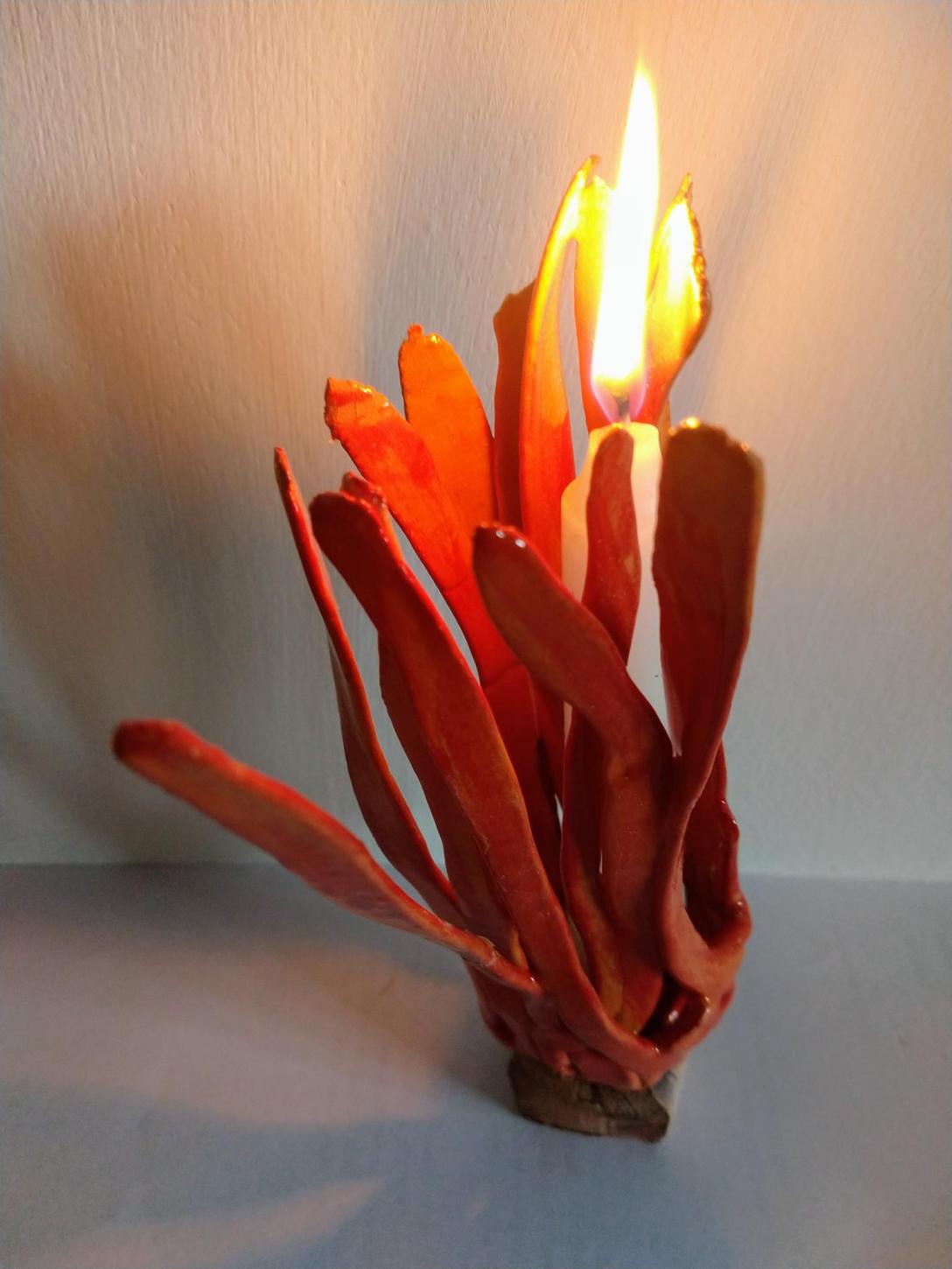
My latest piece of ceramic art, made out of stoneware clay. This and other works by me and 70 other artists and makers will be on show and for sale at the Saltaire Maker’s Fair, Victoria Hall, Saltaire, near Bradford from 24-26 May 2025:
I make the distinction between a minor breakdown and a major breakdown on the basis of the level of functionality that I lost, and the time it has taken to return to a semblance of normal functionality (whatever that means).
When I had a major breakdown over thirty years ago, it took years to recover to the point where I could do paid work again (although I did a lot of voluntary work as part of the recovery process).
In the years leading to my major breakdown, which was effectively from my teens until my late thirties, I developed unhealthy coping strategies.
With no idea how to deal with things differently, I worked out ways of getting through that worked – to a degree – but they weren’t sustainable, and I came crashing down.
“The wound is the place where the Light enters you.” – Rumi
The main thing was – in the trauma of the breakdown experience – I didn’t give up; the survivor in me kicked in. Reaching out for and finding sources of support helped me to rebuild. I started to retrain my brain through meditation and affirmations, did hard physical work and exercise when I could, pushed myself when I felt I needed to; tried to rest and relax into feelings that had previously been buried and then surfaced like a volcano. They were so difficult to deal with.
What do I do with all these feelings? Do I chew them up and spit them out and start again? And if I do what then?
I’m now retired, so in a sense the pressure is off, in that I don’t have to recover enough to fulfil the demands of a job. However, in retirement it is all the more important – and can be difficult – to find reasons to be motivated; to get up in the morning; to have a sense of purpose.
After my recent breakdown, and with support from my partner, good friends, and effective medication, I was able to start drawing on these healthier coping strategies fairly quickly, because I had already built them in to my life over many years; they had become part of my ‘muscle memory’, in brain and in body.
The Chinese exercise for health and well-being – Qigong – works on the whole person; walking our dog takes me into fresh air and the opportunity to appreciate the morning or evening light; making things with clay helps to take my mind away from unwelcome thoughts; Buddhist mind training helps me to just accept these thoughts as thoughts; meditation and affirmations provide the opportunity to let go of negative and introduce positive, even if it’s just for a few moments.
I haven’t yet achieved that all elusive peace of mind – my mind is still a work in progress – but I can at times feel a sense of peacefulness in the moment, and that is very welcome.
Struggling as I have been with my own mental health for most of my life, I haven’t always been able to prioritise dental health.
In voluntary and paid roles supporting others with mental health difficulties, I’ve noticed that poor dental health care is a common problem. Published research supports this observation, for example ‘Oral health interventions for people living with mental disorders: protocol for a realist systemic review’, Kenny Dickson-Swift, Gussy et al, International Journal of Mental Health Systems 14, Article number: 24 (2020) https://doi.org/10.1186/s13033-020-00357-8.
After a major breakdown in my late thirties, I was able to regain and maintain sufficient mental health stability to work and function within society (with various blips and crises along the way) and have since retired. As part of the process of recovery that I went through, I managed to reconnect with regular dental check-ups and treatment.
Recently, though, I struck a stumbling block while going through a really tough patch mentally.
I hadn’t been able to get a check-up at the surgery I’m registered with for over 18 months. While many dentists are still struggling to catch up after Covid, the dentist that I’ve been going to have had an additional burden of backlog due to a fire on their premises. Though they’ve been able to set up satellite surgeries around the city I was advised that, if I wanted a check-up on the NHS, I should seek it elsewhere.
As I have moved out of the city to a neighbouring village, this made sense anyway, so I started ringing around. It was only then that I discovered there was little or no chance of being able to see an NHS dentist as a new patient within the next 2-3 years.
Apparently this is due to government funding, although I don’t know the details of how it works.
If that strategy is to be worth more than words on paper then it would do well to ensure prioritisation of funding that enables people who have recognised mental health disabilities to access NHS dental care. It would be one less enormous obstacle to climb for those who deserve a medal just for getting out of bed on a morning. And let’s face it, if you can’t even look forward to a cup of tea because it’s too painful to eat or drink anything, then what’s the point?
It’s taken me several months to be able to concentrate enough to work out how to tackle the presenting problem and then follow up and get myself booked in for an appointment. I’m fortunate in that I’ve been able to pay privately for a check-up (£59.00) and have been presented with a range of options to address my dental treatment needs that I can prioritise on – for me – an affordable basis (approximately £250.00). Basically I’m going to book in for a hygienist appointment to address some gum issues and also get an old crown taken off so that the dentist can explore what’s going on underneath and put a semi-permanent top dressing on. This should keep me going for another year or so at least and I’ve got myself down on a 3-year waiting list at a surgery closer to home.
Others who are less fortunate than me financially shouldn’t have to suffer and wait, compounding mental agony with dental agony.
For my part, when I do eventually emerge from my current ‘downer’, I’d like to be able to smile without worrying about the fact that I have gaps in my teeth.
Breaking big rocks into smaller rocks: the hard core approach to mental health recovery was the title of an article I wrote in 2013. It was published in a journal by the Royal College of Psychiatrists:
I was surprised, though, that there was no follow up from that. Nobody from the world of psychiatry or related fields sought to make further enquiry about the approach I was taking to rehabilitate myself back into a relatively healthy state of mind.
I think maybe it was because what I was doing seemed quite bizarre: undertaking hard physical labour involving a large sledge hammer and a lot of rocks. And yet the improvements I found in my mental well-being were significant, and lasted for several weeks after I returned to my day job, based in an office.
While I don’t believe that all aspects of my complex mental health needs would have been resolved by continuing to do rigorous physical endeavour all day, every day, the experience certainly had a part to play in my overall recovery.
And the principle of breaking things down into smaller chunks is one that I work with every day.
At the turn of the Millennium, I completed a project under the Mind-Millennium Award Scheme.
My project – the Lifelines Project – involved collecting and publishing poems, pictures and self-help strategies from other people who, like me, had suffered from enduring and debilitating depression.
I had not met many of the contributors, and was amazed – honoured – that they trusted me with their personal expressions, all because of the underlying intention of reaching out in the hope of helping others.
If you, yourself, are suffering with depression, I would like to wish you well and tell you that you are not alone.”
Since then, there’s been increased awareness about mental health and how it can be improved. While there remains much to be done in society from the ‘prevent’ and ‘promote’ perspectives, being able to – and even encouraged – to talk about mental health difficulties more openly represents a start.
In my own experience, I eventually got fed up of talking – I’ve never been much good at it anyway. I knew that I needed to take action, to find ways of turning my life around, however difficult or painful that might be. And I knew it would be difficult and painful, to rebuild from a below zero level when I was in my forties.
From somewhere, somehow, I found the resolve to put my head down, prioritise, and push myself through. For a long time I concentrated on work and on developing my internal resilience. Just before I turned 60 I decided to take the plunge and commit to a relationship. I now have a much fuller and richer life than I have ever had before and I’m thankful for that.
Even so, life continues to be difficult and I still take antidepressants – probably always will. But I have other coping skills and strategies, and have also been able to recently retire, taking away work pressures that I could no longer deal with.
I wasn’t able to keep in touch with all the people who contributed to the Lifelines Project but they’ve always remained in my thoughts and I hope that they too have been able to find a way through; a way that works for each of them:
Sylvia
Marcia
Maggie 2
Peter
Virginia
Henzie
Maggie 3
Jonathan
Fiona
Sean
Christopher
Polly
Christine
Caz
John
Caroline
Frances
Susan
Patricia
Mary
Dave
Mark
Tony
Iain
I thought it was fitting to include a poem by one of the Project contributors – Mark:
Recovery
The night has been terror: depression, cold, confusion. – Ears scream.
Grey – the morning in my front-room.
A tear on my cheek and a child’s grizzle for a few seconds – From my adult form.
1978 was the year I graduated with a degree in Ceramics from Bristol Polytechnic.
I’d reached out to art in my teens as a way of asserting a direction, without knowing where that direction might take me. It was driven by some deep-rooted instinct; an instinct which for a long time I thought had failed me. But it hadn’t.
As it’s turned out, my life has taken many “twists and turns, and loops and leaps”, most of which have left me struggling to find a foothold. Finally, however, I feel I am on firm ground, and astonished to find myself turning back to working with clay, after a break of over 40 years.
What’s even more astonishing is that I’m not only loving working with the medium, I’ve got ideas coming into my head from goodness knows where. I’m not having to push myself just to produce something, anything, as I did when I was at college (although I was proud of what I did produce in the end; it was no easy feat, considering the complexity of mental health problems I was dealing with).
Art didn’t work as a therapy for me when I was younger; the damage went too deep and I had to find ways to dig it out – just like clay has to be dug out. What I’ve got now is malleable and mouldable in whatever way I choose. I can be creative in any way or ways that suit me; working with clay or words; working with my life.
I hope my pots can be poetic; and that my poetry will continue to be potty.
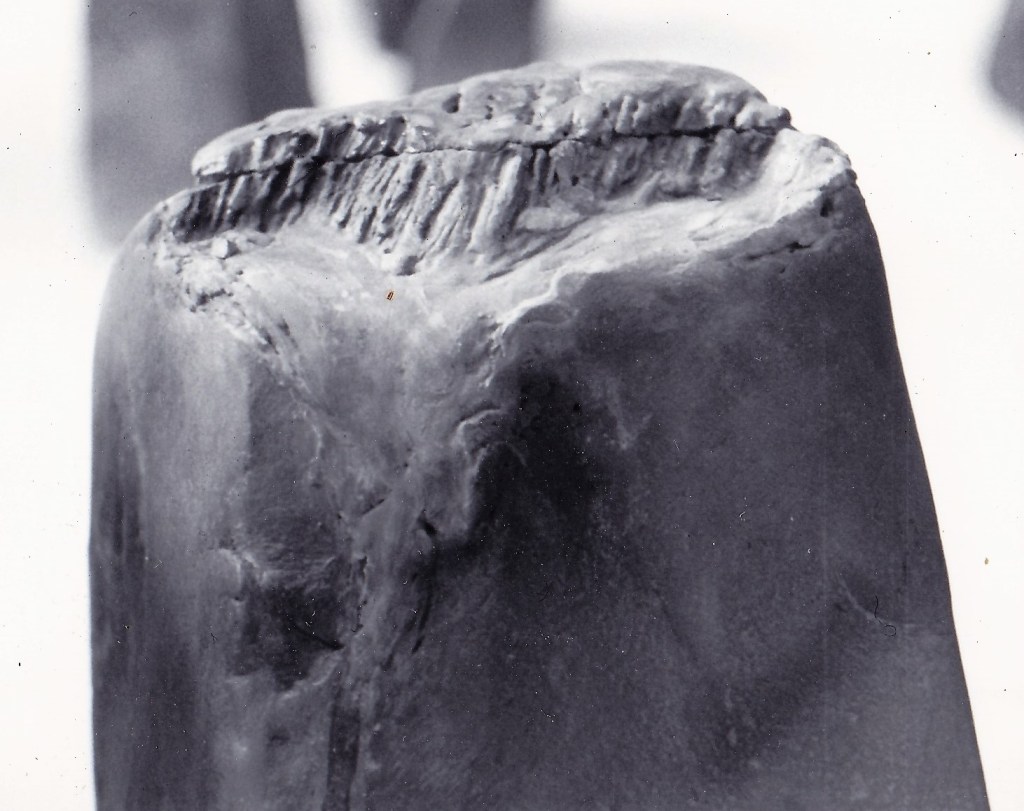
Solid and fluid at the same time. This one’s long gone; I’m making others now.
That does by no means mean that I now consider myself to be an ‘expert’ (whatever that means). However, for a long time I struggled to even form them, at any meaningful level, never mind knew what to do once I finally decided to jump in at the deep end, at the age of 24.
Up till then my life had been a relationship desert. Unlike my peers – who all seemed naturals to me – I just didn’t seem to have what it took. I had extreme social anxiety and – though I didn’t know then – depression, associated with an eating disorder and a fear of being laughed at, humiliated, rejected. So I put up walls to protect myself from what I, essentially, most wanted and needed.
Apart from an occasional snog and a few dates that did nothing to stir my emotions or hormones I thought I would never meet the man of my dreams, fall in love, be happy…
Of course, the idea of meeting someone took itself into the realms of romantic fantasy, giving me no experience of managing the reality. When I did ‘meet’ someone who I had a strong connection with, it was from a distance as he was with someone else. The distance got even greater when he went off to the other side of the world to be with her, and I lost my sense of hope.
I ended up marrying someone I hardly knew because he asked me! I’d just lost my job and I had been floundering without any sense of direction since leaving college two years previously – the eating disorder made it hard to concentrate on anything other than finding ways to take my mind off food – so it seemed as if fate had finally decided to go my way. Foolish, I know now. Or was it? Maybe it was, essentially, the only way I was going to learn to swim, by jumping in at the deep end. We lasted three and a half years before he said he wanted us to separate as I was ‘holding him back’.
It would have been good if we could each have gone our separate ways and found happiness with someone else. I did (after I had learnt many more hard lessons in life over many subsequent years). Sadly, he passed away while still a young man, although he had lived life in his own ebullient gregarious way up to then.
At the time when we split up I could have done with some counselling, to help me explore and start to work through all the issues that were suddenly thrown up in my head and in my heart. It was the 1980s then, though, and I hadn’t even heard of counselling.
Instead, I stumbled, crumbled, and fell into another relationship with a lifetime of unresolved ‘stuff’ still bubbling away. It can’t have been a good experience for my partner, I realise that now, although we both tried to make it work, and support each other in our different ways.
My internal volcano finally exploded when, after a joint business venture collapsed, my partner went off with someone else. The extremes of my emotions and state of mind from there went off the Richter scale and I had a breakdown (to put it mildly). I’d wanted eventually to start a family but, in my late thirties by then, I entered a period of significant instability on all levels.
I had to pull out all the stops to pull myself back from the brink and into functionality over a prolonged period and have only just completed a cycle of recovery that I started over 25 years ago.
During that time, I’ve reached out to and found many different ways of learning to live and love.
At one point I trained as a volunteer bereavement counsellor. The main model that the training was based on was the principle that, with support and time and commitment, the sense of loss doesn’t go away or get smaller, but your life can grow bigger around it. This resonated with me, and I’ve found that it has helped me to reach out and grow into an awareness of life that I wouldn’t have had if I hadn’t had to learn how to find a way through.
For over five years I’ve been in a relationship with a lovely, loving, funny, kind, clever man who also struggled with relationships when he was younger. (I think there must be a lot of us around.)
Even so, the final stages of my recovery cycle have not been easy; I have had to do more than tie up a few loose ends and threads. ‘Out of the blue’ my brain took me to places where it had stored memories from 40 years ago, locked away because they were too painful for me to bear before.
I’m well on the way to having worked through them now, thanks to having the loving arms and heart of my partner to help me feel the sadness that I needed to feel; that I wished I could have felt at the time, for myself and those I was involved with.
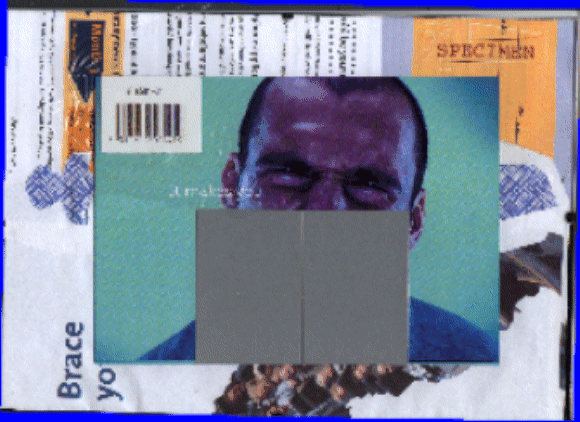
The sadness was worse, for having stayed so buried for so long as extreme trauma that hit me during my breakdown period: trauma associated with decisions I’d made; paths I’d taken. Edvard Munch’s painting, ‘The Scream’, just about sums up how I felt inside at that time; and then some; and then some more. The collage I made in 2001 presents my own version of that scream; the scream of the agonised soul.
Recently, I’ve come across The Hawaiian Healing Art of Ho’oponopono – Forever Conscious. It’s said that things come to us in our lives when we most need them and/or are receptive to them. I most certainly needed this and it was an utter revelation to me. It has helped me to heal from feelings of guilt that have haunted me for decades, all rooted in the difficulties I had in forming, managing and ending relationships in the past.
People had tried to reach me, and I had tried to reach out to them. Ultimately, though, I needed to reach within myself – however long it took – and find what I needed to find. I’ve been fortunate to be able to finally reach that goal from within the protective space of a loving relationship.
I think I’ve learnt a lot about relationships, including knowing how important it is to keep working at them, and know that there is always more to learn. Most of all though, I’m loving now being able to love and be loved. It is worth working for, however long it takes.




 Glad About
You must be logged in to post a comment.