Day 20

Continuing the story of Lydia and Me

I’ve been looking back through some of my earlier blog posts, including one that I wrote in 2021:

I referred to an article, Where Do You Store Stress in Your Body? Top 10 Secret Areas | Psychology Today by Sean Grover, who identifies the ‘Top 10 Tension Areas for Unwanted Feelings’ as:

1.Lower Back: Anger
2. Stomach & Intestines: Fear
3. Heart & Chest: Hurt
4. Headache: Loss of control
5. Neck/Shoulder Tension: Burdens
6. Fatigue: Resentments
7. Numbness: Trauma
8. Breathing Difficulties: Anxiety
9. Voice & Throat Problems: Oppression
10. Insomnia: Loss of self

I found that list helpful then, and I do now.

Historically I’ve had a long struggle with anger.  I’ve done a lot to address this, as I described in my blog from 2021, and continue to do so.

I’ve recently worked through sudden surges of fear and anxiety, as described in my book, Train your dog; train your mind – positive reinforcement for humans and canines https://amzn.eu/d/eQ2sWjU https://amzn.eu/d/99yW3Qk. (also available for Kindle, see below)

I don’t have any problems with my stomach and intestines, nor breathing difficulties. I used to suffer from fatigue but don’t anymore, generally sleep well, never get headaches and am altogether faring very – and thankfully – well for my 69 years.

I could just be lucky and, in many ways, I know that I am. I am very very fortunate to have the robust and healthy body that I have. But I have also done a lot to work through negative emotions, as well as finding ways that work for me to keep my body fit and healthy.

Having established a basic pattern – incorporating Qigong, yoga and walking – into my weekly routine, I’m sticking to it.

A step at a time, a day at time. It’s amazing how it builds up until you realise that you don’t have to make quite so much effort that you used to have to make, because a lot of the inner resistance has gone.

As I write, Lydia lies sleeping on the floor in front of me. She rests and sleeps a lot but she’s approximately 10 years old. She readily jumps in and out of the car with ease, rolls around in the dog park, runs about wearing her ‘happy legs’ as I call them. She’s booked in for a routine health check at the vets next week but I’m fairly confident she has no issues with her heart or digestive system (I make sure that good stuff goes in and monitor what comes out). She continues to have fear and anger issues on sight of her triggers: other dogs, some people, moving vehicles.

We’ll keep working on our residual tension areas, together.

It probably won’t be easy, but we’ll do it, step by step, day by day.

Train your dog; train your mind – positive reinforcement for humans and canines – now available in paperback: https://amzn.eu/d/eQ2sWjU.

The Kindle version is currently for sale at £0.99 on a Kindle Countdown deal https://amzn.eu/d/99yW3Qk.

Happy Summer Solstice Everyone!

Day 7

Photo by Madison Inouye on Pexels.com

Continuing the story of Lydia and Me https://amzn.eu/d/99yW3Qk

As I write, my beautiful girl is crunching her way through a dental chew. 

The chew is bone shaped. I did quite a lot of internet searching to find out about different brands, and this is one of the brands that got the best reviews. She has good teeth, and I want to help her to look after them.

I’ve struggled a bit with looking after my own teeth in the past. 

I previously wrote a blog post about this, and about other aspects of self-care within the context of mental distress:

At that time, there was a mental health update strategy in progress with a claim that mental health would be included in an overall ‘major conditions’ strategy that will focus on ‘whole-person care’.

There is now a Policy paper ‘Major conditions strategy: case for change and our strategic framework’ (Updated 21 August 2023) that includes common mental health conditions and severe mental illness (SMI).

There is some reassurance in the reference to reducing risks earlier in life, and it is also noted that:

 “…  access to physical healthcare is particularly important for people with SMI. The NHS LTP sets out a transformation programme to develop integrated models of care and holistic support closer to home. The major conditions strategy will outline how to do more to implement physical health support across mental health pathways.”

So, there’s a long way to go but at least there does seem to be some movement in the right direction, hopefully for future generations and hopefully for some people sooner than that.

In the here and now, I continue with my own strategy to manage my health and wellbeing, relying on only minimal, but still welcome, support from the system in the form of anti-depressant medication.

However, I do have access to other forms of support, that make all the difference to me in the context of my life.  These take human and canine form.  They are, of course, my friends, including Lydia.

With her, I am out every day, walking, enjoying fresh air and steady exercise.  I have, with her, companionship and company. Good company.

My friends are amazing – they are rallying for me at a time when I am struggling emotionally.

I am still struggling with anger; have just come back from a Buddhist prayer session; have just spoken to a friend on the phone; am writing this.  It all helps; having positive outlets for energy and emotions helps. I didn’t have this when I was younger, but I do now.

“I choose to be peaceful and calm. Everything is unfolding as it should.”

Day 1

continuing the story of Lydia, Me and our Family of Three https://amzn.eu/d/99yW3Qk

Photo by Anthony ud83dude42 on Pexels.com

As I wake, I start to say affirmations to myself.

I first heard about affirmations over 30 years ago, when I came across the Louise Hay book, ‘You Can Heal Your Life’. (Hay House, 1984)

Affirmations have helped me in my healing process, although I’ve had to do a lot of other things as well.

The affirmation that I connected with at that time was: “I am the love and beauty of life in all its manifestations.”

I didn’t feel like I was the love and beauty of life in any of its manifestations, but I kept saying it to myself, over and over again.

I’d had some persistent warts on my thumb for years and found no lotions or potions that did anything to get rid of them.  They disappeared though, shortly after I started using this affirmation.

Coincidence? Maybe, but I don’t think so. The power of positive thinking is not to be underestimated, in my view.  And my view does tend to be aligned with a lot of other views, including those embedded in Buddhist teachings.

During the Covid crisis, my affirmation of choice was, “I choose to be peaceful and calm; everything is unfolding as it should”.   Some people laughed at me when I told them about this at the time, but it did help me to stay calm during Covid, even if I did go through some very ‘not so calm’ periods later.

Today, I am saying the Louise Hay affirmation, and also another that I came across online:

“My knee is healing and getting stronger, each passing day.”

I don’t have too much of a problem with my knees, at the moment, but they are a weak point for me, so I do exercises that a physio taught me, take a one-a-day vitamin and mineral supplement for joints, apply some ‘wear & tear’ lubricating fluid that I bought from the chemist, and say the affirmation.

I need my knees to be functioning and flexible so that I can keep walking and working with Lydia.

We go on our woodland walk this morning.

On the narrow path across the field, between growing crops, Lydia’s nose nudges the backs of my knees, but the lead is looser than it was the last time we did this walk. She seems much more relaxed, and this continues as we emerge from the field and start along the grassy path beside the wood. I do a few ‘about turns’ as I need to but she pulls very little.  We make our way through the wood, which has a warm dampness about it from yesterday’s rain, heating up now with today’s sun.

At one point during our walk, Lydia looks up at me, mouth open as if she is smiling, and I think that she is telling me that she isn’t as afraid as she used to be. She is still alert to sights, sounds, smells, but she isn’t pulling away from me. I feel like we are more ‘together’ on this walk, today. Every so often I reinforce the “heel” command, using some dried food from her daily allowance, mixed with some treats to give extra value to her reward for being a “good girl”.  I haven’t brought cooked chicken with me this morning; I’ll use that tonight when we have our evening training time.

Home and, after giving Lydia the rest of her breakfast allowance in her favourite food ball – which she pushes around with her nose to get access to the dried food pellets that I put inside – I get my own breakfast. It’s a late one and I have a busy afternoon planned.

For much of last year I had what I referred to as ‘Wellbeing Wednesdays’ because I used to take Lydia for a walk first thing, then go to a yoga class, then go for a psychotherapy session at 1pm, then, after taking Lydia out for another walk in the afternoon, go to a Buddhist teaching and meditation session in the evening.

Now I have ‘Mental Health Mondays’, with yoga and Qigong in the afternoon.

Qigong isn’t as well known as yoga, and I find both beneficial for both my physical and mental health. I wrote a blog post about Qigong a while back:

My Qigong teacher, Sue, congratulates me on the forthcoming publication of my book:

https://amzn.eu/d/0TIIDLG

It’s good to be on the receiving end of congratulations, and to feel good about the publication of my book. I used to think that I could never feel good about anything to do with myself again. Now I can, and I do.

Lydia, Me & our Family of Three

Lydia, 2025

When I first started writing this blog I had just retired and it was something that I wanted to do.

I thought it would help me to complete a cycle of mental health recovery that I’d started many years previously, and that in writing about my experiences it might help others too.

I had no idea then just how far away I was from the summit of my recovery mountain, or just how many sheer cliff faces I was going to have to climb to be able to finally enjoy the view.

That was over five years ago.

I found no easy answers but knew that I had to keep going, and I did.

At 69 I have no wish or need now to climb any more mountains, either in my head or with my feet. However, my journey does continue, day by day, step by step, and I will continue to write about it and share it with anyone who is interested.

My new e-book, publishing on Amazon for Kindle 5th June, gives insights into how Lydia, Me & our Family of Three have recently  made our final ascent:

‘Train your dog; train your mind – positive reinforcement for humans and canines’

https://amzn.eu/d/iAQbck8

Fear

“Tree of Love”, my latest piece, ready for the Saltaire Makers Fair at the end of May #saltaireinspired #saltairemakersfair


I’m struggling a lot with fear at the moment. Fear of the future; fear of uncertainty; fear of not being able to cope with whatever life challenges lie ahead.

I’ve coped with a lot of life challenges in the past but I was younger then! I used to put my head down, put my back into it, prioritise and push through. Now, in my 69th year, I know I can no longer do what I used to do. I have to do things differently; see things differently; find an approach to working through my fear that is in tune with my more mature status and circumstances.

I know that I have to believe that everything will be – is – OK. I also know that a lot of what I fear is in my head. I don’t live in a war zone or on the streets.

But when you’ve had to pick yourself up by the bootstraps and start again, and again, and again, it’s hard to believe that the pattern isn’t on repeat.

I’ve been working hard to learn my lessons, to change how I see and do things and to live in the here and now. The important thing is not to let the fear take over. This can be easier said than done, but I’m working on it!

The featured ceramic piece includes some Kintsugi repair work. This is a Japanese method for making a feature of a repair instead of trying to hide it.  The idea is that the piece is even more beautiful than it was before.

Publishing 05 June 2025:

https://amzn.eu/d/2UyHVFQ

Wellbeing Wednesdays

I’ve somehow arrived at the point in retirement where I have ‘Wellbeing Wednesdays’ in my non-working week.

After taking Lydia – our dog – for a walk – which I do every day, usually twice a day – I go to a yoga class. Then, at 1pm, I have a therapy session. In the evening, providing I’m not too tired (or relaxed) I go to a Buddhist class which includes two meditations as well as the teachings.

I usually sleep well on a Wednesday evening; another factor which contributes to wellbeing.

I do other things on other days, including a Qigong class on a Monday, and pottery/making things with clay when I feel like it. But Wednesday stands out as the day when three focused activities combine to contribute to a strong sense of wellbeing emerging.

Making things with clay

“Flowing Form”, stoneware glazed with Teracolor ‘Tourmaline’

Forty five years ago I completed a degree in Ceramics. It wasn’t until a couple of years ago, though, that I started working with clay again.

The intervening years have been challenging, to say the least.

As a teenager with undiagnosed mental health difficulties including an eating disorder and depression, I struggled to get a foot hold on life and eventually came crashing down.

For the last thirty years I’ve largely been focused on getting back going again, pushing through, surviving.

A sense of well-being isn’t easy to establish or maintain when your mind and mood are volatile, like mine can be, always trying to pull me back to a pivotal point of trauma and grief that have been so hard to leave behind.

I do try to make the most of each day, and be thankful for what I’ve got – which is a lot – but when tiredness takes over from positive thinking, it can feel almost overwhelmingly bleak.

Sometimes it’s best to do nothing, rest into it and let it pass. I also find that, if I can get absorbed in making something with clay, I can start to come through the low mood to a brighter sense of self and life.

I have a table at home that I have set up with basic tools and materials, but I find it most uplifting when I go to a studio where I can spend a morning or an afternoon with others. We are all focused and industrious but there together, and it has a special kind of effect, which always leaves me feeling so much better at the end of a session than I felt when I got there.

It isn’t easy to pick up the pieces of your life and start again, but picking up a piece of clay is now a part of my ongoing journey of recovery and reclamation.

#thepottermanstudio

Qigong – body awareness of a different kind

I first encountered Qigong when I was exploring anything and everything that I could find that I thought might help to restore my mental health from a point of crisis to some semblance of stability. That was over 25 years ago, and I had a long and arduous journey ahead of me. Along the way I took part occasionally in Qigong classes and workshops. It wasn’t until some years later, however, when I was struggling to push through the challenges of a demanding job – in itself part of my recovery process – that I considered a more regular commitment to the practise of Qigong.

Google searches came up with limited references to Qigong being offered locally. Luckily, one of these few was an evening class at a school just a few miles from where I was living, in Leeds.

An online Medical Dictionary notes:

Qigong (pronounced “chee-gung,” also spelled chi kung) is translated from the Chinese to mean “energy cultivation” or “working with the life energy.” Qigong is an ancient Chinese system of postures, exercises, breathing techniques, and meditations. Its techniques are designed to improve and enhance the body’s qi. According to traditional Chinese philosophy, qi is the fundamental life energy responsible for health and vitality.

The Dictionary goes on to state:

Qigong may be used as a daily routine to increase overall health and well-being, as well as for disease prevention and longevity. It can be used to increase energy and reduce stress. In China, qigong is used in conjunction with other medical therapies for many chronic conditions, including asthma, allergies, AIDS, cancer, headaches, hypertension, depression, mental illness, strokes, heart disease, and obesity.

Qigong is presently being used in Hong Kong to relieve depression and improve the overall psychological and social well-being of elderly people with chronic physical illnesses.

[Source: https://medical-dictionary.thefreedictionary.com/qigong]

While I can’t claim that I commit to a daily practice – not yet anyway – I have been attending these evening classes – and some day workshops at weekends too – with the same teacher ever since. 

When the Covid lockdowns first started, Sue Dunham – the teacher – was quick off the mark with setting up Zoom classes.  Just as in the live classes, Sue’s commitment to her own practice and to sharing her knowledge and vast experience has shone through into these Zoom sessions.

Sue doesn’t just demonstrate what to do for us to follow. She talks through and builds up each movement step by step, repeating as necessary; infinitely thorough and always engaging.  Her approach is very meditative and mindful, working deep on different themes in each group of three classes.  During the height of the pandemic, focusing on the lungs could not have been more appropriate, and we’ve also recently worked on the spine and the digestive system. 

Though the movements are slow and steady, I find that I sleep really well after a class session, and wake in the morning with the sense that I’ve had a really good workout, even though it isn’t ‘exercise’ in the conventional sense.

According to Sue:

“Qigong is an extraordinary practice: it can bring you to question fundamental beliefs about mind and your life, bringing you to that in a supported, gentle way. I have found it to be accessible and yet challenging, it’s enigmatic but intriguing!”

One of my favourite Qigong movements is called ‘Healing Form’, and Qigong has certainly become an essential part of my own movement towards health and healing.

When I started to become aware of my body, as a teenager, it was on the basis of how it looked. The negative compulsive obsessions I developed were – I realise now – associated with complex psychological and emotional traumas that have taken me 50 years to unravel.

Fortunately for me, my body was and is healthy and, while I continued well into adulthood to control my life by controlling what I ate, my body served me well. Deep roots hold tight, though, and it was a long time – being ultimately faced with the choice of life or no life – before I was able to find the strength, coping mechanisms, and resolve, to push through and come out the other side.

Qigong has helped me to work at a deeper level with my body – my amazing body.

It hasn’t provided me with a miracle ‘cure’ but it has helped to shift my focus into health and wellbeing, which is where it should be.

I feel a lot ‘lighter’ these days, even though I’m 65 and probably weigh at least 4 stone more than I did when I was 15. At six-and-a-half stone and still feeling the need to lose weight, I was weighed down and locked in as a teenager.

Some of the grief, sadness and regret linger on, but less so day by day. I’m thankful for a lot of things and hope that I can continue to be so for many years to come. Qigong helps me to nurture my body, with all its intricate mechanisms for feeding and flow.

One of the wonderful things about this practice is that it takes me beyond what I ‘know’, what I can measure or evaluate, into that sense of wonder, about what I don’t know, with all the associated mysteries of those realms.

When I’m practising Qigong, under Sue’s infinitely patient and painstaking instruction, I feel as graceful as a dancer, and that – for me – is something of a miracle.

The Covid pandemic has shown us just how vulnerable any of us can be, at any age, but also how those vulnerability factors can increase as we get older. The more we can do ourselves to mitigate those factors, the more likely we are to be able to lead fulfilling, meaningful lives for longer.  That’s my plan, anyway, and I’m sticking to it!

If you want to know more about Qigong, you can visit Sue’s website and Facebook pages via the following links:  https://www.facebook.com/suedunhamqigong and this https://sites.google.com/view/qigongwithsue/home.

Additional references:

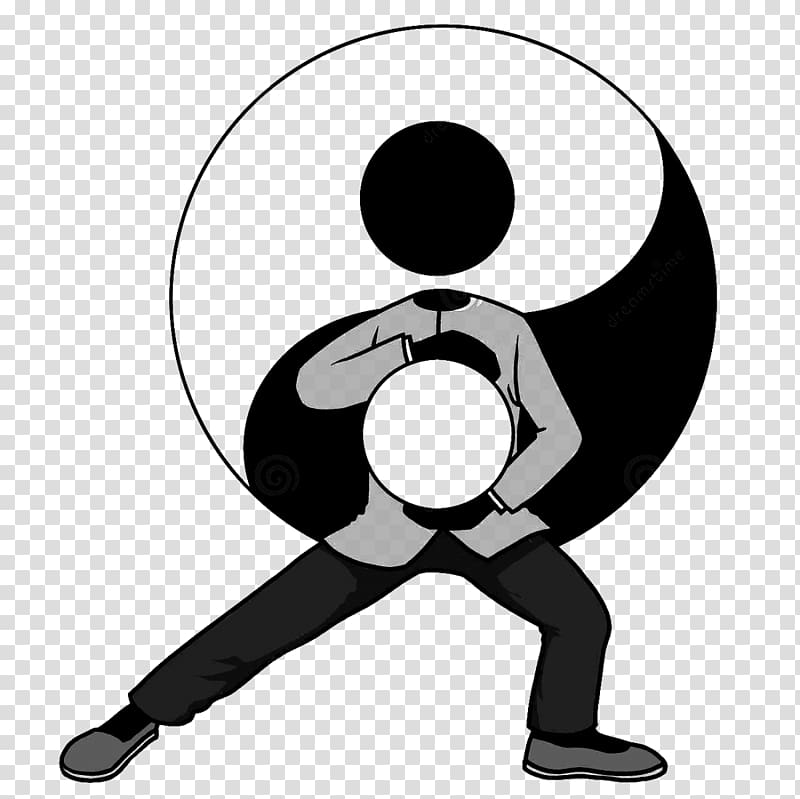
Image: Physical exercise, yin yang transparent background PNG clipart | HiClipart

Familiar Fields

Familiar Fields

Turning the corner
the familiar fields and shelters
come into view

Open outlook, clear and calm
this is the place where past harms
are healed

Friends old and new
graze on at steady pace
it’s never too late for needs to be met
just a turn of fate

The familiar fields and shelters
will come into view again next year
the way ahead may not always be calm and clear
but we can always come back to this place
this sanctuary

And marvel at the donkeys
stroke the pony’s mane
it’s always different every year
and every year, just wonderfully
the same


It’s around a year ago today that my friend, Rosemary, passed away. She was 49.

I wrote the above poem after we had been to visit an animal sanctuary in Norfolk. Rosemary had introduced me to the animal sanctuary because she had adopted a Shetland pony who lives there, Sampson.

I suggested we go and visit which we did, and revisited a few times more, before it got to the point where it was too much for Rosemary. She found it too tiring, she said, which it was. It was too tiring because she smoked heavily and was an alcoholic.

Rosemary had been diagnosed with schizophrenia in her early 20s.  While she never opened up much about her past or about anything emotional at all really – I was told in no uncertain terms to ‘leave it’ if I prompted her in any way – she did tell me once that the psychiatrist who diagnosed her told her that she would never work again.

That may well have been the case in the conventional sense of what constitutes ‘work’ in our society, but if it was unlikely that she would ever do regular paid work again, that prognosis could have been presented differently, to give Rosemary a sense of hope of having a fulfilling life, even if not the life that she would have been hoping for as a young woman in her 20s at that time.

In recent times there has been a lot of talk about mental health and a lot of awareness raising in the media, but when it fundamentally comes down to it, has anything significantly changed to ensure that people who have diagnoses of extreme forms of mental illness can find some way of identifying themselves with a meaningful role, a sense of positive purpose, in the world? I’m not convinced that it has. 

Some people are fortunate to be partners, wives, husbands, mothers, fathers, which can help to offset the stigma and isolation that accompanies their condition, but many – like Rosemary – do not.

Rosemary was not an easy person to get on with. She pushed people away, more often than not, and did make lifestyle choices – however hard and judgmental that sounds – that led to her limiting her own life in many ways.  But I have often wondered how different it would have been if, when given that diagnosis of schizophrenia all those years ago, she had been told about all the things that she could keep doing – and all the support that she would get in the process – to help her feel good about herself and her life, whatever form or path that took.

Having extra support at a critical time can make all the difference between us, on the one hand finding our own strength and resolve to come through with a sense of purpose and, on the other hand, wavering and floundering and – at best – just not drowning.

At times Rosemary pushed my patience to the limits and then some (and she knew it!), but I could only try and imagine what difficulties she went through every day. Somehow, through that diagnosis, and prognosis, and the position it placed her in, in the world, all her intelligence, her good memory, her dark sense of humour, her creativity, her kindness to animals and sense of fair play got devalued, not least by her.

Thank you for the friendship that we shared Rosemary.  For the times we spent at nature reserves and animal sanctuaries, the concerts we went to and the smile that you used to greet me with. 

I hope you are now flying high, with the birds.